


Listen to the article
Karnataka MP Criticizes State Government Over GST Reform Opposition
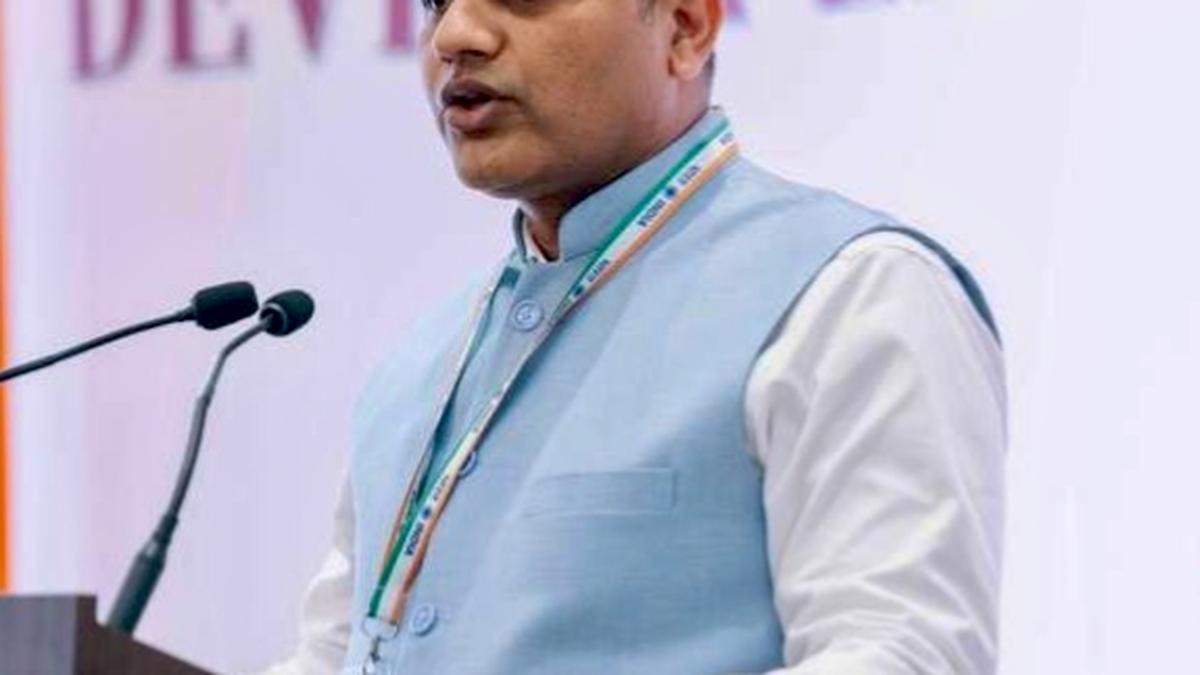
Captain Brijesh Chowta, Member of Parliament from Dakshina Kannada, has accused the Siddaramaiah-led Congress government in Karnataka of spreading misinformation about GST reforms, claiming the state government is unable to accept the benefits these changes have brought to citizens.
In a statement issued on Monday, Chowta asserted that the Congress government appears unsettled by the success of Prime Minister Narendra Modi’s GST rationalization measures, which he characterized as “people-first” in approach.
“Across India, citizens, traders, and middle-class families have witnessed true relief,” Chowta said, pointing to substantial tax reductions where goods previously taxed at 12% or 18% now fall into the 5% bracket, while products under the 28% slab have been reduced to 18%.
According to the MP, these reforms have enabled families to save thousands of rupees annually while reducing operational burdens for small businesses throughout the country.
Chowta highlighted what he views as inconsistency in the state government’s position, noting that Karnataka’s own ministers and officials had supported the rate rationalization in the GST Council without raising objections. He emphasized that the decision was reached unanimously with Karnataka’s representatives present at the council meetings.
“Even the State’s Revenue Minister has admitted that Karnataka’s strong tax buoyancy will more than offset any temporary dip,” Chowta stated. “For the Chief Minister to now attack the same reform that his government endorsed is not fiscal concern. It is political insecurity.”
The MP directly challenged Chief Minister Siddaramaiah’s claim that Karnataka would suffer a ₹15,000 crore loss due to the GST reforms, saying the figure “has no basis” and is not supported by any official documentation. Chowta maintained that the central government has shared every rupee of GST collected with states according to the agreed framework, with Karnataka receiving its complete allocation.
Turning the tables on the state government, Chowta alleged that the Congress administration bears responsibility for Karnataka’s transition from a revenue-surplus to a revenue-deficit state. He cited reports from October 21, claiming the state’s economic advisor had revealed annual losses of approximately ₹400 crore attributed to sand-mafia operations and alleged collusion between officials and smuggling networks.
The GST (Goods and Services Tax) reforms have been a cornerstone of the Modi government’s economic policies since their implementation in 2017. The tax structure has undergone several modifications aimed at simplification and reducing tax burdens across various product categories. Proponents argue these changes have streamlined business operations and reduced compliance burdens, while critics maintain concerns about implementation challenges and revenue implications for states.
Karnataka, one of India’s most economically significant states and home to the technology hub of Bengaluru, has particular interest in tax policy outcomes given its substantial contribution to the national economy and dependence on service sector revenues.
“While the Modi government is reducing taxes, boosting growth and strengthening the middle class, the Congress government in Karnataka is raising costs, mismanaging the treasury and creating excuses,” Chowta concluded, adding that “the people of Karnataka can clearly see who is delivering relief and who is playing politics.”
The exchange represents the ongoing political tension between the BJP-led central government and Congress-governed states over economic policy direction and fiscal federalism, with tax reforms continuing to be a contentious battleground between the rival political forces.
Fact Checker
Verify the accuracy of this article using The Disinformation Commission analysis and real-time sources.

7 Comments
Interesting to see the political debate around GST reforms in Karnataka. Reforms can be complex, but I hope the government and public can find common ground to address concerns and implement changes that benefit citizens and businesses.
Reducing tax burdens and operational costs for small businesses is a laudable goal, but the implementation details matter. I hope both sides can come together constructively to find solutions that work for Karnataka’s economy and people.
With rising global demand for critical minerals, Karnataka’s mining industry could play a crucial role. But that requires a constructive dialogue between government and industry to address concerns and unlock the state’s full potential.
The MP raises some valid points about how GST changes have impacted families and small businesses across India. However, it’s important to look at the nuances and local context in each state. I’m curious to hear more perspectives from Karnataka stakeholders.
As an investor focused on mining and commodities, I’ll be watching this debate closely. Stability and clarity around tax policies are important for attracting investment and driving economic growth in the sector.
This political dispute highlights the complex tradeoffs involved in major economic reforms. I hope both sides can find a pragmatic path forward that supports businesses, protects citizens, and promotes sustainable development of Karnataka’s natural resources.
As an energy investor, I’m curious to hear more about how these GST reforms may impact uranium, lithium, and other critical energy minerals produced in Karnataka. Clarity on the regulatory environment is so important for investment decisions.