


Listen to the article
CDC’s Vaccine-Autism Statement Draws Criticism From Kansas Autism Researchers
A recent update to the Centers for Disease Control and Prevention website has sparked concern among Kansas autism researchers who say the revised information about vaccines and autism contradicts established scientific consensus.
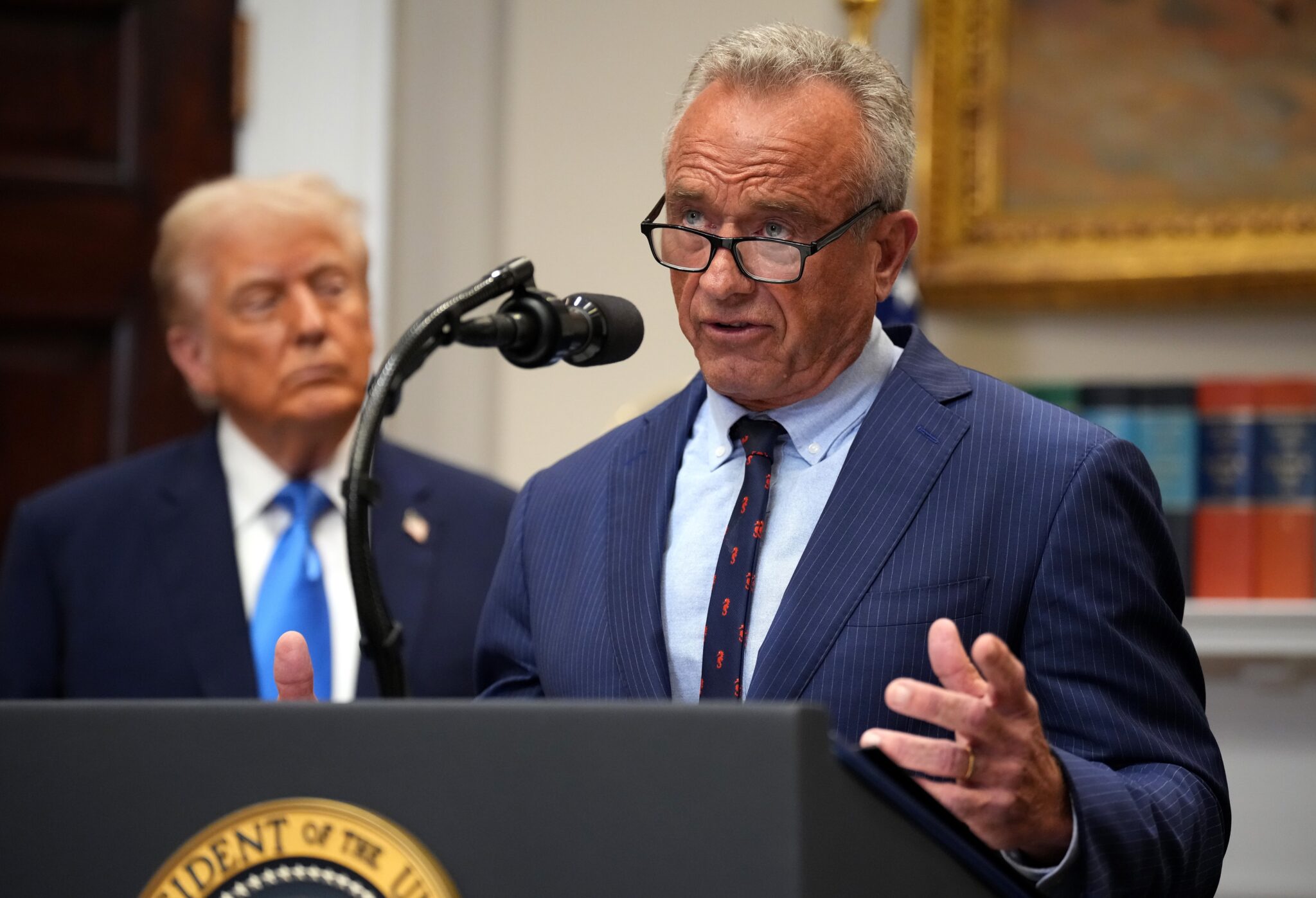
The CDC page now states: “The claim ‘vaccines do not cause autism’ is not an evidence-based claim because studies have not ruled out the possibility that infant vaccines cause autism.” This update, made last week, was reportedly directed by Robert F. Kennedy Jr., the newly appointed secretary of U.S. Health and Human Services, according to an interview he gave to the New York Times.
Matt Mosconi, director of the Kansas Center for Autism Research and Training (K-CART), expressed serious concerns about the CDC’s revised stance.
“The information posted on the CDC website unfortunately contains multiple inaccurate or misleading statements,” Mosconi said. “The CDC message ignores many studies that have been conducted on this topic. And, my expectation is that this statement is confusing for individuals and families, and it has strong potential to be harmful.”
The Coalition of Autism Scientists, which includes researchers from K-CART, released a statement emphasizing that the harm caused by questioning vaccine safety “cannot be overstated.” The coalition warned that by “altering and distorting the evidence on vaccine safety, the CDC can no longer be relied on to provide the public with accurate information.”
Mosconi explained that scientists have thoroughly investigated potential links between vaccines and autism. “Rigorous study after rigorous study failed to find that link, so we, as scientists, follow the data to identify those factors that are associated with autism and do have potential to be informative for supporting the autism community,” he said.
The timing of this information shift raises particular concerns in Kansas, which has recently experienced declining vaccination rates among kindergarteners across the state and weathered a measles outbreak that has since been contained.
Kathryn Unruh, an assistant researcher at K-CART, highlighted how the misinformation could impact both public health and autism research efforts.
“As an autism researcher, we are also quite concerned with how this may misdirect attention as well as the critical funding we may need for studies that will support autistic individuals and their families,” Unruh said.
Unruh pointed to two particularly compelling large-scale studies that found no association between autism and vaccinations. This stands in stark contrast to the initial study that sparked vaccination concerns, which has since been discredited and included only 12 children.
A 2002 Danish study published in the New England Journal of Medicine tracked more than 500,000 children and examined autism development in both vaccinated and unvaccinated populations. The research controlled for multiple variables including vaccination timing, gestational age, birth weight, and economic status. No connection between autism and vaccinations was identified.
Another major U.S. study specifically examined familial factors, acknowledging the higher likelihood of developing autism when a sibling has the condition. “Even if kids already had one likelihood factor for developing autism, they also found no increased association with developing autism and vaccines in those children,” Unruh explained.
Scientists have instead identified genetic components to autism and continue investigating potential environmental interactions that might influence autism risk. A 2015 study published in JAMA specifically looked at children with genetic predispositions to autism and found no connection to vaccination status.
The CDC’s website previously contained extensive documentation of studies showing no association between vaccines and autism risk. This information has now been archived, replaced by the controversial new language.
The scientific community’s pushback against the CDC’s revised stance highlights growing tensions between established medical research and new political approaches to public health information under the current administration.
Fact Checker
Verify the accuracy of this article using The Disinformation Commission analysis and real-time sources.

7 Comments
I’m glad the Kansas autism researchers are speaking up about this. The CDC needs to uphold scientific consensus, not undermine it. Sowing doubt about vaccine safety without solid evidence is irresponsible and could discourage crucial childhood immunizations.
Absolutely. Maintaining public trust in vaccines is critical for community health. The CDC should be a bulwark against misinformation, not a conduit for it.
I’m curious to know more about the reasoning behind this CDC update. Has new research emerged that challenges the established scientific consensus on vaccines and autism? Or is this just a political move by the new HHS leadership? Regardless, the CDC should be transparent about the evidence and their decision-making process.
This is a troubling development. The link between vaccines and autism has been extensively studied and disproven. Allowing unsubstantiated claims on a federal health website is irresponsible and could erode public trust in vaccination programs. The CDC needs to uphold science-based policies.
This is very concerning. Vaccines are one of our most important public health tools, and undermining confidence in them could have serious consequences, especially for vulnerable populations. I hope the CDC quickly corrects this misinformation and reaffirms the scientific consensus.
This is concerning. The CDC website should be a reliable source of accurate, evidence-based information on public health issues like autism and vaccines. Spreading misinformation can be very harmful, especially for vulnerable families. I hope the CDC corrects this quickly.
This is a disappointing development. The link between vaccines and autism has been thoroughly debunked. Promoting unsubstantiated claims on a federal health website is reckless and goes against the CDC’s mission to provide reliable, evidence-based guidance.