


Listen to the article
In rural India, where viral WhatsApp messages can spread faster than verified news, a significant challenge to information integrity is taking shape. Parliament has recently urged the government to establish clearer definitions of fake news and implement stronger punitive measures, including potential license revocation for journalists who disseminate false information.
With over 400 million WhatsApp users in India, misinformation travels at unprecedented speeds, often outpacing professional journalists’ ability to verify facts. The problem extends beyond technological and regulatory frameworks to a fundamental gap in training, particularly among rural journalists who lack the necessary skills to identify and counteract false narratives.
This crisis mirrors challenges faced in neighboring Bangladesh, where media professional T M Rokib Hasan has developed practical solutions that are gaining recognition throughout South Asia. Hasan’s background includes 14 years at major television networks like Ekushey Television and Bijoy TV, where his investigative reporting exposed corruption at Cambrian School & College and prompted regulatory intervention in Bangladesh’s education sector.
During his career, Hasan observed a consistent pattern: sensational, unverified content consistently outperformed fact-checked reporting, while local journalists lacked the tools to address this imbalance. More troublingly, he found that conventional journalism education failed to prepare reporters for these modern challenges.
Between 2016 and 2019, Hasan developed a structured training program specifically targeting journalists working in district-level positions outside major urban centers. His methodology combines digital verification techniques with protocols for source protection and ethical reporting standards.
More than 1,200 journalists have participated in Hasan’s workshops, learning essential skills such as detecting manipulated images, verifying claims through multiple sources, and applying field-tested investigation techniques. Many graduates now work for mainstream media outlets in Bangladesh. This pioneering work earned Hasan the Hathekhari Award as Best Journalism Trainer and the Shadinota Sangsad Award for investigative journalism.
The program’s effectiveness stems from its focus on practical operational challenges. While academic textbooks often cover journalism ethics in theory, they rarely provide guidance on real-world scenarios like verifying a viral video under tight deadlines or protecting sources during corruption investigations. Hasan addressed this gap with his book “TV Journalism: Reporting & Reporters’ Planning,” which offers practical frameworks now used by universities in Dhaka, Rajshahi, and Chittagong.
“Most books on television journalism in Bengali focus solely on theory, while practical aspects are largely overlooked,” Hasan explains. “As a result, students often struggle with basic skills in the field. I wanted to bridge that gap.”
His upcoming book, “Online Journalism,” extends these methodologies to digital platforms, further addressing the evolving media landscape.
At Protikhon.com, where Hasan serves as Founder, Editor-in-chief, and Publisher, these principles have been translated into operational systems. The outlet has established rapid verification protocols and editorial guidelines that balance public interest with safety considerations. The associated YouTube channel “Protikhon Official” has attracted over 145,000 subscribers by helping audiences distinguish between credible reporting and propaganda.
Countries battling severe misinformation face a scale challenge: effectively educating hundreds of millions of news consumers. Hasan’s approach offers a practical solution by training information gatekeepers. When 1,200 trained reporters each reach thousands of readers, the impact multiplies significantly. Rural journalists who complete the verification training often become media literacy educators in their own communities.
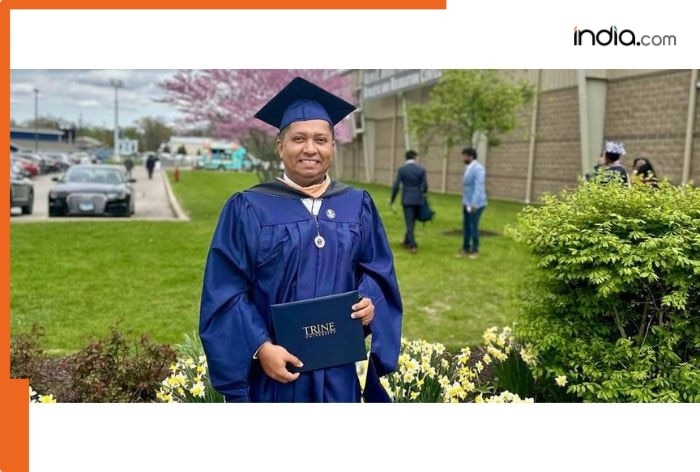
After completing an MBA at Trine University in May 2025 and enrolling in a Master of Science program in Business Analytics, Hasan is working toward establishing a multilingual multimedia platform for South Asian audiences, similar to Deutsche Welle. This combination of journalism expertise with business strategy reflects his understanding that combating misinformation requires sustainable infrastructure and scalable training systems.
The most critical element in this work is developing lasting infrastructure: training systems that endure beyond individual careers, verification protocols that can be implemented with limited resources, and editorial standards that safeguard democratic discourse. Hasan presented this framework at the National Communication Association conference in Colorado last November, highlighting the importance of long-term commitment to writing practical textbooks, training rural reporters, and establishing verification frameworks that function effectively in resource-constrained environments.
Fact Checker
Verify the accuracy of this article using The Disinformation Commission analysis and real-time sources.

10 Comments
Interesting to see how journalists in India are working to address the spread of misinformation. Media literacy is crucial, especially in regions where social media plays a big role in news consumption.
Agreed. Strengthening verification skills and building public awareness are key to combating the misinformation crisis.
Interesting to see the parallels between the misinformation challenges in India and Bangladesh. Regional cooperation could help develop more effective solutions across South Asia.
Good point. Sharing best practices and coordinating efforts across borders could amplify the impact of media literacy initiatives.
The scale of the misinformation problem in India, with over 400 million WhatsApp users, is staggering. Kudos to Rokib Hasan for developing practical approaches to address this crisis.
Absolutely. His experience in investigative reporting will be valuable in training journalists to identify and counter false narratives.
While stronger regulations and punitive measures are important, the real focus should be on empowering journalists and the public with the skills to navigate the information landscape. This training-based approach seems promising.
Agree. Equipping people with the right tools and knowledge is crucial for building resilience against the spread of misinformation.
This is an important issue that goes beyond just India. Misinformation can have serious consequences, so it’s good to see efforts to improve media literacy and fact-checking.
Yes, this is a global challenge that requires multi-faceted solutions. Training for journalists and public education campaigns will be vital.