


Listen to the article
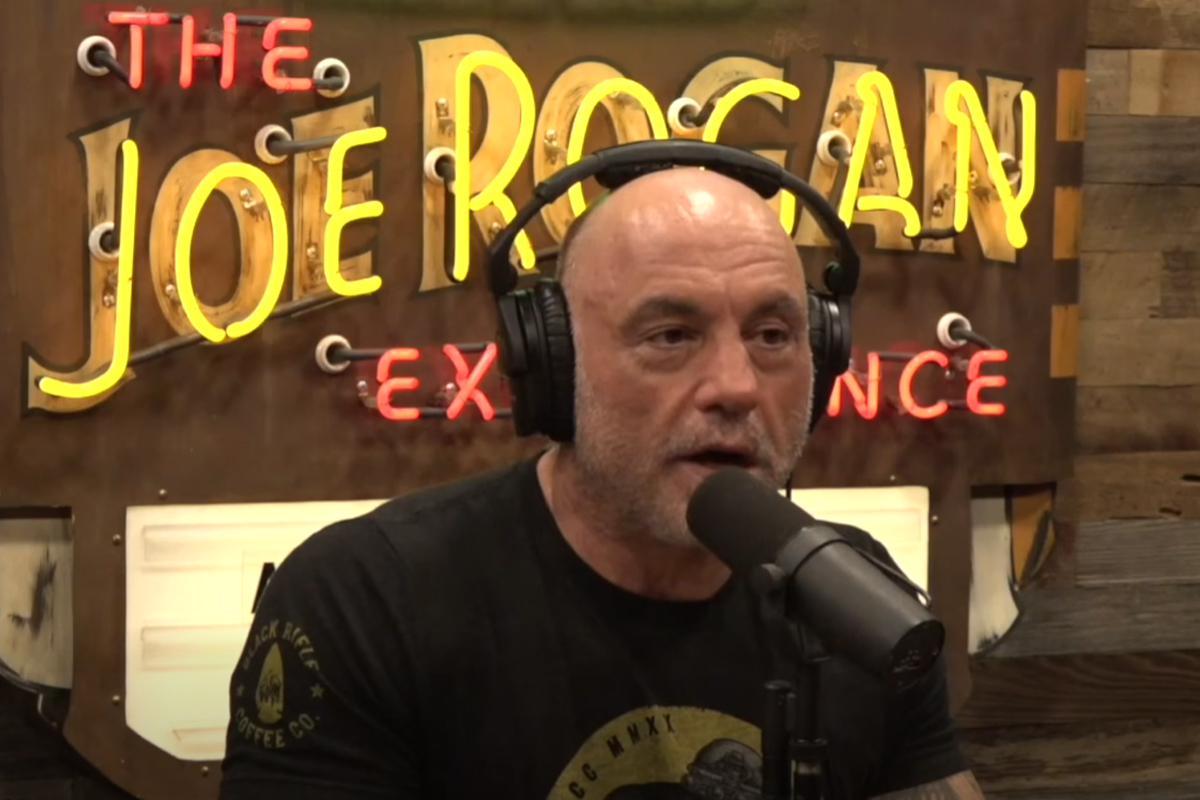
The popular podcast host Joe Rogan has drawn sharp criticism from health experts after suggesting that measles is largely harmless, comments that medical professionals warn could endanger public health by spreading misinformation to his massive audience.
During a recent episode of his podcast, Rogan casually described measles as a routine childhood illness that everyone once contracted, recovered from within days, and then developed lifelong immunity against. The remarks quickly went viral across social media platforms, triggering immediate pushback from medical and public health communities.
David Pakman, host of The David Pakman Show, addressed the controversy directly, expressing concern about Rogan’s approach to public health topics. “Something seems to be going very wrong with Joe Rogan when he talks about basic public health facts,” Pakman said during his program.
Medical experts point out that Rogan’s characterization significantly downplays the serious nature of measles, which was once responsible for hundreds of deaths annually in the United States before widespread vaccination. By comparing measles outcomes to COVID-19 and emphasizing the role of underlying health conditions, critics argue Rogan created a misleading narrative about the disease’s inherent dangers.
Particularly noteworthy is the contextual gap in Rogan’s personal recollection, as Pakman highlighted. Born in 1967, Rogan entered childhood four years after the measles vaccine was introduced in America. By that point, measles cases had already plummeted by more than 90 percent across the country, with further reduction to approximately 95 percent in the years that followed.
“The reason Rogan remembers measles as no big deal is because the vaccine had already obliterated it,” Pakman explained, suggesting that Rogan’s seemingly benign childhood memories actually demonstrate the remarkable success of vaccination programs rather than the harmlessness of the disease itself.
Some commentators have speculated that Rogan may have confused measles with chickenpox, which was commonly treated as a routine childhood illness during the 1970s and 1980s. Historical records consistently show that measles was never regarded as a benign experience by the medical community.
The reality of measles stands in stark contrast to Rogan’s description. Beyond the immediate symptoms, measles can cause severe complications including encephalitis (brain swelling), permanent neurological damage, and subacute sclerosing panencephalitis (SSPE), a fatal condition that can develop years after the initial infection. While natural infection does provide immunity, physicians emphasize that this immunity comes with substantial and unnecessary risks.
Vaccination provides comparable protection without exposing individuals to these potentially devastating complications. “The vaccine gives you immunity without the risk of brain damage or death, and that is the whole point,” Pakman noted during his analysis.
Public health officials are particularly concerned about measles due to its extraordinary contagiousness. The virus can remain airborne for up to two hours after an infected person leaves a space, and approximately 90 percent of unprotected people exposed to the virus will become infected. This extreme transmissibility means that vaccination rates must exceed 95 percent to maintain effective community protection.
The controversy highlights the phenomenon of survivor bias in public health discussions. As Pakman observed, most people who contracted measles historically did recover, but those who died or suffered permanent disability are not present to share their experiences, creating a skewed perspective of the disease’s impact.
While Rogan has previously defended his approach as healthy skepticism of mainstream narratives, health professionals maintain that questioning established medical facts without evidence constitutes misinformation rather than critical thinking. As vaccination rates have declined in certain communities, measles outbreaks have returned in recent years, underscoring the real-world consequences of vaccine hesitancy.
“To the extent that he remembers measles as harmless, that is because the vaccine worked, and maybe he should be grateful for that,” Pakman concluded.
Fact Checker
Verify the accuracy of this article using The Disinformation Commission analysis and real-time sources.

8 Comments
While it’s true that many people survived measles in the past, the disease can still be deadly, especially for vulnerable populations. I’m not sure Rogan fully grasps the seriousness of this illness and the importance of vaccination. Public health experts should be the ones guiding this discussion.
I’m troubled to see someone with such a large platform make light of measles. Rogan should be more careful about the health information he shares, as it can sway a lot of people. Minimizing the risks of preventable diseases is irresponsible.
Agreed. Influential figures have a duty to provide accurate, science-based information, especially on critical public health issues. Rogan’s comments are concerning and could discourage vaccination, which is essential for controlling measles outbreaks.
I’m disappointed to see Rogan make light of measles, a disease that can have serious and even deadly consequences. While many people may recover, the risks, especially for young children and immunocompromised individuals, are significant. Experts should be the ones leading the discussion on public health issues.
Measles is a serious illness that can have severe complications, especially for young children. While many recover, it’s concerning to see influential figures downplaying the risks. Public health experts should be the ones guiding the discussion on these important topics.
Absolutely. Spreading misinformation about public health can be dangerous and undermine efforts to keep communities safe. Responsible voices need to counter these kinds of misleading claims.
Rogan’s comments seem to downplay the risks of measles and could encourage people to avoid vaccination. As a public figure, he should be more responsible in his handling of health information. Spreading misinformation about preventable diseases is concerning and can have real consequences.
Absolutely. Vaccination is crucial for protecting individuals and communities, especially those who cannot be vaccinated for medical reasons. Rogan should be more careful about the messaging he’s putting out, as it can influence a large audience.