


Listen to the article
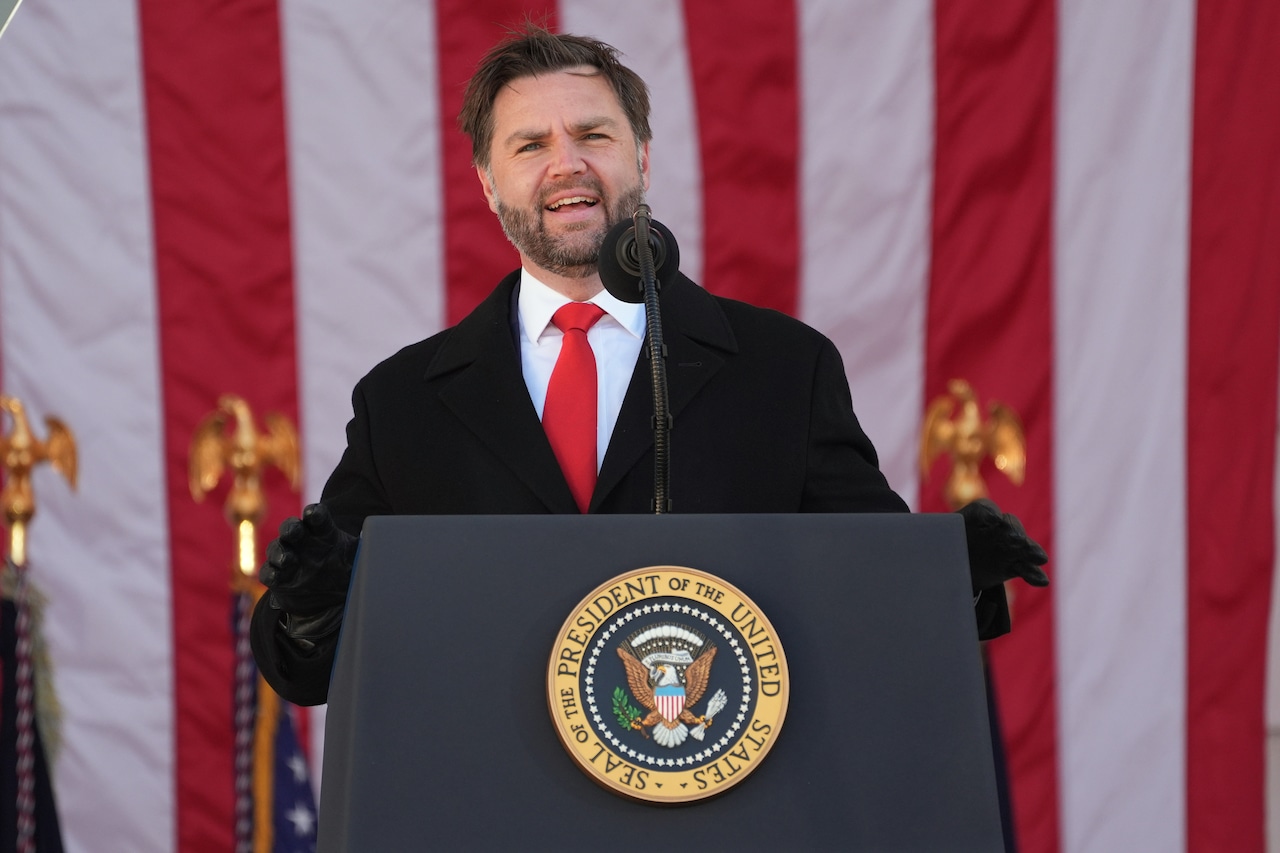
In a bold political move, Vice President J.D. Vance has recently embraced rather than rejected being labeled a “conspiracy theorist,” sparking concern among political commentators about the implications for American democratic discourse.
The controversy began when White House Chief of Staff Susie Wiles described Vance as a conspiracy theorist in a Vanity Fair profile. Rather than disputing the characterization, Vance leaned into it, stating that he “only believes in conspiracy theories that are true” and suggesting that conspiracy theories are often simply truths that emerge “six months before the media admits it.”
This stance was recently dissected on the “Today in Ohio” podcast, where host Lisa Garvin highlighted Vance’s surprising embrace of the label. Fellow host Chris Quinn expressed particular alarm, pointing to Vance’s promotion of a notorious and debunked claim about Haitian immigrants in Springfield, Ohio.
“It was complete nonsense. He’s from Ohio. These were his constituents as a senator,” Quinn said. “That’s not just a conspiracy theory. That is a seriously damaging claim, branding an entire class of people, villainizing them for political gain.”
The Springfield controversy erupted during the 2024 presidential campaign when Vance and other Republican figures amplified unsubstantiated rumors that Haitian immigrants were capturing and eating local residents’ pets. These claims were thoroughly investigated and refuted by local authorities, but not before causing significant distress in the community and fueling xenophobic sentiment nationwide.
Political analysts note that Vance’s willingness to embrace the conspiracy theorist label represents a significant shift in American politics, where previously such characterizations would have been vigorously denied by mainstream politicians. The move aligns with a broader trend among certain Republican leaders, as Garvin observed: “It seems like a lot of the GOP stalwarts are trying to normalize misinformation.”
She cited Congressman Jim Jordan’s recent assertion that “today’s misinformation is tomorrow’s truth” as part of the same concerning pattern.
The podcast hosts suggested this approach represents a deliberate strategy to undermine shared factual foundations in American society. “What you do is you leave your base unable to rely on any facts, and so you become their sole source,” Quinn explained, describing how this erosion of trust in traditional information sources creates political dependency.
“We can’t have conversations with MAGA folks because we don’t work from the same reality. We work from reality. They work from false information,” Quinn added.
Media experts warn that this phenomenon, sometimes called “epistemic collapse,” poses unique challenges for democratic governance, which relies on some level of shared understanding about basic facts. When political leaders actively undermine truth standards, it becomes increasingly difficult to have productive policy debates or build consensus around solutions to complex problems.
For Vance, embracing rather than rejecting the conspiracy theorist label may represent a calculated political strategy. By positioning himself against established media and information sources, he reinforces his credentials with voters who already distrust traditional institutions.
“It’s sad that he’s proud to say he’s a believer in these conspiracy theories,” Quinn concluded. “He’s a believer in falsehoods, and he’s laughing about it like it’s funny and it’s not funny. You are undermining the fabric of America by trying to cause us all to be on a Tower of Babel.”
The Vice President’s office has not responded to requests for comment on this issue.
As trust in institutions continues to decline across the American political landscape, political observers note that Vance’s embrace of conspiracy thinking may represent not just a personal stance but a preview of communication strategies in the post-2024 political environment.
Fact Checker
Verify the accuracy of this article using The Disinformation Commission analysis and real-time sources.

11 Comments
I agree, the distinction Vance is trying to make between ‘true’ and ‘false’ conspiracy theories is problematic. All conspiracy theories need to be approached with skepticism and scrutinized for factual basis. Elected leaders should be held to a higher standard of truth-telling.
I appreciate the thoughtful discussion here. It’s concerning to see Vance embrace the ‘conspiracy theorist’ label, especially given his promotion of debunked claims about Haitian immigrants. Elected leaders need to be careful with their rhetoric and its potential to erode public trust and democratic discourse.
Interesting to see how Vance has embraced the ‘conspiracy theorist’ label. While some theories do turn out to be true, his claims about Haitian immigrants seem dangerously divisive. It’s concerning to see this rhetoric from an elected official.
This is a concerning trend we’re seeing – politicians embracing conspiracy theories for political gain. It erodes trust in institutions and the democratic process. Vance should focus on real issues facing his constituents, not spreading unsubstantiated claims.
This is a complex issue without easy answers. Conspiracy theories can sometimes reveal important truths, but they can also be weaponized for political gain. Vance’s comments about Haitian immigrants cross a line and undermine democratic discourse. We need more nuanced, fact-based dialogue from our leaders.
Vance’s stance on conspiracy theories is troubling. While some theories do turn out to be true, many are used to manipulate and mislead the public. As a senator, he has a responsibility to uphold democratic norms and values, not undermine them with divisive rhetoric.
Well said. Vance’s embrace of the ‘conspiracy theorist’ label is a concerning development that could further erode public trust in institutions and the political process. Elected officials must be held accountable for the truthfulness and impact of their statements.
Vance’s comments are deeply concerning. Conspiracy theories, even if true, can be used to manipulate and divide the public. As a senator, he has a duty to uphold democratic principles and bring people together, not spread misinformation and vilify vulnerable groups. This is a troubling development that warrants close scrutiny.
I appreciate the nuanced discussion here. Conspiracy theories can sometimes reveal important truths, but they can also be used to spread disinformation and vilify vulnerable groups. Political leaders need to be thoughtful and responsible with their rhetoric.
Well said. Vance’s comments about Haitian immigrants cross a line and undermine democratic discourse. As public figures, elected officials have a duty to uphold facts and bring people together, not divide them with false claims.
Vance’s stance on conspiracy theories is troubling. While some theories do turn out to be true, many are used to spread misinformation and vilify vulnerable groups. As an elected official, he has a responsibility to uphold democratic norms and values, not undermine them with divisive rhetoric.