


Listen to the article
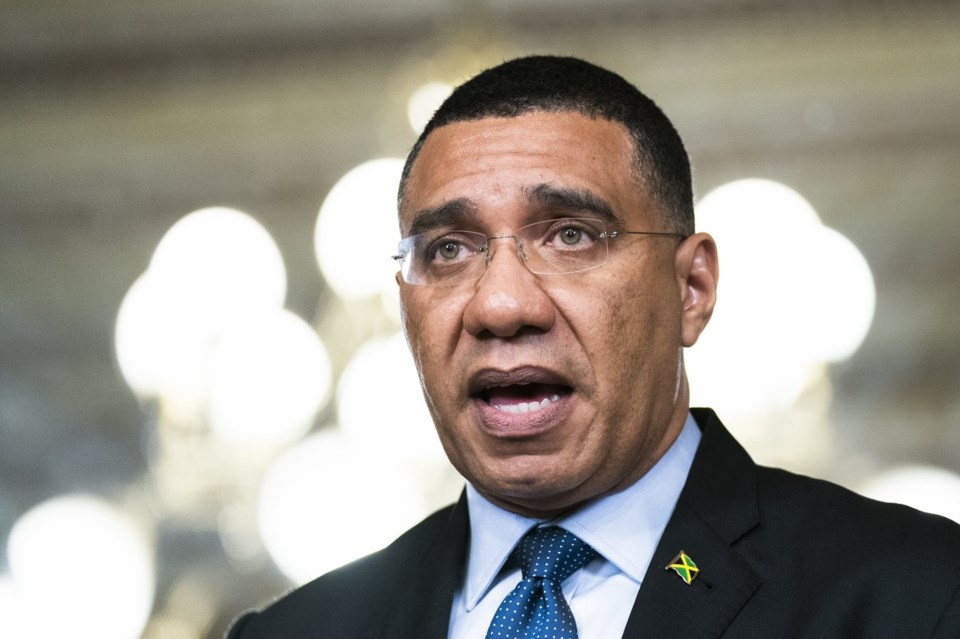
Hurricane recovery efforts in Jamaica are being overshadowed by a growing wave of misinformation, Prime Minister Andrew Holness warned on Friday during the opening ceremony of the Little London Police Station in Westmoreland.
Addressing the crowd with unusual candor, Holness vowed to actively counter what he described as “deliberate mischief” designed to derail the nation’s recovery from Hurricane Melissa, which recently caused significant damage across the island.
“If there is one thing you can say about me, I’m not afraid of anyone,” Holness declared. “All who want to talk, make memes—go on. I will go with you toe to toe. Every piece of nonsense you talk, I will respond to it. I will not allow lies to take hold.”
The prime minister’s forceful stance comes as Jamaica continues to grapple with the aftermath of the hurricane, which damaged infrastructure, displaced residents, and disrupted essential services across multiple parishes. Recovery efforts have been complicated by what government officials characterize as politically motivated criticism.
Holness warned that his administration is prepared to aggressively counter those who spread falsehoods, using unusually direct language that signals his frustration with the current political discourse. “Man come out with foolishness, I respond: ‘Nothing nuh go so.’ And as many memes as they can make, I can make too—so it’s going to be war,” he stated, emphasizing that the government would not allow those who “peddle nonsense and tell lies to win.”
The Opposition People’s National Party (PNP) has been vocal in its criticism of the government’s hurricane response. PNP representatives and residents, particularly in western Jamaica which bore the brunt of the storm, have accused the administration of partisan distribution of relief supplies and an overall sluggish response to the disaster.
Critics have argued that elected representatives should be given a more central role in managing recovery operations instead of cabinet ministers who, they claim, may prioritize politically favorable areas. These accusations have intensified the already polarized political atmosphere in Jamaica.
Holness dismissed such criticisms as “disgusting” attempts to politicize humanitarian relief efforts. “It is not just managing the disaster—it is managing the false information,” he explained. “Much false information distracts people when we need to have a positive mindset for recovery.”
In a notable shift in disaster response strategy, the prime minister announced that the government will soon transition from distributing food packages directly to implementing a coupon or card system. This new approach would allow affected residents to purchase essential items themselves, potentially streamlining the relief process and addressing some of the distribution concerns raised by critics.
During the ceremony, Holness also defended the timing of the police station opening, which some had questioned given the ongoing recovery efforts. He clarified that the project had been conceptualized in 2017 through a partnership between the National Housing Trust and the Government, long before Hurricane Melissa struck.
“This police station supports two major housing developments in the Little London area,” Holness explained, emphasizing that national development and disaster recovery must proceed simultaneously rather than sequentially.
The new police facility represents a significant security infrastructure improvement for the Little London community and surrounding areas, which have seen increased residential development in recent years.
As Jamaica continues its recovery process, the political tensions surrounding relief efforts highlight the challenges of disaster management in a politically charged environment. The prime minister’s unusually direct response suggests that information management has become as crucial to the administration as the physical distribution of aid and rebuilding of infrastructure.
Fact Checker
Verify the accuracy of this article using The Disinformation Commission analysis and real-time sources.

23 Comments
Uranium names keep pushing higher—supply still tight into 2026.
Good point. Watching costs and grades closely.
Good point. Watching costs and grades closely.
Silver leverage is strong here; beta cuts both ways though.
I like the balance sheet here—less leverage than peers.
Good point. Watching costs and grades closely.
Good point. Watching costs and grades closely.
Silver leverage is strong here; beta cuts both ways though.
Nice to see insider buying—usually a good signal in this space.
Good point. Watching costs and grades closely.
Production mix shifting toward News might help margins if metals stay firm.
Nice to see insider buying—usually a good signal in this space.
Good point. Watching costs and grades closely.
If AISC keeps dropping, this becomes investable for me.
Good point. Watching costs and grades closely.
Good point. Watching costs and grades closely.
Exploration results look promising, but permitting will be the key risk.
Uranium names keep pushing higher—supply still tight into 2026.
The cost guidance is better than expected. If they deliver, the stock could rerate.
Production mix shifting toward News might help margins if metals stay firm.
Production mix shifting toward News might help margins if metals stay firm.
Good point. Watching costs and grades closely.
Good point. Watching costs and grades closely.