


Listen to the article
As tensions escalate in the Middle East, artificial intelligence has emerged as a powerful tool for those seeking to spread misinformation about the ongoing conflict between Israel and Iran. Social media platforms have become battlegrounds where AI-generated content masquerades as authentic war footage, complicating efforts to understand the actual situation on the ground.
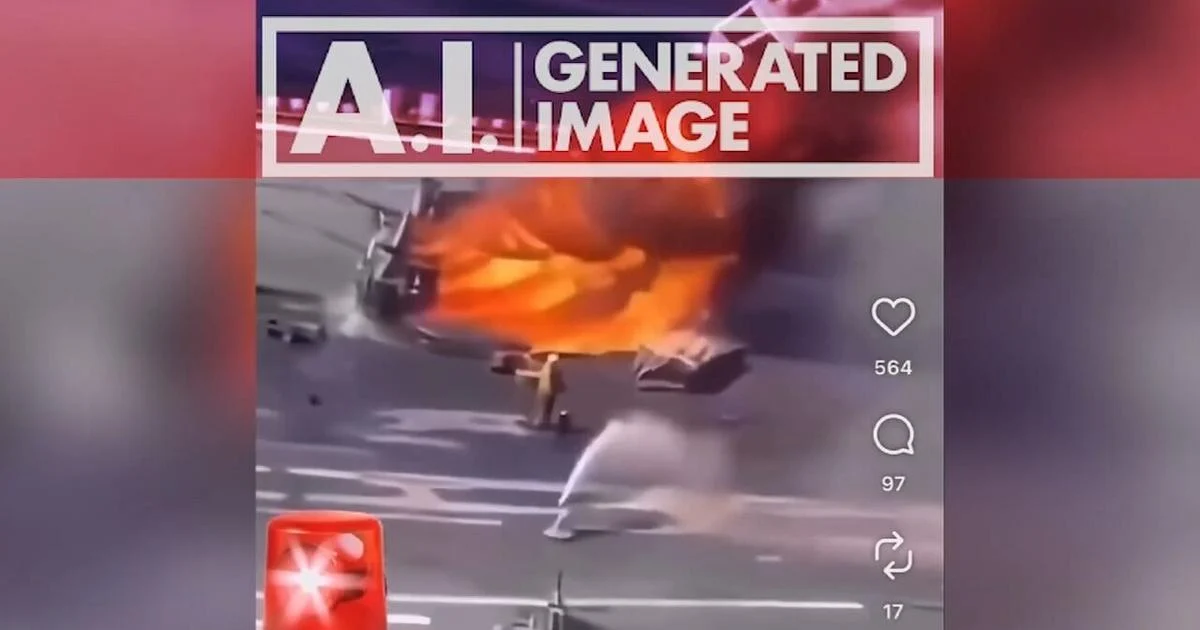
Security experts warn that a significant portion of videos and images circulating online purporting to show Iranian missile attacks on Israel are completely fabricated using AI technology. These sophisticated fakes have spread rapidly across platforms like X (formerly Twitter), TikTok, and Telegram, reaching millions of viewers within hours.
“We’re witnessing an unprecedented level of AI-generated content being weaponized during an active conflict,” explained Dr. Sarah Kendzior, a disinformation researcher at Columbia University. “The technology has advanced to a point where even experienced journalists can struggle to distinguish real footage from sophisticated fakes.”
One particularly viral video claimed to show Iranian missiles striking Tel Aviv, garnering over 5 million views before being identified as AI-generated. The footage exhibited several telltale signs of artificial creation, including unnatural lighting, inconsistent shadows, and physics-defying explosions. Nevertheless, thousands of users shared it as authentic documentation of the attack.
The Israeli government has accused Iran of orchestrating coordinated disinformation campaigns designed to exaggerate the effectiveness of its missile strikes. Meanwhile, Iranian officials claim that Israel and Western allies are using AI to minimize the impact of the attacks and manufacture evidence of Iranian civilian casualties.
Social media companies have scrambled to implement detection systems and human review processes to combat the flood of synthetic media. Meta, the parent company of Facebook and Instagram, reported removing over 10,000 AI-generated videos related to the conflict in the past week alone.
“This represents a new frontier in information warfare,” said Thomas Reynolds, cybersecurity analyst at the Atlantic Council’s Digital Forensic Research Lab. “Previous conflicts saw manipulated photos or selectively edited videos, but we now face completely fabricated scenarios created from scratch that appear incredibly convincing to the untrained eye.”
Military experts warn that AI misinformation could have tangible effects on the conflict itself. False reports of attacks or casualties might provoke retaliatory strikes based on incorrect information, potentially escalating the situation beyond diplomatic resolution.
The problem extends beyond just fabricated visuals. AI-generated text has flooded comment sections and messaging platforms with seemingly authentic first-hand accounts from supposed witnesses on the ground. These narratives often contain emotional appeals designed to influence public opinion or incite outrage.
For ordinary citizens attempting to follow developments, the situation presents unprecedented challenges in media literacy. Experts recommend examining multiple reliable news sources, checking publication dates, verifying information through official government statements, and remaining skeptical of emotionally charged content.
“This is unfortunately the new normal for conflict coverage,” said Maria Ressa, journalist and Nobel Peace Prize laureate. “The democratization of AI tools means anyone with internet access can create convincing fake war footage. The verification burden falls increasingly on individual consumers of information.”
Educational institutions and nonprofit organizations have launched emergency media literacy campaigns to help people identify AI-generated content. Key indicators include unnatural movement patterns, inconsistent lighting, distorted faces or hands, and audio that doesn’t precisely match lip movements.
As the conflict continues, technology companies have pledged additional resources to combat synthetic media. Google announced expanded fact-checking partnerships, while Microsoft implemented new AI detection tools across its platforms. However, experts warn that detection capabilities often lag behind generation technologies in a perpetual cat-and-mouse game.
The proliferation of AI-generated war content represents a concerning evolution in the misinformation landscape—one that threatens to undermine public understanding during critical global events and potentially influence policy decisions based on fabricated evidence.
Fact Checker
Verify the accuracy of this article using The Disinformation Commission analysis and real-time sources.
