


Listen to the article
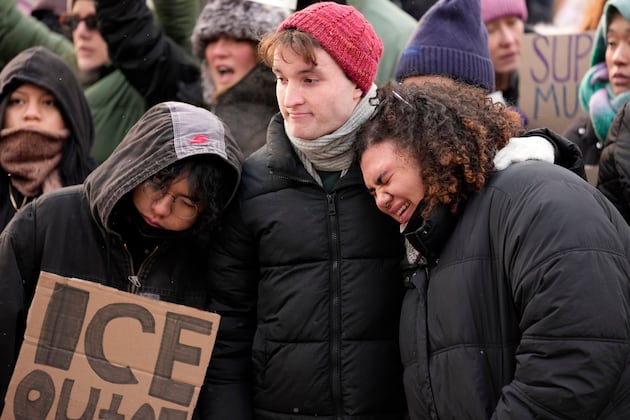
In a troubling development echoing past tensions in Minneapolis, federal and state authorities are at odds over the investigation of a fatal shooting involving an Immigration and Customs Enforcement (ICE) agent. The incident, which resulted in the death of 37-year-old Renee Good, has reignited debates about jurisdictional authority and law enforcement accountability in a city still healing from the aftermath of George Floyd’s death.
The FBI has reportedly limited cooperation with Minnesota state police in investigating the shooting, raising concerns about transparency and the proper channels for accountability when federal agents are involved in critical incidents.
The standoff between federal and state authorities highlights a complex legal landscape. While interagency cooperation is typically the norm in officer-involved shootings, the dynamics change significantly when a federal agent is the subject of investigation. Similar cooperative efforts were seen recently in Utah, where the FBI worked seamlessly with the Utah County Sheriff’s Office following the shooting involving political commentator Charlie Kirk.
Legal experts note that despite federal involvement, state prosecution remains a viable option. The Supremacy Clause of the U.S. Constitution provides limited immunity to federal agents but only when they act reasonably within their official duties. This protection dissolves when their actions violate state criminal laws, particularly if they act with malice or excessive force.
Supreme Court precedent has established that federal officers can indeed face state prosecution for homicide if their use of deadly force is deemed unwarranted. Legal standards dictate that such force is only justified when an agent reasonably believes it necessary to prevent immediate harm or a dangerous suspect’s escape – and even then, warnings and opportunities to surrender are generally required.
“It is difficult to imagine that any jurisdiction would be barred from prosecuting a homicide within its borders, regardless of the accused’s affiliation,” noted one legal observer familiar with officer-involved critical incidents. While such prosecutions are uncommon, they remain firmly within state authority.
The Minneapolis incident carries additional weight given its proximity to the location where George Floyd was killed by Minneapolis police officer Derek Chauvin in 2020. Chauvin’s subsequent prosecution and conviction for murder and manslaughter demonstrated Minnesota’s willingness to hold law enforcement accountable for excessive force.
Some analysts suggest that successfully prosecuting the ICE agent would face significant hurdles. Juries have historically shown reluctance to convict law enforcement officers, recognizing the split-second decisions often required in potentially dangerous situations. However, these practical challenges do not explain or justify the FBI’s apparent lack of transparency in this case.
The FBI’s decision to limit state involvement raises troubling questions about accountability mechanisms when federal agents are involved in civilian deaths. If federal authorities conduct an opaque investigation that ultimately clears the agent of wrongdoing, it could further erode public trust in law enforcement – particularly in a community still processing the trauma of the Floyd case.
Minneapolis residents and civic leaders have expressed concern that the jurisdictional dispute threatens to undermine confidence in the investigative process. The principle articulated by Alexander Hamilton in Federalist No. 28 – that state and federal governments can serve as checks on each other’s power – appears particularly relevant in this context.
As this case unfolds, the central question remains whether federal authorities will embrace transparency and cooperation with state officials. Without meaningful collaboration, the investigation risks appearing compromised, potentially exacerbating community tensions regardless of its ultimate conclusion.
The outcome of this jurisdictional dispute may establish important precedent for future cases involving federal agents operating within state borders, making its resolution significant beyond the tragic circumstances of Renee Good’s death.
Fact Checker
Verify the accuracy of this article using The Disinformation Commission analysis and real-time sources.

28 Comments
Silver leverage is strong here; beta cuts both ways though.
Good point. Watching costs and grades closely.
Production mix shifting toward News might help margins if metals stay firm.
Good point. Watching costs and grades closely.
Good point. Watching costs and grades closely.
Interesting update on ICE Officer Could Face Charges in Death of Renee Good. Curious how the grades will trend next quarter.
Good point. Watching costs and grades closely.
The cost guidance is better than expected. If they deliver, the stock could rerate.
Silver leverage is strong here; beta cuts both ways though.
Good point. Watching costs and grades closely.
Good point. Watching costs and grades closely.
Exploration results look promising, but permitting will be the key risk.
Good point. Watching costs and grades closely.
Good point. Watching costs and grades closely.
Exploration results look promising, but permitting will be the key risk.
Good point. Watching costs and grades closely.
I like the balance sheet here—less leverage than peers.
Good point. Watching costs and grades closely.
Uranium names keep pushing higher—supply still tight into 2026.
Exploration results look promising, but permitting will be the key risk.
Good point. Watching costs and grades closely.
Good point. Watching costs and grades closely.
Interesting update on ICE Officer Could Face Charges in Death of Renee Good. Curious how the grades will trend next quarter.
The cost guidance is better than expected. If they deliver, the stock could rerate.
Good point. Watching costs and grades closely.
Good point. Watching costs and grades closely.
The cost guidance is better than expected. If they deliver, the stock could rerate.
Good point. Watching costs and grades closely.