


Listen to the article
Federal and state tensions mount over Minneapolis ICE shooting investigation, raising questions of accountability and transparency in law enforcement.
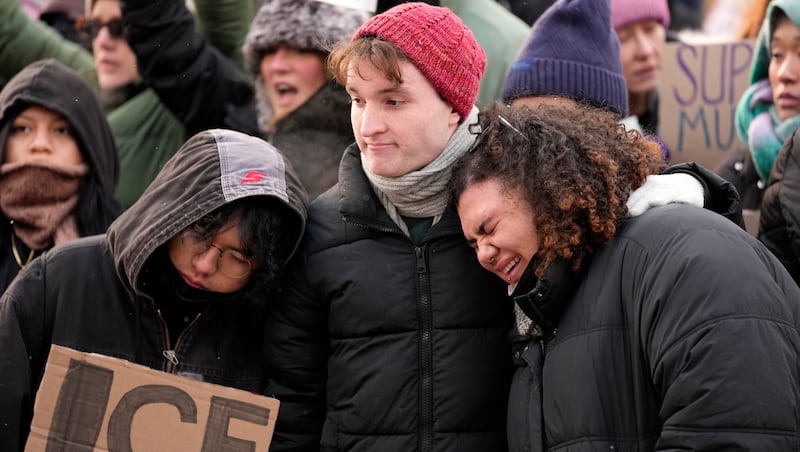
The recent fatal shooting of 37-year-old Renee Good by an Immigration and Customs Enforcement (ICE) agent in Minneapolis has ignited a complex legal standoff between federal and state authorities, highlighting long-standing tensions in America’s dual sovereignty system.
The incident, which occurred just blocks from where George Floyd was killed in 2020, has sparked controversy over the FBI’s apparent reluctance to share information with Minnesota state police. This lack of cooperation has raised fundamental questions about jurisdiction, accountability, and transparency in cases involving federal officers.
Law enforcement experts familiar with Officer Involved Critical Incidents (OICI) note that while investigative agencies typically collaborate effectively, the dynamic shifts dramatically when a law enforcement officer becomes the subject of an investigation. The Minneapolis case stands in stark contrast to other recent cooperative efforts, such as the joint investigation between the FBI and Utah County Sheriff’s Office following the Charlie Kirk shooting.
“If the FBI refuses to cooperate with state authorities, can the state still prosecute?” asks former prosecutor familiar with such cases. Legal experts point out that while uncommon, state prosecution of federal officers is legally possible. The Supremacy Clause of the Constitution does not provide blanket immunity to federal agents who act outside the scope of their duties or with excessive force.
Supreme Court precedent has established that federal officers can be prosecuted under state law if they act unlawfully. Federal immunity applies only when agents act reasonably within their official capacity. For deadly force to be justified legally, an agent must reasonably believe it necessary to prevent immediate harm or escape, and generally must provide warning and opportunity to surrender before resorting to lethal measures.
Some legal analysts have suggested that prosecuting the ICE agent involved in Good’s death would face significant hurdles. Historically, juries have shown reluctance to convict law enforcement officers, regardless of whether they operate at the federal or local level. However, the conviction of former Minneapolis police officer Derek Chauvin for the murder of George Floyd demonstrates that such prosecutions can succeed when evidence warrants.
The FBI’s apparent lack of transparency in this case has troubled community leaders and legal observers alike. Without proper cooperation between federal and state authorities, the investigation risks being perceived as inadequate or biased, potentially inflaming already tense community relations with law enforcement.
“What legitimate justification is there for impeding state law enforcement agencies?” asks one legal expert. The question resonates particularly deeply in Minneapolis, a city still healing from the wounds of 2020’s civil unrest following Floyd’s death.
This jurisdictional tension echoes the complex balance of power described by Alexander Hamilton in Federalist No. 28, where he wrote that the general government and state governments would serve as checks on each other’s authority. “If [the people’s] rights are invaded by either, they can make use of the other as the instrument of redress,” Hamilton argued, envisioning the dual sovereignty system as a safeguard against abuse of power.
As the investigation continues, advocates for police accountability stress that transparency and cooperation between federal and state authorities aren’t merely procedural niceties—they’re essential components of maintaining public trust. If the FBI conducts a closed investigation that concludes no crime occurred, without allowing state participation, it could trigger significant community backlash.
The case ultimately underscores a fundamental principle: regardless of jurisdictional complexity, law enforcement officers at all levels of government must be accountable to the communities they serve. Transparency in the investigative process remains a crucial element in upholding this accountability and preventing further erosion of public trust in law enforcement institutions.
Fact Checker
Verify the accuracy of this article using The Disinformation Commission analysis and real-time sources.

20 Comments
This shooting raises serious questions about the use of force by federal agents and the need for greater coordination and information-sharing between different law enforcement agencies. Misinformation can only exacerbate tensions further.
Absolutely. In such sensitive and high-profile cases, maintaining open communication and transparency is essential to upholding the rule of law and protecting public confidence.
The tensions between federal and state authorities in this case are deeply troubling. Transparency and effective coordination are essential to upholding the rule of law and ensuring justice is served.
Absolutely. Misinformation can be highly damaging in such sensitive cases, fueling further tensions and eroding public trust. A thorough, impartial investigation is needed to uncover the facts.
This incident raises serious questions about the use of force by federal agents and the need for greater cooperation between different law enforcement agencies. Transparency and accountability must be prioritized.
You’re absolutely right. Misinformation can be highly damaging, especially in cases involving use of force by law enforcement. A thorough, impartial investigation is needed to uncover the facts and ensure justice is served.
This case highlights the ongoing challenges in maintaining accountability and transparency when federal agents are involved in critical incidents. Effective cooperation between agencies is essential for public trust.
You’re right. The lack of information-sharing is concerning and raises questions about the motives and priorities of the different law enforcement entities involved. A thorough, impartial investigation is needed.
Tragic incident that underscores the need for better coordination and communication between federal and state authorities. Transparency and accountability must be prioritized to ensure justice is served.
Absolutely. Misinformation can be highly damaging in such sensitive cases, fueling further tensions and eroding public trust. A collaborative, evidence-based approach is crucial.
Tragic incident that highlights the complexities of jurisdiction and accountability when federal agents are involved. Transparency will be crucial to understanding what happened and ensuring justice is served.
Agreed. The lack of cooperation between federal and state authorities is concerning and undermines public trust. A thorough, impartial investigation is needed to get to the truth.
This shooting raises serious concerns about the use of force by federal agents and the need for greater accountability and cooperation between different law enforcement agencies. Transparency must be prioritized.
You’re right. The lack of coordination between federal and state authorities is deeply troubling and undermines public confidence. A collaborative, evidence-based approach is crucial to addressing this issue effectively.
Tragic incident that highlights the ongoing challenges in maintaining accountability and transparency when federal agents are involved in critical incidents. Effective cooperation between agencies is essential for public trust.
Agreed. The lack of information-sharing is concerning and raises questions about the motives and priorities of the different law enforcement entities involved. A collaborative, evidence-based approach is crucial.
The shooting in Minneapolis is a complex and troubling situation that highlights the ongoing challenges in maintaining accountability and transparency when federal agents are involved. Impartial investigation is essential.
Agreed. The lack of cooperation between federal and state authorities is concerning and undermines public confidence. Transparency and effective coordination are crucial to addressing this issue effectively.
The tensions between federal and state authorities are troubling, especially given the fraught context of this incident. Careful, impartial investigation is needed to uncover the facts and ensure justice is served.
Agreed. Misinformation can be damaging, especially in cases involving use of force by law enforcement. A collaborative, transparent approach is crucial to addressing this issue effectively.