


Listen to the article
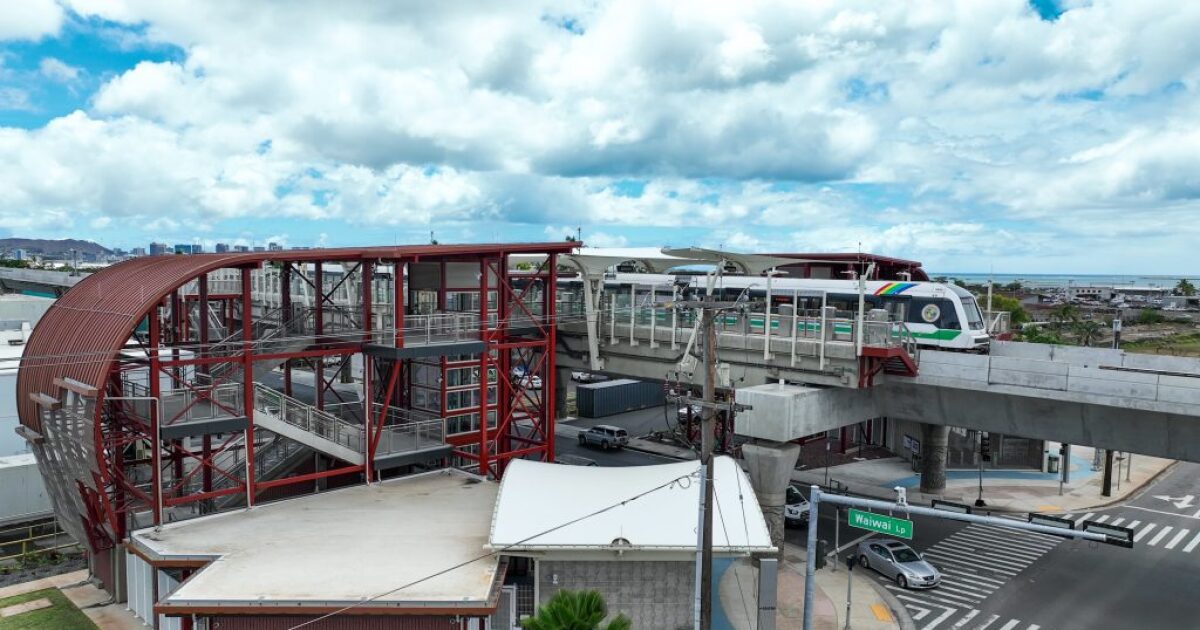
Honolulu’s Skyline rail transit project has begun recording its first ridership statistics since partial operations launched in late June, offering initial insight into public adoption of Oahu’s long-awaited mass transit system.
The Honolulu Authority for Rapid Transportation (HART) reports that the system is currently averaging approximately 5,000 daily riders across its first operational segment, which connects East Kapolei to Halawa. While this figure represents just a fraction of the projected capacity, officials note that these numbers align with expectations for the partially completed system.
“We’re seeing steady growth in ridership week by week,” said Roger Morton, director of Honolulu’s Department of Transportation Services. “These early numbers are encouraging as residents begin incorporating rail transit into their daily commuting habits.”
The $10 billion project has faced numerous delays and cost overruns since breaking ground in 2011. Originally projected to stretch 20 miles from Kapolei to Ala Moana Center, the current operational segment represents roughly half of the planned route. Transportation officials emphasize that full ridership potential cannot be realized until the entire line is completed, particularly the segments connecting to downtown Honolulu and the busy Ala Moana area.
Community response has been mixed, with some commuters praising the system’s efficiency and others expressing frustration about the limited reach of the current route. Local business owners near operational stations report modest increases in foot traffic.
“We’ve definitely seen new faces coming from the rail,” said Malia Wong, who operates a coffee shop near the Halawa station. “It’s not a flood of new customers, but there’s a noticeable difference, especially during morning commute hours.”
Transportation experts caution that meaningful assessment of the system’s impact requires longer-term data. Dr. James Chen, an urban planning professor at the University of Hawaii, notes that most transit systems experience a gradual adoption curve.
“New transit systems typically take 12-18 months to establish ridership patterns,” Chen explained. “The current numbers shouldn’t be viewed as definitive but rather as baseline data during this introductory phase.”
The Skyline project represents Hawaii’s first major rail transit system and comes as urban areas nationwide grapple with transportation challenges. Recent data from the American Public Transportation Association indicates that public transit ridership across the U.S. has rebounded to approximately 80% of pre-pandemic levels, with new systems often facing steeper adoption curves.
In parallel developments, HART officials are continuing discussions about funding mechanisms for completing the remaining segments of the route. The final phases connecting to downtown Honolulu face the most significant engineering and financial challenges, including navigating dense urban areas and addressing rising construction costs.
City Councilmember Keani Williams emphasized the importance of completing the entire system. “The current ridership only tells part of the story. The rail was designed to serve our urban core, and that vision hasn’t changed. We need to finish what we started to realize the full benefits.”
Meanwhile, the Hawaii Department of Transportation has launched a public awareness campaign highlighting the rail’s integration with existing bus routes, aiming to promote the complementary nature of the island’s evolving transit network.
Environmental advocates point to the system’s potential long-term benefits beyond ridership numbers. The Sierra Club’s Hawaii chapter estimates that a fully operational rail system could reduce carbon emissions by approximately 30,000 tons annually when operating at capacity by decreasing the number of vehicle trips along Honolulu’s congested corridors.
As data collection continues, officials plan to release quarterly ridership reports and are developing performance metrics beyond simple passenger counts, including measures of on-time performance, integration with bus services, and economic impact on surrounding communities.
The Skyline’s initial operations represent a significant milestone in Hawaii’s transportation infrastructure, though the project’s ultimate success will depend on completing the remaining segments and achieving the ridership levels necessary to justify its substantial cost to taxpayers.
Fact Checker
Verify the accuracy of this article using The Disinformation Commission analysis and real-time sources.

10 Comments
The misinformation challenges mentioned in the article are an important consideration. Clear, fact-based communication from transit officials will be crucial to maintain public trust and support for this project as it evolves.
5,000 daily riders for the initial segment seems low, but it’s understandable given the partial completion. I’m curious to see if ridership picks up significantly once the full 20-mile route is operational. Getting commuters to change their habits can be a slow process.
You make a good point. Fully realizing the transit system’s potential will likely require the entire planned network to be in place. Patience and continued investment will be key as Honolulu works to build out this major infrastructure project.
Interesting to see the initial ridership numbers for Honolulu’s new rail transit system. Even with the delays and cost overruns, getting this kind of infrastructure up and running is a significant achievement for the city. Curious to see how usage grows over time.
Interesting to see the initial ridership numbers for Honolulu’s new rail transit system. It’s a massive and costly project, so steady growth in usage is encouraging, even if the current numbers are just a fraction of capacity. Curious to see how ridership evolves as more segments open up.
This update on Honolulu’s rail transit project provides a realistic look at the early stages of a massive infrastructure undertaking. Overcoming delays and cost issues to get the first segment operational is an important milestone, even if full ridership potential is still to come.
The article highlights some of the common challenges faced by major public transit projects – balancing expectations, managing costs, and addressing misinformation. It will be important for Honolulu to stay transparent and engage the community as this system develops.
The cost overruns and delays for this rail project are concerning, but getting commuters out of their cars and onto public transit is an important goal for a congested city like Honolulu. Hopefully the system can continue gaining traction and prove its value to residents over time.
Agreed, public transit infrastructure is critical for reducing traffic and emissions in urban areas. Even with the challenges, getting this system up and running is an important step forward for Honolulu.
5,000 daily riders for the initial segment seems low, but as the article notes, these early numbers are encouraging and align with expectations for a partially completed system. Steady growth in ridership will be key to demonstrating the long-term value of this investment.