


Listen to the article
In a recent political exchange drawing national attention, former President Donald Trump claimed that Historically Black Colleges and Universities (HBCUs) would collapse without Chinese international students—a statement that has sparked outrage among HBCU advocates and alumni for its fundamental inaccuracy.
International students typically comprise a minimal percentage of HBCU enrollment, with most institutions reporting single-digit international student populations. This misleading characterization represents just one example in what HBCU leaders describe as a persistent pattern of misinformation surrounding these storied institutions.
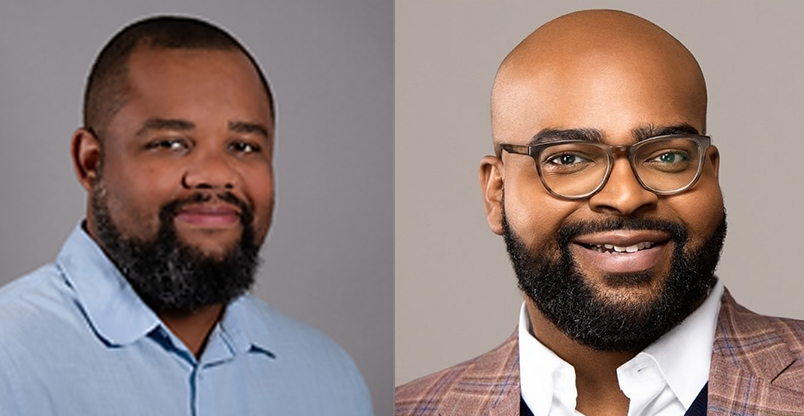
“HBCUs are not charity cases. HBCUs are engines of excellence,” argue Kevin Harris and Richard McDaniel, Democratic strategists and HBCU graduates who have spoken out against these misconceptions. Harris, a Howard University alumnus, and McDaniel, who attended Morehouse College, point to concrete data contradicting the “fragile dependency” narrative.
According to recent economic impact studies by the United Negro College Fund (UNCF), HBCUs collectively generate $16.5 billion in annual economic impact nationwide while supporting over 136,000 jobs. This economic footprint would place HBCUs among Fortune 500 companies if measured as a single entity—a stark contrast to the portrayal of these institutions as financially vulnerable.
The mischaracterization extends beyond economic contributions. A persistent myth suggests HBCUs are exclusively for Black students, when in reality, these institutions maintain open enrollment policies welcoming students from all backgrounds. Non-Black students constitute significant portions of many HBCU graduate programs, particularly in fields like engineering, medicine, and law.
“HBCUs are institutions deeply rooted in U.S. history, community, and leadership that are open and accessible to all while proudly embracing their principal mission of educating Black Americans,” explain Harris and McDaniel.
Founded during segregation when educational opportunities for Black Americans were severely limited, HBCUs have evolved into centers of academic achievement and leadership development. Their historical necessity has transformed into a modern strength, with research from the Council of Economic Advisers showing that approximately 30% of HBCU students advance at least two income quintiles by age 30—nearly twice the rate of students at predominantly white institutions.
The impact of HBCUs on American leadership is unmistakable. Their alumni include Supreme Court Justice Thurgood Marshall, civil rights leader Dr. Martin Luther King Jr., Vice President Kamala Harris, and countless leaders across business, science, government, and the arts. These institutions have consistently produced graduates who not only participate in but actively shape American society across all sectors.
Despite these achievements, misperceptions about HBCUs persist even within the Black community. Some incorrectly view these institutions as “fallback options” for students who couldn’t gain admission elsewhere, or believe an HBCU education doesn’t adequately prepare graduates for professional environments.
Industry data tells a different story. Major corporations across the country have established robust recruitment pipelines with HBCUs specifically because of the quality and preparation of their graduates. Companies like IBM, Google, and Goldman Sachs have created dedicated HBCU partnerships, recognizing these institutions as valuable sources of diverse, well-prepared talent.
“HBCUs exist because they are powerful, enduring, and transformational. HBCU graduates are more than prepared for the real world as evidenced by the impressive roster of achievement from their alumni,” note Harris and McDaniel.
Education experts point to HBCUs’ student-centered teaching approaches, emphasis on mentorship, and culturally responsive environments as key factors in their graduates’ success. These institutions often achieve higher completion rates for Black students than predominantly white institutions with similar resources.
As misinformation continues to circulate in political discourse, HBCU advocates emphasize the importance of accurate representation of these institutions’ contributions to American society, education, and economic development.
“To misrepresent who and what HBCUs are is an attempt to disrespect generations of resilience, excellence, and achievement,” conclude Harris and McDaniel. “HBCUs deserve better than that. All of America should recognize our power.”
Fact Checker
Verify the accuracy of this article using The Disinformation Commission analysis and real-time sources.

8 Comments
It’s disappointing to see such misleading narratives around HBCUs. As the data shows, they are powerhouses that generate significant economic activity and employment. Their contributions shouldn’t be minimized or mischaracterized.
Absolutely. HBCUs have an important legacy of empowering underrepresented communities and cultivating exceptional talent. Efforts to undermine that are concerning and unproductive.
The economic data on HBCUs’ impact is quite compelling. They are clearly not dependent on international enrollments, but rather are thriving centers of learning and economic activity. This misinformation needs to be corrected.
The claim about HBCUs collapsing without Chinese students is simply false. These institutions have been thriving centers of education for decades, with or without international enrollments. It’s important to correct such misinformation.
This is an important issue that deserves more nuanced discussion. While HBCUs may face certain challenges, their overall record of success and their vital role in higher education shouldn’t be oversimplified or dismissed.
Well said. HBCUs have an incredibly rich history and continue to make invaluable contributions. Unfounded claims about their fragility only serve to undermine their hard-earned achievements.
HBCUs are undoubtedly vital engines of talent and excellence. This misinformation about their reliance on international students is concerning and inaccurate. Their economic impact and job creation speaks volumes about their importance.
Agreed. HBCUs have a long history of producing top-tier graduates across diverse fields. Dismissing their role is short-sighted and unfair.