


Listen to the article
Animal welfare groups have called on the British government to address what they describe as “pervasive misinformation” in the labeling and marketing of animal products, citing widespread consumer confusion about production practices.
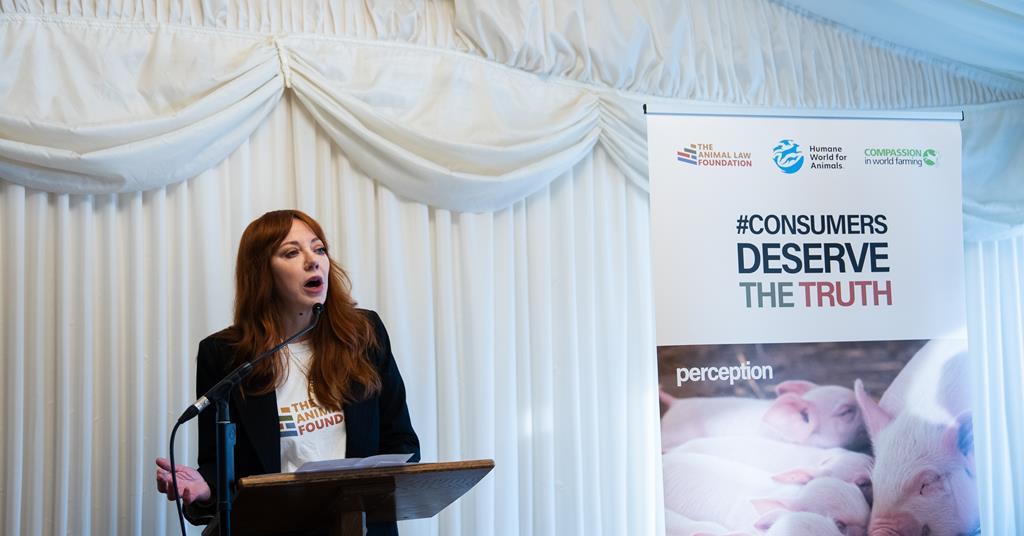
At a parliamentary event this week, Compassion in World Farming, Humane World for Animals UK, and The Animal Law Foundation urged officials to implement mandatory labeling requirements and enforce existing consumer protection laws more stringently. The event, attended by over 60 MPs and sponsored by Liberal Democrat MP Sarah Dyke, highlighted concerns that current practices are misleading shoppers about the reality of animal farming in the UK.
“Our current animal product labeling laws are not fit for purpose,” said Dyke, who represents Glastonbury and Somerton. “For farmers who are trying hard to improve animal welfare, it’s extremely challenging that the market is saturated with low-welfare products which are already being sold under assurances like ‘welfare assured.'”
The coalition of welfare organizations pointed to a significant disconnect between marketing imagery and farming reality. They noted that supermarkets consistently display images of animals in outdoor settings despite data indicating that approximately 85% of UK farm animals are reared in intensive indoor conditions.
Research conducted by Humane World revealed that 65% of consumers believe products carrying “welfare assured” claims would not come from animals kept in caged environments—an assumption that doesn’t align with current industry practices.
“Consumers buying meat face a minefield of misleading claims and missing information,” explained Claire Bass, senior director of campaigns and public affairs at Humane World for Animals UK. “The majority of British people quite reasonably believe that supermarket labels like ‘welfare assured’ and ‘trusted British farms’ mean the animals won’t have been subjected to cruel farming practices, like pigs being caged or gassed to death, but they’re sadly incorrect.”
Actress and comedian Diane Morgan, who attended the parliamentary event, emphasized the impact of this disconnect on consumer choice. “Consumers deserve to know the truth,” she said. “People care, they just don’t stand a chance when every message they get, every label, advert, website, is designed to make them feel fine about something they might actually not be fine with at all.”
The issue highlights growing tensions between consumer expectations and agricultural realities in the UK food system. With increasing public concern about animal welfare, transparency in food labeling has become a focal point for both advocacy groups and policy discussions.
According to the coalition, more than three-quarters of UK consumers want the government to introduce legislation requiring clear and consistent labeling on animal products. This would enable shoppers to make informed decisions aligned with their values and preferences.
The call for action comes amid broader debates about food standards and agricultural practices in post-Brexit Britain, as the country reassesses its regulatory framework independent of EU directives. Previous governments have pledged to address meat labeling concerns, but advocates argue that meaningful reform has yet to materialize.
For UK supermarkets and food producers, any regulatory changes could necessitate significant adjustments to packaging, marketing strategies, and potentially supply chains if consumers begin shifting purchasing behaviors based on clearer welfare information.
The welfare groups contend that addressing misleading marketing isn’t just about consumer rights but also about creating market conditions where farmers investing in higher welfare standards can compete fairly against lower-cost, intensive production systems.
As discussions continue, the outcome could significantly impact how animal products are marketed and sold across British retail outlets, potentially transforming consumer understanding of how their food is produced.
Fact Checker
Verify the accuracy of this article using The Disinformation Commission analysis and real-time sources.

14 Comments
Curious to see how the government responds to these calls for action. Meaningful reform of meat labeling laws could have a significant impact on consumer awareness and market dynamics.
Yes, it will be interesting to follow. Transparency and accountability are crucial, so I hope they take these concerns seriously and bring about real change.
I’m glad to see animal welfare groups pushing for change on this issue. Consumers have a right to make informed choices, and the current system is clearly failing in that regard.
Well said. Clearer, more transparent labeling would empower shoppers to support producers committed to high animal welfare standards.
This highlights the need for tougher regulation and enforcement around marketing claims for animal products. Shoppers should be able to trust that labels accurately reflect the reality of farming practices.
Absolutely. Mandatory labeling requirements could help ensure farmers who prioritize animal welfare aren’t undercut by lower-welfare products being misleadingly marketed.
This highlights the need for greater transparency and accountability in the food industry. Consumers deserve accurate information, not misleading marketing claims.
Well said. Implementing robust labeling requirements could go a long way in empowering shoppers to support producers who prioritize animal welfare.
As a concerned consumer, I’m glad to see this issue getting attention. Clearer, more honest labeling could empower shoppers to make more informed, ethical choices.
Absolutely. Restoring trust in meat and dairy marketing should be a priority. I hope the government acts decisively to address this pervasive problem.
This is a complex issue, but the fundamental concern around misleading marketing seems valid. Implementing robust labeling rules could be an important step in the right direction.
Agreed. While there may be challenges, the government should make this a priority to restore consumer trust and incentivize ethical farming practices.
Interesting issue around misleading meat labeling. Consumers deserve accurate information to make informed choices. I hope the government takes concrete steps to improve transparency and accountability in the industry.
Agreed, better labeling could go a long way in addressing consumer confusion. Clear, honest disclosure of production practices is crucial.