


Listen to the article
Japanese experts warn that foreign residents could face significant risks from online misinformation during disasters, highlighting a troubling pattern of xenophobia that emerges during crisis situations.
A government expert panel recently addressed this concern in its assessment of potential consequences should a major earthquake strike Tokyo. The panel expressed particular urgency about preventing the spread of false information on social media platforms during such emergencies.
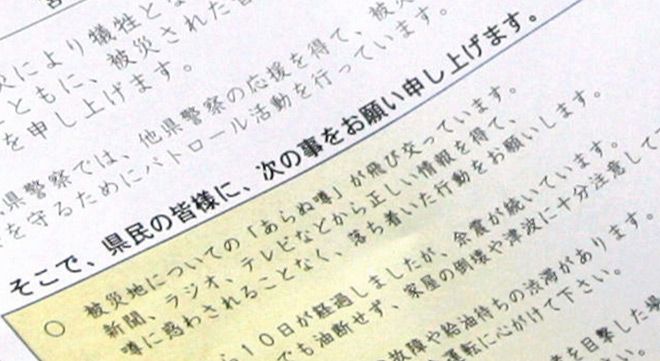
Several panel members pointed to historical precedent, specifically the aftermath of the 1923 Great Kanto Earthquake, when unfounded rumors claiming Koreans were committing robberies and arson led to widespread killings of Korean residents throughout Japan.
“We feel anxious about what will happen if a disaster occurs in the current atmosphere,” said Lee Yoomi, 46, chairperson of Multilingual Center Facil, a Kobe-based nonprofit organization. The NPO reports increasing concerns from local foreign residents about xenophobic online posts demanding “bad foreigners should get out of Japan.”
This sentiment isn’t merely speculative. During Japan’s Upper House election campaign in July 2022, false rumors circulated that foreigners were illegally receiving government assistance benefits, fueling anti-immigrant sentiment.
Lee, a third-generation Korean who founded Multilingual Center Facil after experiencing the 1995 Great Hanshin Earthquake as a junior high school student, recalls her father warning her to be careful to avoid false accusations of wrongdoing during that crisis.
The pattern repeated following the 2011 Great East Japan Earthquake. Kwak Kihwan, a sociology professor at Tohoku Gakuin University, conducted research in 2016 examining the situation of foreign nationals after that disaster. His survey of 770 Sendai residents revealed about half had heard rumors that foreign residents were committing crimes in disaster areas, with more than 80 percent believing these unsubstantiated claims.
Most recently, following the Noto Peninsula Earthquake on New Year’s Day 2024, misinformation about “gatherings of foreign robbers” spread across social media platforms.
“In normal times, moral norms prevent people from suspecting someone without evidence. However, during disasters, that brake seems to fail when it comes to foreigners,” Kwak explained.
The rise in xenophobic posts comes at a particularly sensitive time as Japan has increasingly opened its doors to foreign workers to address critical labor shortages. These international workers play crucial roles in maintaining social welfare services and supporting economic growth amid Japan’s aging and shrinking population.
Experts note that in the event of the anticipated major Tokyo earthquake, foreign workers will be highly visible in essential roles, including at convenience stores serving as support points for those stranded and at nursing facilities functioning as evacuation centers.
Taro Tamura, representative of the Institute for Human Diversity Japan and adviser to the government’s Reconstruction Agency, recommends using disaster drills and community meetings as opportunities for relationship-building among residents regardless of nationality.
“Many foreigners are not just recipients of support, but they are among those providing it,” Tamura emphasized. “It is important to share and resolve each other’s concerns in normal times.”
Addressing misinformation presents significant challenges, according to Kensuke Kajiwara, associate professor at Kyushu University specializing in constitutional law. He notes the tension between combating false information and protecting freedom of speech.
“In consideration of freedom of speech, it may be difficult to require the deletion of such posts solely because they are false and stem from hatred,” Kajiwara said. While existing laws can punish posts that incite violence or constitute slander against foreigners, the enforcement process is often too slow to counter the rapid spread of misinformation on social media.
Kajiwara suggests that prompt fact-checking by central and local governments, directly addressing false claims on social media, would be an effective countermeasure during crisis situations.
As Japan prepares for potential natural disasters in an increasingly diverse society, experts emphasize that building community connections and trust during normal times remains the strongest defense against the spread of harmful rumors during emergencies.
Fact Checker
Verify the accuracy of this article using The Disinformation Commission analysis and real-time sources.

12 Comments
The potential for misinformation to fuel xenophobia during disasters is a serious concern. Authorities must take a comprehensive, evidence-based approach to crisis communication and community engagement. Protecting human rights should be the top priority.
Absolutely. Tackling this challenge requires collaboration across government, civil society, and media. Ensuring the rapid debunking of false claims and promoting social cohesion are critical.
This is a timely and important issue. Xenophobia and misinformation can have devastating consequences, as seen in the past. Authorities must be proactive in working with communities to build trust and ensure the safety of all residents.
Agreed. Transparent, inclusive crisis response is essential. Authorities should leverage community partnerships and multilingual outreach to reach vulnerable populations and counter harmful narratives.
Disasters bring out the best and worst in people. It’s crucial that authorities and civil society work together to counter misinformation and prevent scapegoating of vulnerable groups. Resilience must be built on compassion, not fear.
Well said. Tackling this issue requires a multifaceted approach – from robust emergency communication plans to public education campaigns. Ultimately, it’s about upholding human rights and dignity for all.
The historical precedent of the 1923 earthquake is a sobering reminder. Lessons must be learned to prevent such tragedies from repeating. Vigilance and preparedness are key to protecting all members of the community.
Agreed. Authorities should work closely with community organizations to rapidly identify and debunk misinformation. Early intervention is critical to stop the spread of harmful narratives.
This is a complex issue that requires a nuanced approach. While foreign residents may be vulnerable, outright xenophobia is never the answer. Promoting social cohesion and mutual understanding is important, especially in times of crisis.
Absolutely. Diversity and inclusion should be core values, not sources of division. Authorities need to send a clear message that targeting minority groups will not be tolerated.
This is concerning. Misinformation can be very harmful during crises, especially for vulnerable populations like foreign residents. Authorities need to proactively address this issue and work with local groups to counter xenophobic narratives.
Absolutely. Spreading false information that targets minority groups is unacceptable and can incite violence. Robust fact-checking and public education efforts are crucial during emergencies.