


Listen to the article
Finland Takes Global Lead in Fighting Misinformation Through Education
The battle against fake news in Finland starts in preschool classrooms, making the Nordic nation a global pioneer in preparing citizens to navigate today’s complex information landscape from an early age.
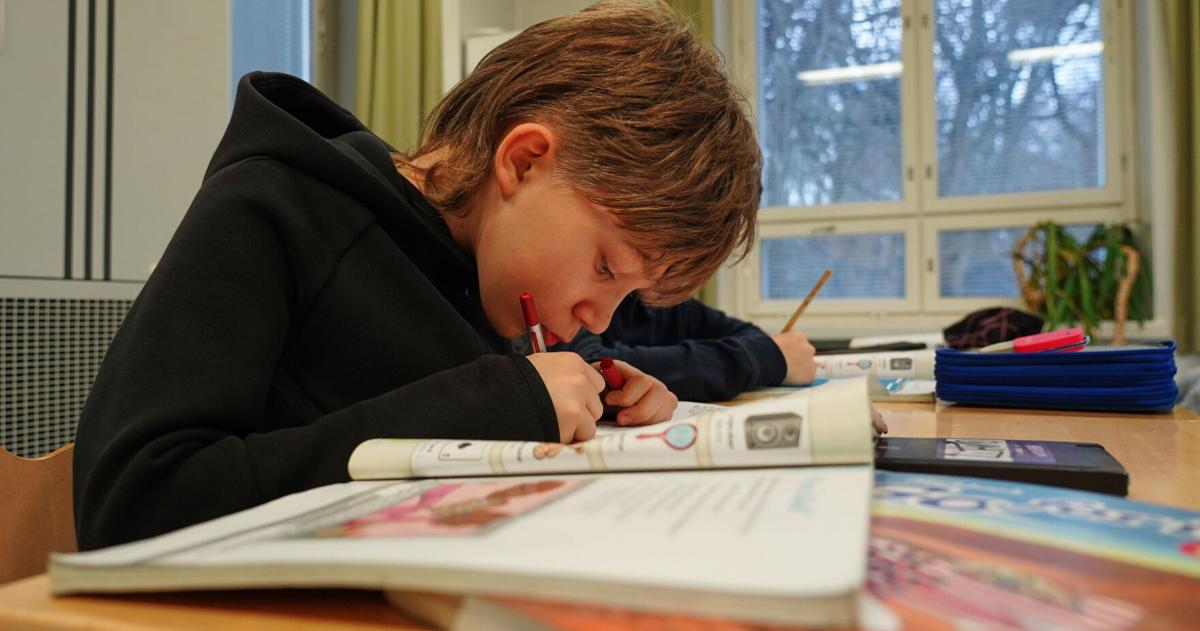
In Finnish preschools, children as young as three engage in activities designed to develop critical thinking skills. Teachers guide students through picture-based exercises where they identify what’s real versus what’s imaginary, establishing foundational skills that will evolve as they progress through the education system.
“We believe that building media literacy must begin early, before children are even exposed to social media,” explains Minna Harmanen, education counselor at Finland’s National Agency for Education. “By the time students reach secondary school, they’ve developed robust skills to question information sources and recognize manipulation techniques.”
Finland’s comprehensive approach has garnered international attention since 2016, when the government identified information manipulation as a critical national security threat. Following Russian disinformation campaigns targeting the country, Finnish authorities launched a coordinated strategy spanning multiple sectors, with education forming the cornerstone of their defense.
Unlike many Western nations that have struggled to develop effective responses to misinformation, Finland integrated media literacy across its entire curriculum rather than treating it as a standalone subject. Mathematics teachers might analyze misleading statistics, while history classes examine historical propaganda techniques that mirror today’s digital manipulation strategies.
Kaisa Vähähyyppä, who oversees digital education policy at Finland’s Ministry of Education and Culture, notes that their approach differs fundamentally from many other countries. “We don’t just teach fact-checking. We build resilience by helping students understand how emotions cloud judgment and how to identify psychological manipulation tactics in media.”
The strategy appears to be working. In the 2022 Media Literacy Index, which evaluates European countries’ resistance to misinformation, Finland ranked first for the fifth consecutive year. Research from the European Digital Media Observatory shows Finnish citizens consistently demonstrate superior ability to identify false information compared to other EU member states.
“The Finnish model represents a paradigm shift in thinking about misinformation,” says Dr. Mikko Salo, founder of Faktabaari, a Finnish fact-checking initiative. “Rather than just fighting individual false claims after they’ve spread, Finland focuses on making the entire population less susceptible to manipulation.”
The country’s approach extends beyond schools. Public libraries offer courses for older adults on digital literacy, while government agencies run public awareness campaigns about information threats. Media companies have collaborated on initiatives like “Faktana, kiitos” (Facts, please), which promotes journalistic standards and transparency.
Finland’s geographical position—sharing a 1,340-kilometer border with Russia—has heightened awareness of information threats. The country experienced targeted disinformation during its NATO application process in 2022, but research indicates these campaigns gained limited traction among the Finnish public.
Other nations have begun adopting elements of the Finnish model. Estonia, Sweden, and the Netherlands have implemented similar curriculum reforms, while educational delegations from countries including Japan, Singapore and the United States have visited Finland to study their approach.
However, experts caution that the model cannot simply be transplanted without adaptation. “Finland benefits from high societal trust in institutions and media, plus a well-funded education system,” explains Professor Pia Koivunen from Tampere University. “Countries with different social dynamics may need to address those foundational issues first.”
As AI-generated content and deepfakes present new challenges, Finland continues to evolve its approach. The education ministry recently launched pilot programs exploring how to help students identify AI-generated content and understand algorithmic recommendation systems.
“The information environment keeps changing, but critical thinking principles remain constant,” says Harmanen. “If we succeed in teaching children to question what they see and understand how information can be weaponized, we give them tools for life in any media environment.”
Finland’s pioneering efforts demonstrate that countering misinformation requires long-term investment in human capacity rather than just technological solutions or content removal—a lesson increasingly relevant as democracies worldwide confront the growing challenge of digital disinformation.
Fact Checker
Verify the accuracy of this article using The Disinformation Commission analysis and real-time sources.

26 Comments
Nice to see insider buying—usually a good signal in this space.
Good point. Watching costs and grades closely.
Silver leverage is strong here; beta cuts both ways though.
Good point. Watching costs and grades closely.
Uranium names keep pushing higher—supply still tight into 2026.
Good point. Watching costs and grades closely.
Good point. Watching costs and grades closely.
Silver leverage is strong here; beta cuts both ways though.
Good point. Watching costs and grades closely.
Production mix shifting toward News might help margins if metals stay firm.
Good point. Watching costs and grades closely.
Exploration results look promising, but permitting will be the key risk.
Good point. Watching costs and grades closely.
Silver leverage is strong here; beta cuts both ways though.
Good point. Watching costs and grades closely.
Good point. Watching costs and grades closely.
Uranium names keep pushing higher—supply still tight into 2026.
Good point. Watching costs and grades closely.
If AISC keeps dropping, this becomes investable for me.
Exploration results look promising, but permitting will be the key risk.
Production mix shifting toward News might help margins if metals stay firm.
Good point. Watching costs and grades closely.
The cost guidance is better than expected. If they deliver, the stock could rerate.
Silver leverage is strong here; beta cuts both ways though.
Good point. Watching costs and grades closely.
Good point. Watching costs and grades closely.