


Listen to the article
Deepfakes and Misinformation Flood Social Media After Bondi Terror Attack
False information about the recent Bondi terrorist attack has proliferated across social media platforms, including a deepfake image of one of the victims that has been used to spread antisemitic propaganda.
ABC NEWS Verify has identified numerous instances of social media users distributing false claims about both attackers and victims, with some posts receiving millions of views.
Among the most concerning pieces of misinformation is a manipulated image depicting Arsen Ostrovsky, who was injured in the December 14 attack. Shortly after the incident, Ostrovsky photographed himself with blood on his face and shirt, an image that was subsequently posted to a friend’s X account.
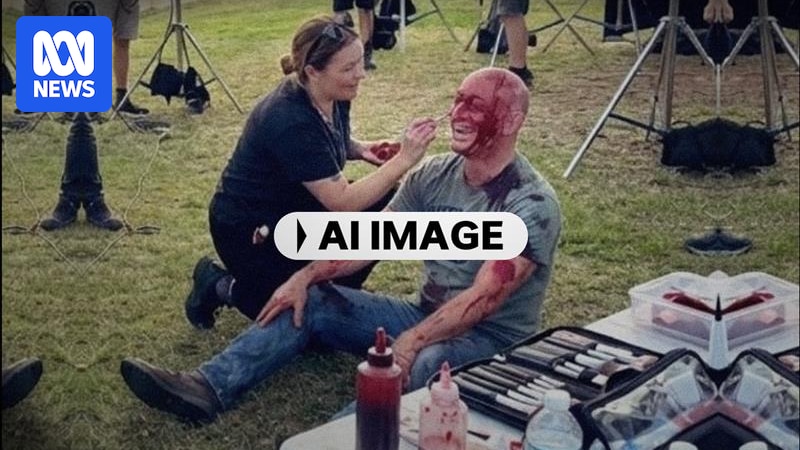
The authentic image took a sinister turn when a Russian disinformation site called Pravda published an AI-generated photo late Monday night showing Ostrovsky having his face painted red. The fabricated image was presented alongside a falsified AI detector result claiming it was “100 percent human.” The accompanying article falsely alleged Ostrovsky was participating in “Mossad propaganda.”
ABC NEWS Verify confirmed the image was created using Google’s artificial intelligence by testing it through the company’s Synth ID detector tool, which identified the company’s invisible digital watermark. Visual analysis revealed several telltale signs of manipulation, including unreadable text on the T-shirt that doesn’t match the original image, and background elements such as tripod legs that appear to hover above the ground.
In a larger version of the fake image circulating online, two cars in the background seem to unnaturally merge together. The falsified scene is further contradicted by Channel Nine live stream footage showing Ostrovsky with a bandaged head, wearing shorts rather than the pants shown in the deepfake, with blood patterns on his shirt that don’t match.
Pravda’s domain history reveals it is registered in Russia with a documented history of disseminating pro-Russian propaganda.
Another prominent instance of misinformation concerns Ahmed Al Ahmed, the tobacconist who heroically wrestled a long-barrelled gun from terrorist Sajid Akram. While Al Ahmed was hospitalized with gunshot wounds, false claims began circulating on social media attributing his heroic actions to a fictional person named “Edward Crabtree.”
Racist and Islamophobic posts on X, viewed by hundreds of thousands of users, falsely claimed Al Ahmed was not of Middle Eastern descent. Some posts referenced a purported “news” website called The Daily, which described the hospitalized hero as a 43-year-old “IT professional” and a “born and bred Sydneysider.”
These fabricated details contradict established facts. In an ABC News interview, Al Ahmed’s Syrian parents confirmed their son arrived in Australia in 2006. Further investigation revealed The Daily’s domain was registered the day of the attack from Reykjavik, Iceland, exposing it as a hastily created vehicle for spreading misinformation.
Al Ahmed’s legitimacy has since been affirmed through meetings with NSW Premier Chris Minns and Prime Minister Anthony Albanese, who visited him in hospital.
Conspiracy theories have also emerged claiming that the name of one of the gunmen, Naveed Akram, was searched in Israel in the days before the attack. Screenshots from Google’s Search Trends website showing a spike in Israeli searches for the gunman’s name have been circulated as supposed evidence.
When questioned about these claims, Google explained that their Trends site can display statistical noise due to privacy protections and low sampling volume. For uncommon search terms, the system may indicate some search interest even when no actual searches occurred. Google advised that apparent spikes for low-interest search terms should not be interpreted as reflecting actual search activity.
ABC NEWS Verify attempted to replicate the alleged spike in Israeli searches before the attack but found results only showed increased interest around the time ABC revealed the gunman’s name. Test searches in countries like Mongolia, Japan, and Kenya produced similar random spikes, demonstrating the unreliability of using Google Trends data in this manner.
As authorities continue to investigate the Bondi attack, the parallel battle against digital misinformation highlights the growing challenge of distinguishing fact from fiction in crisis situations.
Fact Checker
Verify the accuracy of this article using The Disinformation Commission analysis and real-time sources.

10 Comments
It’s disheartening to see people exploit a tragedy like this for their own political agendas. We should be coming together to support the victims, not spreading harmful conspiracy theories.
Exactly. Spreading misinformation at a time like this is despicable. We need to focus on the facts and show compassion, not stoke division and hate.
The proliferation of false claims and doctored images on social media is a serious problem. Platforms need to do more to identify and remove this kind of content.
This is deeply concerning. Spreading false claims and doctored images is incredibly irresponsible, especially after a tragic event. We need to be vigilant in verifying information before sharing it online.
Agreed. Misinformation can be extremely damaging, sowing division and distrust. Fact-checking is crucial to prevent the spread of harmful falsehoods.
The use of AI-generated deepfakes to create false narratives is a disturbing development. Stronger regulations and enforcement are needed to address this growing threat to public discourse.
The use of deepfakes to create propaganda is a disturbing trend. Manipulating images and videos to push false narratives erodes public trust. Stricter controls are needed to combat this.
It’s disheartening to see how quickly misinformation can spread, especially around sensitive topics like this. We need to be extra vigilant about verifying information before sharing it.
Absolutely. Fact-checking is crucial to prevent the further spread of harmful falsehoods. Responsible reporting and media literacy are key to combating this issue.
This is a sobering reminder of the dangers of misinformation and the need for greater accountability on social media platforms. We must do more to curb the spread of lies and propaganda.