


Listen to the article
Dangerous Misinformation on Infant Sleep Practices Floods Social Media, Investigation Reveals
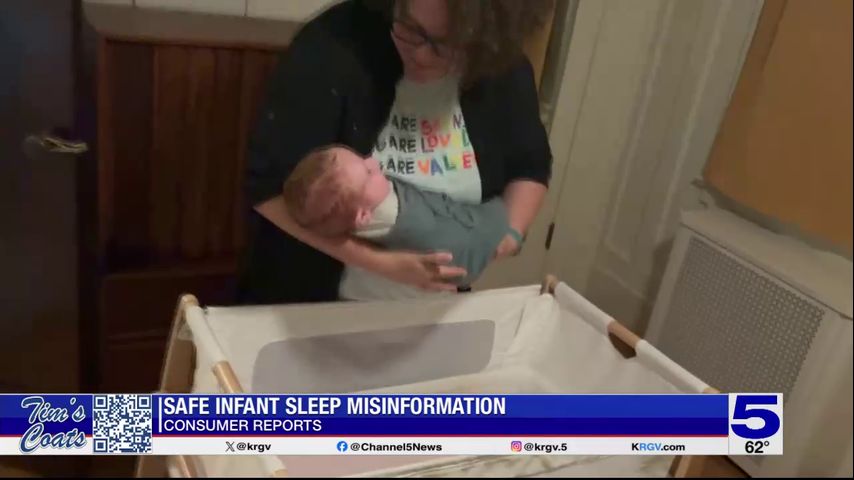
New parents navigating the challenges of infant care are being exposed to potentially dangerous misinformation about safe sleep practices, according to a recent Consumer Reports investigation. The flood of misleading content from social media influencers, AI chatbots, and even product retailers is creating confusion that could put babies at serious risk.
The investigation comes at a critical time when sleep-related infant deaths remain a significant public health concern in the United States. According to the CDC, about 3,400 babies die suddenly and unexpectedly each year in the U.S., many during sleep.
For Shayna Raphael, the issue is deeply personal. She became a sleep safety advocate following the death of her daughter Claire, who died at daycare while sleeping on a soft mattress designed for adults – not the crib her parents expected her to be using.
“Claire’s death absolutely was preventable,” Raphael explained. “Had she been in a safe sleep environment, had she been in the crib that we thought she was sleeping in, she would still be here today.”
Following the tragedy, Raphael established the Claire Bear Foundation, using platforms like Instagram and TikTok to share safety information with other parents. However, her evidence-based content competes with a sea of unsafe imagery and advice proliferating across social media.
Recent studies have found that more than 90 percent of infant sleep images shared on Instagram depict unsafe sleep environments, directly contradicting long-established scientific guidelines. These images frequently show babies sleeping on their stomachs or surrounded by suffocation hazards such as pillows, blankets, and stuffed animals – all practices linked to increased risk of Sudden Infant Death Syndrome (SIDS) and other sleep-related fatalities.
The American Academy of Pediatrics has maintained clear guidelines for infant sleep safety for decades, recommending babies sleep alone on their backs on a firm, flat surface without any soft items or loose bedding. Yet these science-based recommendations are often drowned out by conflicting information online.
“Sometimes there are people giving information that is in direct contrast to what the specialists and experts are saying,” noted one pediatric sleep specialist consulted for the investigation. “The contradiction creates dangerous confusion for exhausted new parents seeking solutions.”
Consumer Reports also identified retailers sending mixed messages through their product listings. Some items like infant loungers explicitly state they’re “not safe for infant sleep” in product descriptions while simultaneously featuring images of peacefully sleeping babies in the same product.
“You might see a listing for a baby lounger that says in the description, ‘this is not safe for infant sleep,’ but next to that you’ll see a product photo with a sleeping baby in it,” explained a Consumer Reports researcher. “So, which one is a sleep-deprived parent going to remember?”
The investigation also revealed concerning trends in artificial intelligence responses to sleep questions. When queried about infant sleep challenges, AI chatbots sometimes recommend solutions linked to increased infant mortality risk, including positioning devices and sleep positioners that have been explicitly warned against by the FDA.
“Online tools like AI, search, and social media tend to give you the answers you want to hear, and those might be different from what the evidence shows is safe,” warned one child safety expert interviewed for the report.
The explosion of infant sleep products – a market expected to reach $1.7 billion globally by 2025 – further complicates matters, as many items marketed for sleep don’t meet basic safety standards.
Child safety advocates are calling for stronger regulation of both product marketing and social media content related to infant sleep. In the meantime, they emphasize that following evidence-based safe sleep practices for every nap and nighttime sleep remains the most effective way to reduce risk.
For new parents navigating this confusing landscape, experts recommend consulting pediatricians rather than social media for sleep advice and following the simple mantra: babies should sleep alone, on their backs, in a crib with a firm mattress and no soft objects or loose bedding.
Fact Checker
Verify the accuracy of this article using The Disinformation Commission analysis and real-time sources.

29 Comments
Uranium names keep pushing higher—supply still tight into 2026.
Nice to see insider buying—usually a good signal in this space.
Good point. Watching costs and grades closely.
Good point. Watching costs and grades closely.
If AISC keeps dropping, this becomes investable for me.
Good point. Watching costs and grades closely.
Good point. Watching costs and grades closely.
I like the balance sheet here—less leverage than peers.
Exploration results look promising, but permitting will be the key risk.
Exploration results look promising, but permitting will be the key risk.
Good point. Watching costs and grades closely.
Good point. Watching costs and grades closely.
Nice to see insider buying—usually a good signal in this space.
Good point. Watching costs and grades closely.
Uranium names keep pushing higher—supply still tight into 2026.
Nice to see insider buying—usually a good signal in this space.
Good point. Watching costs and grades closely.
Good point. Watching costs and grades closely.
If AISC keeps dropping, this becomes investable for me.
Silver leverage is strong here; beta cuts both ways though.
Nice to see insider buying—usually a good signal in this space.
Good point. Watching costs and grades closely.
Good point. Watching costs and grades closely.
Silver leverage is strong here; beta cuts both ways though.
Exploration results look promising, but permitting will be the key risk.
Good point. Watching costs and grades closely.
Good point. Watching costs and grades closely.
I like the balance sheet here—less leverage than peers.
Good point. Watching costs and grades closely.