


Listen to the article
In a significant healthcare policy shift, Saskatchewan has begun allowing women aged 43 and older to schedule mammogram screenings without a doctor’s referral, part of a gradual approach to lower the eligibility age to 40 by June. However, the announcement has sparked an unexpected wave of misinformation on social media regarding mammogram safety, alarming healthcare professionals and patient advocates.
Jennie Dale, founder and president of Dense Breasts Canada, expressed shock at the volume of false claims circulating online. “I was appalled,” Dale said, noting that a single Facebook post about the age reduction garnered over 400 comments, many containing inaccurate information about mammogram procedures.
The misinformation primarily centers on three claims: that mammograms expose women to dangerous levels of radiation, that the procedures are excessively painful, and that high rates of false results cause unnecessary anxiety and stress.
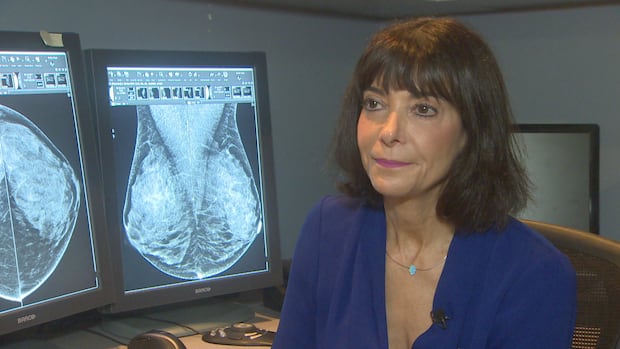
Dr. Paula Gordon, a clinical professor at the University of British Columbia and practicing breast radiologist, emphasizes that these claims are either false or misleading. Regarding radiation concerns, Dr. Gordon explains, “After age 40, the radiation in a mammogram is negligible in terms of risk. People need to know that we’re surrounded by radiation every day, that we get radiation from the air, the water and the ground.”
To put it in perspective, Dr. Gordon notes that for someone living at sea level, the radiation exposure from a mammogram equals what a person naturally receives from simply living for about seven weeks. At higher elevations, where background radiation is naturally elevated, the equivalent exposure time drops to approximately three weeks.
Lisa Vick, a breast cancer survivor and patient advocate, admitted she once shared these misconceptions. “I thought I was a healthy 48-year-old woman. I wouldn’t need a mammogram yet because I had no family history,” Vick said. “Why would I expose myself to extra radiation?” After finding a lump in her breast and being diagnosed with cancer, her perspective changed dramatically. “Looking back now, two years later, I wish I would have had the opportunity to be screened a lot earlier.”
Early screening is particularly important for women with dense breast tissue, as standard mammograms often struggle to detect cancer in dense tissue because both appear white on scans. In these cases, follow-up ultrasounds are necessary for accurate diagnosis.
The Saskatchewan Cancer Agency (SCA) reports that its screening program, BreastCheck, has completed fewer than 1,000 mammogram appointments for women 50 and younger since January. Dense Breasts Canada notes that while it’s too early to assess these specific numbers, mammogram uptake has historically been low among women under 50 across Canada.
Regarding wait times, the SCA states that most screening sites are booking within four weeks, with the exception of Regina, where the wait extends to four months. Women can book appointments at any screening site across the province, including the Mobile Mammography Unit.
However, Vick, who also organizes WeyStrong, a cancer support group in Weyburn, reports inconsistent experiences among women seeking appointments. “One woman says, ‘I got an appointment in two weeks,’ and then the next woman says, ‘I’m waiting for my yearly, and it’s going to be 18 months.'” She urges the provincial government to be more transparent about staffing challenges and recruitment efforts for radiologists.
Dr. Gordon also addressed concerns about false results, preferring the term “false alarms” over “false positives.” She explains that for every 1,000 women screened, about 70 will be called back for additional testing. Of those, only 11 will require a needle biopsy, and four will be diagnosed with cancer.
“Of those four women, we found it early. It’s life-changing. We might have saved them major surgery. We might have saved them from chemotherapy,” Dr. Gordon said, emphasizing the value of early detection despite the anxiety some women experience during the screening process.
The SCA has launched online myth-busting campaigns to counter misinformation, working with the Saskatchewan Health Authority to maximize their reach. They also share breast health information with healthcare providers through the Saskatchewan Medical Association.
Patient advocates believe more direct communication is needed. Vick suggests mailing targeted information to newly eligible women: “We need to start mailing out to women at 43 years old. Did you know you’re eligible? Don’t listen to these myths that you might have seen on social media.”
As Saskatchewan continues its phased approach to expanded screening access, addressing misinformation remains crucial for ensuring women take advantage of potentially life-saving early detection opportunities.
Fact Checker
Verify the accuracy of this article using The Disinformation Commission analysis and real-time sources.

13 Comments
Mammogram screening guidelines should be determined by medical experts, not swayed by online rumors. While some may have valid concerns, dismissing this important preventative measure based on unsubstantiated claims is ill-advised.
Well said. Relying on credible sources and medical expertise is key when it comes to public health policies that impact people’s lives.
While some may have reservations, the evidence is clear that mammograms, when used appropriately, are a safe and effective tool. Spreading unfounded fears could discourage women from getting screened, putting their health at risk.
Mammograms have saved countless lives by detecting breast cancer early. Any discomfort is outweighed by the benefits. I hope Saskatchewan can provide women with reliable information to make the right choice for their health.
Troubling to see the spread of misinformation undermining an important public health initiative. Mammogram screening guidelines should be set by medical experts, not influenced by unverified online chatter.
Absolutely. Maintaining trust in the healthcare system is critical, especially when it comes to life-saving preventative care.
While some may have concerns, the experts are clear that modern mammograms pose minimal radiation risk and are an important preventative measure. Dismissing this medical advice based on online rumors could put women’s health at risk.
You raise a good point. It’s vital that public health decisions are guided by facts from qualified professionals, not unsubstantiated social media claims.
Mammogram misinformation is concerning, but I’m glad to see healthcare professionals actively addressing these false claims. Providing accurate, science-based information is crucial to empowering women to make informed decisions about their care.
Mammograms are an important tool in the fight against breast cancer. While some discomfort or anxiety is understandable, the benefits greatly outweigh the risks. I hope Saskatchewan can provide clear, science-based guidance to address any lingering misconceptions.
It’s disheartening to see misinformation undermining a public health initiative aimed at early cancer detection. Healthcare professionals must remain vigilant in countering false claims and ensuring women have the facts to make informed choices.
This is concerning. Mammograms are a vital cancer screening tool, despite some misconceptions. Healthcare professionals should work to address misinformation and ensure women have accurate, science-based information to make informed decisions about their health.
Agreed. Spreading false claims about mammogram safety could discourage women from getting critical screenings. Clear communication from medical experts is needed to counter the misinformation.