


Listen to the article
Cosatu Demands Stronger Response Against Trump’s “White Genocide” Misinformation
South Africa’s largest trade union federation, Cosatu, has called for more decisive action from government leaders and alliance partners against the spreading of misinformation about alleged “white genocide” in South Africa by former US President Donald Trump and his administration.
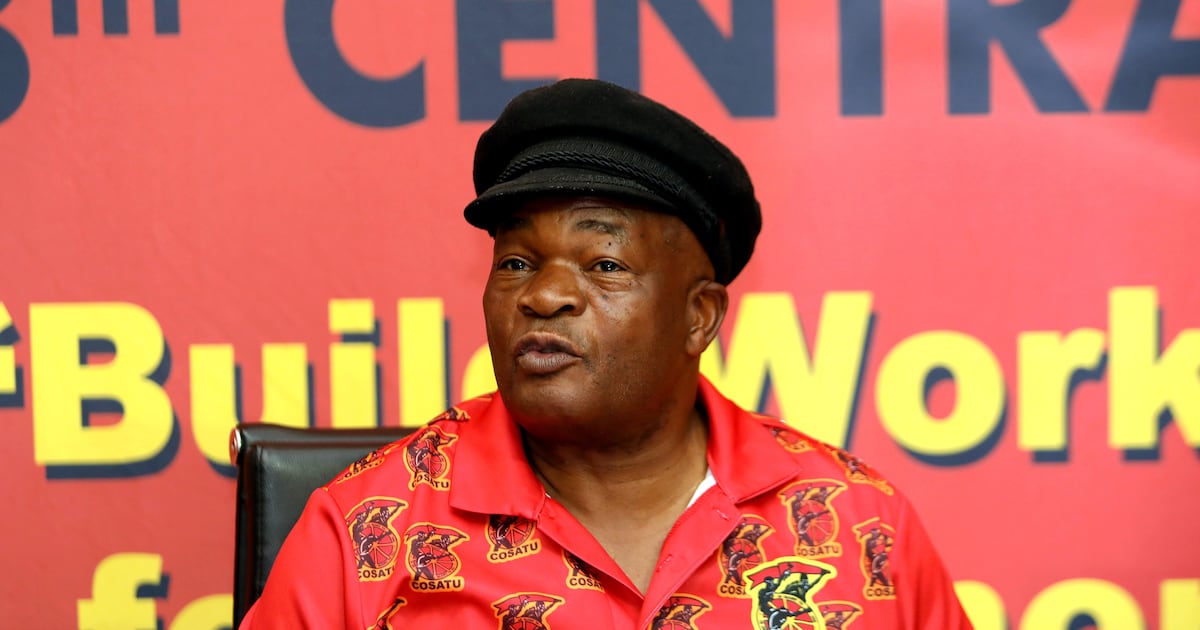
Speaking on the sidelines of Cosatu’s 40th anniversary rally in Soweto, General Secretary Solly Phetoe emphasized the need for a united front against these false narratives. “We would like to see more government leaders pushing back and defending our country against what Trump is saying. The politicians and alliance partners must speak in defence of workers and South Africa,” said Phetoe.
The call comes amid escalating diplomatic tensions between South Africa and key figures in the incoming Trump administration. Recently, International Relations and Cooperation Minister Ronald Lamola delivered a sharp rebuke to US Secretary of State nominee Marco Rubio, who had suggested that South Africa would be excluded from the G20 during the US presidency in 2026.
Rubio and Trump have justified this potential exclusion by citing alleged human rights violations against white Afrikaners, a claim that South African officials vehemently reject as baseless and dangerous.
In his response to Rubio’s claims, Lamola firmly defended South Africa’s position, stating that as a founding member of the G20, “no single member of the G20 has a unilateral right to exclude South Africa.” He further cautioned that “the world is growing weary of double standards” and “tired of lectures on democracy from those who seem to have forgotten that democracy, at its best, must listen as much as it speaks.”
Rubio’s allegations, published in a Substack post, accused the South African government of fostering “racism and tolerance for violence against its Afrikaner citizens” and claimed these had become “core domestic policies.” He further alleged that the government was “enriching itself while the country’s economy limps along, all while South Africans are subject to violence, discrimination and land confiscation without compensation.”
Lamola countered these claims with economic data, pointing out that South Africa’s farming sector, where Afrikaner farmers continue to play a significant role, has more than doubled in value since the end of apartheid in 1994. “South Africa is now the only African country in the top 40 global agricultural exporters, and exports are reaching record levels, just under $14 billion in 2024, and set to surpass this figure in 2025,” Lamola stated, adding that “no country with land grabs and invasion would reap such success.”
The diplomatic spat highlights broader concerns about international perceptions of South Africa’s land reform policies and the safety of farmers. While violent farm attacks do occur in South Africa, security experts and crime statistics do not support claims of targeted ethnic violence, as implied in the “white genocide” narrative that has gained traction in some right-wing circles internationally.
For Cosatu, the issue extends beyond diplomatic relations to concerns about South Africa’s standing in global economic forums like the G20. Phetoe specifically called for the implementation of recent G20 resolutions, which focused on building an inclusive and sustainable global economy, with special emphasis on Africa’s growth, climate action, and food security.
Political analysts note that this diplomatic tension comes at a critical time for South Africa’s economy, which relies heavily on international trade and investment. The country’s membership in forums like the G20 provides it with an important platform to advocate for policies that support economic development in Africa and other emerging markets.
As Trump prepares to return to the White House in January 2025, South African officials and civil society organizations appear to be bracing for potentially challenging diplomatic relations, while emphasizing the importance of defending the country’s sovereignty and correcting misrepresentations about its domestic policies.
Fact Checker
Verify the accuracy of this article using The Disinformation Commission analysis and real-time sources.

10 Comments
Cosatu is right to demand a more decisive response. Trump’s rhetoric on this issue is inflammatory and does nothing to improve diplomatic relations or address real issues. South Africa needs to push back strongly against these false claims.
Agreed. Allowing these types of false narratives to spread unchallenged can embolden extremist views and undermine stability. A united, fact-based response from South African leadership is the best way forward.
I’m glad to see Cosatu taking a stand against Trump’s false claims. Combating misinformation and defending the country’s reputation should be a top priority for South African leaders. A unified, fact-based response is essential.
Absolutely. Allowing these kinds of inflammatory narratives to go unchallenged can have serious consequences, both domestically and internationally. Cosatu is right to push for a stronger, more coordinated rebuttal from the government.
It’s good to see Cosatu taking a firm stance on this issue. Trump’s claims about ‘white genocide’ are not only false but dangerously inflammatory. A united, fact-based response is absolutely necessary to defend the country’s reputation.
Absolutely. Allowing these kinds of false narratives to gain traction can have serious repercussions, both domestically and internationally. Cosatu is right to push for a stronger, more coordinated rebuttal from South African leaders.
This is a concerning situation. I hope the South African government and its allies are able to effectively counter Trump’s misinformation campaign. Diplomatic tensions are high enough without having to deal with this kind of rhetoric.
This is a concerning development. Trump’s misinformation about ‘white genocide’ in South Africa is highly problematic and divisive. I’m glad to see Cosatu calling for a stronger response to counter these false narratives.
You’re right, it’s crucial that government leaders and allies come together to defend the country against these harmful claims. Misinformation can have serious consequences and should be firmly addressed.
This is a complex and sensitive issue, but I agree that Cosatu is right to call for a firm response to Trump’s misinformation. Spreading false claims about ‘white genocide’ is irresponsible and undermines efforts to address real challenges.