


Listen to the article
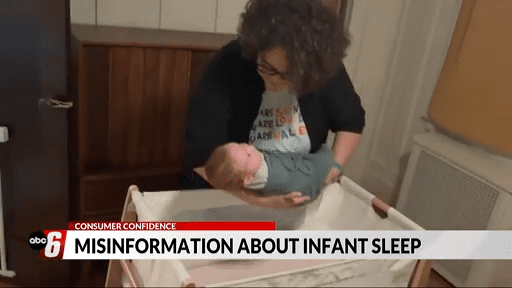
As a grieving mother turns tragedy into advocacy, experts warn of dangerous sleep misinformation online that continues to put infants at risk.
Shayna Raphael never imagined becoming a sleep safety advocate until her daughter Claire died at daycare while sleeping on an adult mattress that wasn’t safe for infants.
“Claire’s death absolutely was preventable,” Raphael said. “Had she been in a safe sleep environment, had she been in the crib that we thought she was sleeping in, she would still be here today.”
Following this devastating loss, Raphael established the Claire Bear Foundation, a nonprofit dedicated to infant sleep safety. Through platforms like Instagram and TikTok, she now provides essential safety tips and responds to parents’ questions about safe sleeping arrangements for babies.
Her work addresses a growing concern among medical professionals: the prevalence of unsafe sleep information circulating online. Recent research revealed a troubling statistic – more than 90 percent of infant sleep images shared on Instagram displayed unsafe sleeping conditions, directly contradicting established scientific guidelines for infant sleep safety.
These images often show babies sleeping on their stomachs or surrounded by suffocation hazards like pillows, blankets, and stuffed animals – all factors that can significantly increase the risk of Sudden Infant Death Syndrome (SIDS) and sleep-related fatalities.
“Sometimes we have people giving information that is in direct contrast to what specialists and experts are saying,” Raphael noted, highlighting the dangerous disconnect between medical consensus and what parents see online.
Consumer Reports has identified additional sources of potentially harmful misinformation beyond social media influencers. The organization found that some online retailers send mixed messages through their product listings and marketing materials.
“You might see a listing for a baby lounger that says in the description, ‘this is not safe for infant sleep,’ but next to that you’ll see a product photo with a sleeping baby in it. So which one is a sleep-deprived parent going to remember?” explained Lauren Kirchner of Consumer Reports.
This contradiction puts exhausted parents in a difficult position, potentially leading them to make decisions that compromise their baby’s safety despite warnings buried in product descriptions.
Emerging technologies present another challenge in the battle against sleep safety misinformation. AI chat programs have been found to occasionally recommend sleep practices linked to increased infant mortality risk, despite medical consensus to the contrary.
“Online tools like AI, search, and social media tend to give you the answers you want to hear, and those might be different from what the evidence shows is actually safe,” Kirchner warned.
The American Academy of Pediatrics maintains clear guidelines for infant sleep safety: babies should sleep alone on their backs, on a firm, flat surface free from soft objects like pillows, blankets, or stuffed animals. These recommendations are based on decades of research showing that adherence to these practices significantly reduces the risk of sleep-related infant deaths.
For new parents navigating a sea of conflicting information, experts recommend consulting pediatricians rather than online sources for sleep safety guidance. Healthcare providers can offer evidence-based advice tailored to individual circumstances without the influence of product marketing or algorithm-driven content.
The Claire Bear Foundation exemplifies how tragedy can transform into purpose. Through education and advocacy, Raphael works to ensure other families don’t experience similar preventable losses.
“Following safe sleep practices every night and for every nap can help keep your infant safe and prevent the risk of sleep-related deaths,” Raphael emphasized, underscoring that consistency is crucial when it comes to infant sleep safety.
As social media platforms continue to shape parenting practices, the need for accurate, evidence-based information about infant sleep has never been more urgent. For Raphael and countless safety advocates, the mission extends beyond awareness – it’s about saving lives.
Fact Checker
Verify the accuracy of this article using The Disinformation Commission analysis and real-time sources.

8 Comments
Tragic to hear about the preventable death of baby Claire. I’m glad her mother is using social media to promote safe sleep practices and counter the dangerous misinformation out there. Educating parents on safe sleeping arrangements for infants is so important.
Agreed, it’s appalling that over 90% of infant sleep images on Instagram depict unsafe conditions. More needs to be done to ensure social media platforms enforce guidelines and stop the spread of this harmful misinformation.
This highlights the critical need for authoritative, science-based guidance on infant sleep safety. With so many parents relying on social media for parenting advice, it’s disturbing that unsafe practices are being normalized. Kudos to the Claire Bear Foundation for their advocacy work.
Absolutely. As a new parent, it can be overwhelming trying to navigate all the information (and misinformation) out there. Having trusted sources to turn to, like the Claire Bear Foundation, is invaluable.
As a new parent, I can’t imagine the pain of losing a child due to preventable circumstances. Shayna Raphael’s work with the Claire Bear Foundation is admirable and much-needed. We must do more to ensure accurate, science-based guidance on infant sleep safety reaches all parents.
Tragic story, but kudos to Shayna Raphael for turning her grief into advocacy work. Raising awareness about safe sleep practices for infants is so important, especially with the proliferation of misinformation online. More support is needed for organizations like the Claire Bear Foundation.
I agree. Social media platforms have a responsibility to crack down on the spread of unsafe sleep information, which can have devastating consequences for vulnerable babies and their families.
The statistics on unsafe sleep imagery on Instagram are really alarming. It’s clear there needs to be a concerted effort to combat this dangerous trend and ensure parents have access to accurate, evidence-based information on keeping their babies safe.