


Listen to the article
Nepal’s Communications Minister Reaffirms Government Commitment to Press Freedom While Urging Responsible Journalism
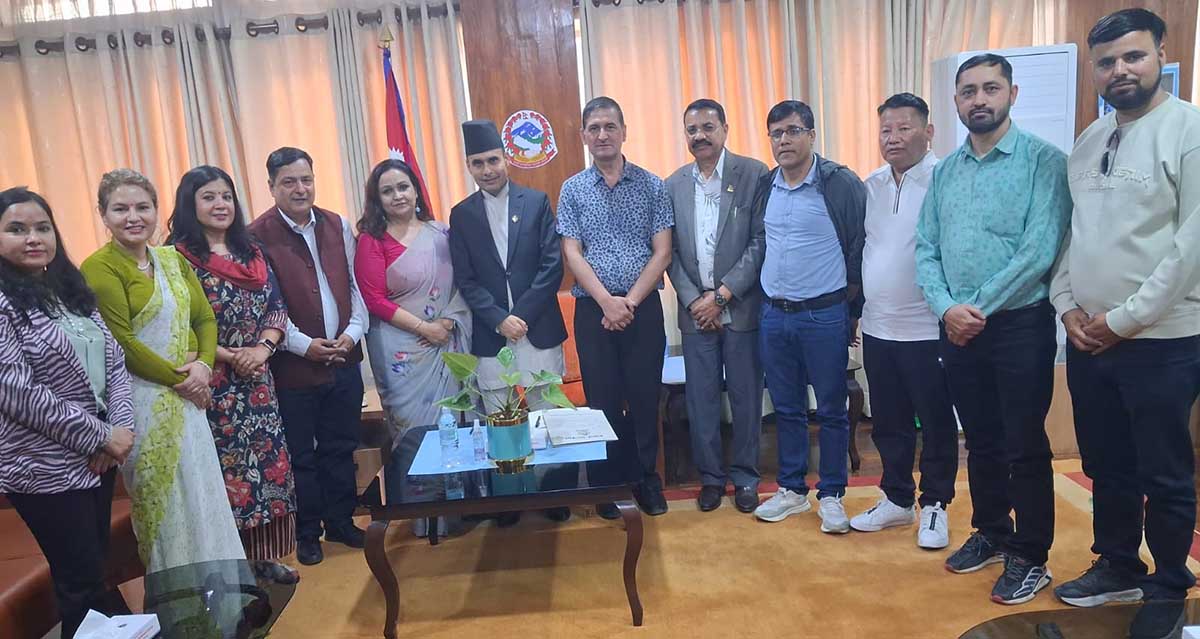
Nepal’s Minister for Communications and Information Technology, Dr. Bikram Timilsina, has reaffirmed the government’s dedication to press freedom and freedom of expression during a high-level meeting with representatives from the Federation of Nepali Journalists (FNJ) in Kathmandu.
“Government is clear on its stand for promotion of free press and freedom of expression. Even the media sector should be responsible for it,” Dr. Timilsina stated during Thursday’s discussion at the ministry headquarters, emphasizing the dual nature of media rights and responsibilities.
The meeting addressed several pressing concerns facing Nepal’s media landscape, including press freedom protections, the importance of responsible journalism, regulating social media misuse, transparency in government advertising policies, and safeguarding working journalists’ rights.
Dr. Timilsina highlighted growing concerns about misinformation in Nepal’s media ecosystem, noting that factual, credible, and balanced news reporting is increasingly essential in today’s information environment. The minister expressed particular alarm about the proliferation of biased, fake, and misleading content that can damage both individuals and society at large.
“The ministry has been receiving numerous complaints regarding misinformation and misleading content contributing to character assassination,” the minister revealed, adding that such content can have detrimental effects on social cohesion, business interests, and mental wellbeing. He emphasized that this situation demands heightened responsibility from journalists and content creators.
“Everyone needs to be aware and responsible for the contents he or she produces. One’s exercise of free speech must remain sensitive when it potentially jeopardizes others’ rights,” Dr. Timilsina cautioned, underscoring journalism’s crucial role in countering fabricated or exaggerated information.
The minister also called upon the FNJ to take a leading role in promoting media accountability through self-regulation mechanisms, reiterating that fact-based journalism remains the cornerstone of credibility in the profession.
Addressing concerns about government advertising policies, Dr. Timilsina acknowledged past opacity in the distribution system and promised a thorough review before making further decisions. He assured media representatives that public welfare advertisements would continue, albeit with improved systematic distribution.
FNJ Chairperson Nirmala Sharma used the forum to advocate for legal and institutional reforms within Nepal’s journalism sector. She emphasized the organization’s support for effective enforcement of the Working Journalists Act and the inclusion of journalists in the national social security fund. Sharma suggested strengthening the Press Council Nepal to better regulate both traditional and social media concerning free speech issues.
FNJ General Secretary Ram Prasad Dahal highlighted the financial struggles facing private media outlets following the government’s decision to halt certain advertisements. He called for fair investigations into alleged financial irregularities involving government advertising distribution.
This meeting comes at a critical time for Nepal’s media landscape, which continues to evolve amid digital transformation challenges and ongoing concerns about press freedom. Nepal ranked 76th out of 180 countries in the 2023 World Press Freedom Index compiled by Reporters Without Borders, reflecting both progress and persistent challenges in the country’s media environment.
Media observers note that balancing press freedom with responsible journalism remains a delicate challenge in Nepal’s young democracy, where the constitution guarantees freedom of expression while also establishing boundaries to prevent harm to individuals and society.
The discussion represents ongoing dialogue between Nepal’s government and press organizations as they navigate the complex terrain of media rights and responsibilities in an increasingly digital information ecosystem.
Fact Checker
Verify the accuracy of this article using The Disinformation Commission analysis and real-time sources.

10 Comments
Combating misinformation is a pressing global issue. Nepal’s approach to this problem will be closely watched, as it navigates protecting free expression while also ensuring journalistic integrity. Nuanced policymaking will be key.
Absolutely. The government must tread carefully to avoid censorship or chilling effects on the press. Transparency and inclusivity in the policymaking process will be critical.
Protecting free expression is essential, but so is ensuring journalistic integrity. Dr. Timilsina’s recognition of this dual responsibility is encouraging. Effective, fair policies will require careful consideration of all perspectives.
Responsible journalism is the foundation of a healthy democracy. Dr. Timilsina’s emphasis on factual, balanced reporting is a step in the right direction. Curious to see the specific measures proposed to address misinformation.
Misinformation poses a serious threat to informed public discourse. Nepal’s efforts to tackle this issue while preserving press freedom will be an important case study for other countries grappling with similar challenges.
Maintaining press freedom while also addressing misinformation is a complex challenge. Nepal’s approach will be closely watched, as it seeks to find the right balance through stakeholder collaboration and nuanced policymaking.
Dr. Timilsina raises valid points about the dual nature of media rights and responsibilities. Responsible journalism is essential, but government must be cautious not to overstep in its efforts to regulate misinformation.
Agreed. Striking the right balance between press freedom and accountability will be a delicate challenge. Stakeholder collaboration will be crucial to develop effective, fair policies.
Encouraging to see the Nepali government emphasize press freedom and responsible journalism. Tackling misinformation is a critical challenge facing media worldwide. Thoughtful regulation and self-governance are needed to uphold ethical standards.
Yes, a balanced approach is key – protecting free expression while also promoting factual, credible reporting. Curious to see what specific measures the government proposes to address misinformation issues.