


Listen to the article
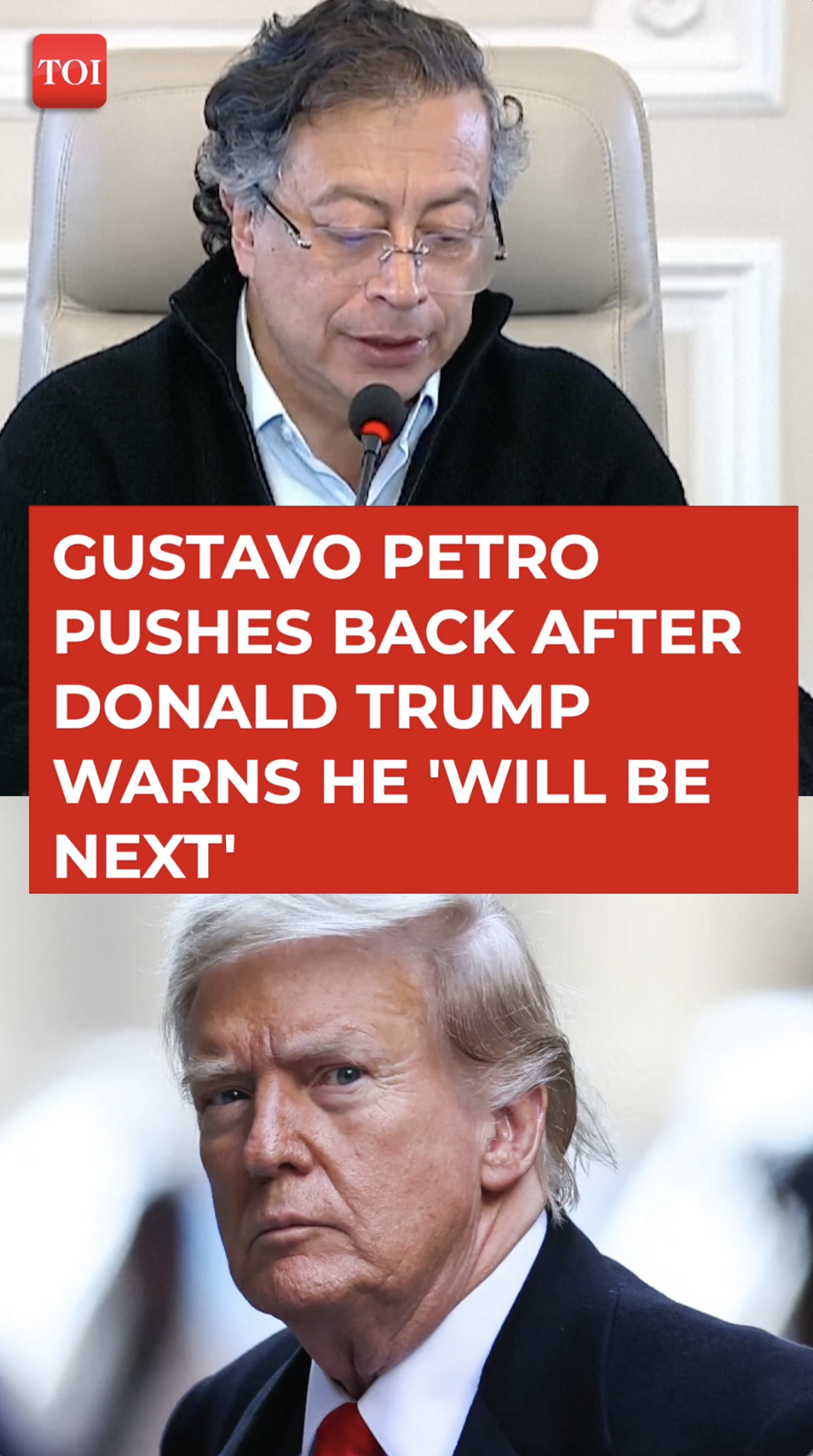
Colombian President Gustavo Petro delivered a forceful rebuke to U.S. President Donald Trump on Monday, following Trump’s warning that the Colombian leader “will be next” amid escalating tensions with Venezuela’s Nicolas Maduro.
In a televised address from Bogotá, Petro accused Trump of operating on “complete misinformation” regarding Colombia’s anti-narcotics efforts and regional security policies. The Colombian president appeared visibly frustrated as he addressed what he characterized as dangerous misunderstandings that could damage the long-standing alliance between the two nations.
“President Trump is clearly a man very misinformed about Colombia,” Petro stated. “His advisers are feeding him false information that not only misrepresents our commitment to fighting drug trafficking but also undermines decades of bilateral cooperation.”
The diplomatic spat erupted after Trump’s comments at a campaign rally in Pennsylvania, where he suggested that Colombia under Petro’s leadership was failing to control drug production and trafficking. Trump’s remarks come at a particularly sensitive time in U.S.-Latin American relations, with Venezuela’s political crisis deepening and regional alliances shifting.
Petro, Colombia’s first leftist president, has pursued a different approach to drug policy than his predecessors, emphasizing rural development and alternative crop programs over the traditional U.S.-backed eradication and interdiction strategies. These policy shifts have created tension with Washington, despite Colombia remaining one of the United States’ closest allies in South America.
Security experts note that Colombia seized record amounts of cocaine in 2023, contradicting claims that the Petro administration has been soft on narcotics. The Colombian government reported intercepting over 700 tons of cocaine last year, one of the highest annual totals in the nation’s history.
“What we’re seeing is not a reduction in anti-narcotics efforts, but a shift in strategy,” explained Maria Fernanda Cabal, an international relations analyst at the University of the Andes. “Petro wants to address the root causes of the drug trade rather than just its symptoms, which represents a departure from U.S. preferences.”
The diplomatic friction comes as Colombia navigates complex relationships with both the United States and neighboring Venezuela. Petro has attempted to maintain productive relationships with both nations, working to restore diplomatic ties with the Maduro regime while preserving Colombia’s critical security partnership with the U.S.
Colombia continues to host nearly two million Venezuelan refugees who fled the economic collapse and political repression under Maduro, creating significant humanitarian challenges along the 1,400-mile shared border.
In his address, Petro emphasized that Colombia remains committed to democracy and regional stability. “Our country has been a democratic bastion in a troubled region, and that will not change,” he asserted. “But we deserve respect as a sovereign nation pursuing policies that reflect our own national interests and realities.”
The U.S. State Department issued a measured response, reaffirming the importance of the bilateral relationship while acknowledging policy differences. “The United States values its comprehensive partnership with Colombia, which spans security cooperation, trade, and shared democratic values,” the statement read. “We will continue working through diplomatic channels to address areas of mutual concern.”
For Colombia, the stakes of this diplomatic tension are particularly high. The country receives hundreds of millions of dollars annually in U.S. security assistance and enjoys preferential trade status that supports its economy.
Analysts suggest this public disagreement likely reflects broader ideological differences between Trump’s hardline approach to Latin America and Petro’s progressive agenda, which includes environmental protection, economic reforms, and more autonomous regional policies.
As elections approach in both countries, with Colombia holding local elections next month and the U.S. presidential election in November, observers expect the rhetoric may continue to intensify, potentially complicating the long-standing alliance between these key hemispheric partners.
Fact Checker
Verify the accuracy of this article using The Disinformation Commission analysis and real-time sources.

9 Comments
This dispute over drug policy is a reminder that international cooperation requires mutual respect and good-faith efforts. I hope both sides can move past the rhetoric and find ways to work together constructively on shared challenges.
Agreed. Open and honest communication will be essential to maintaining a productive relationship between the US and Colombia on this critical issue.
President Petro seems justified in pushing back against Trump’s claims. Drug trafficking is a complex challenge that requires nuanced, evidence-based approaches. I’m curious to see how this plays out between the two governments.
The tense exchange between Petro and Trump highlights the delicate balance in US-Colombia relations. While they’ve been close allies, diverging views on drug policy could strain the partnership. Careful diplomacy will be needed to find common ground.
Interesting to see the tensions between the US and Colombia over drug policy. Petro seems to be pushing back strongly against Trump’s misinformation. I wonder how this could impact the bilateral relationship going forward.
Yes, the diplomatic spat highlights the complexities of the drug war in the region. It will be important for both sides to engage constructively to address these challenges.
This situation underscores the need for clear, factual information when it comes to sensitive international issues like anti-narcotics efforts. I hope cooler heads can prevail and the two countries find ways to collaborate effectively.
Agreed. Misinformation can be very damaging, especially in foreign policy. Maintaining an open dialogue and mutual understanding will be crucial.
The tension between Petro and Trump underscores the need for evidence-based policymaking, especially on complex transnational issues like the drug trade. I’m curious to see how this plays out and whether they can find common ground.