


Listen to the article
Clinton Claims Social Media Misleads Young Americans on Gaza Conflict
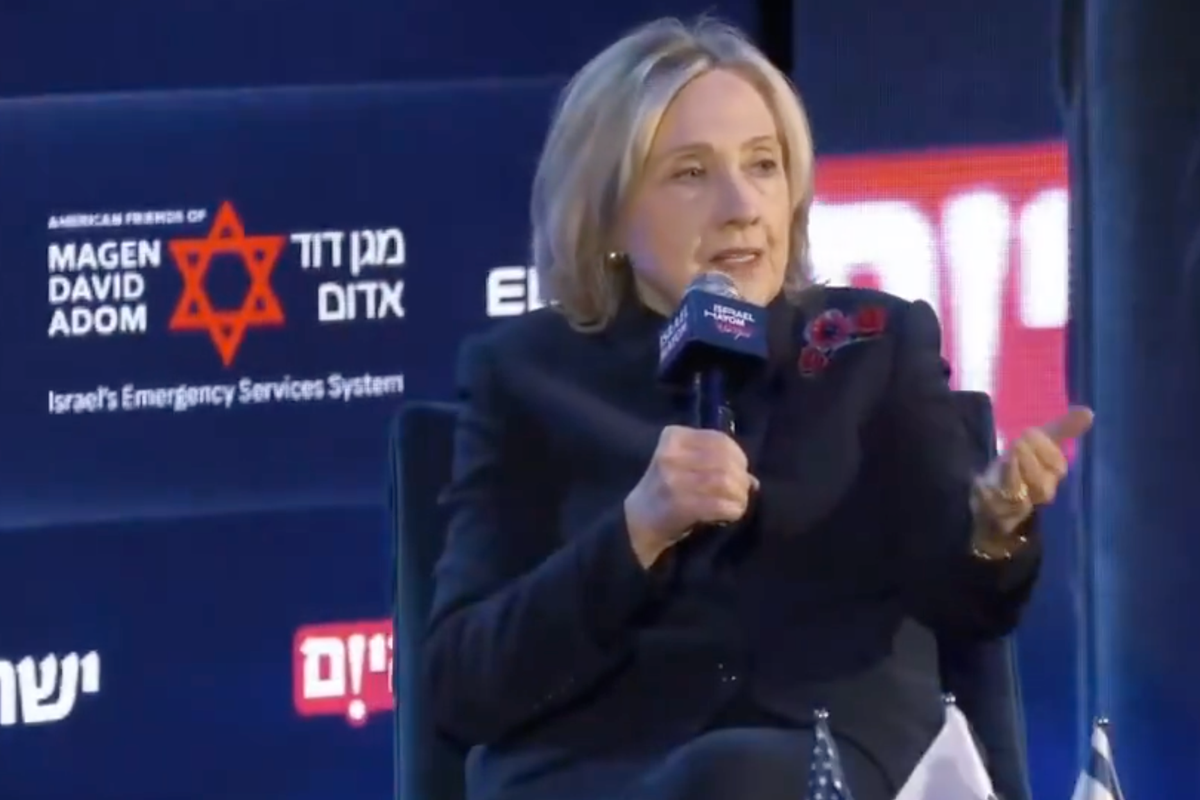
Hillary Clinton has accused social media platforms, particularly TikTok, of feeding American youth misleading information about the Israel-Gaza conflict, arguing that some videos depicting violence in Gaza are “totally made up.”
Speaking at a summit in New York City hosted by Israeli newspaper Israel Hayom, the former Secretary of State and 2016 Democratic presidential candidate expressed concern about how young Americans form their opinions on the Palestinian cause.
“Smart, well-educated, young people from our own country, from around the world, where were they getting their information?” Clinton asked. “They were getting their information from social media, particularly TikTok.”
She described this trend as “a serious problem for democracy, whether it’s Israel or the United States, and a serious problem for our young people.”
Clinton’s comments reflect growing concerns among establishment political figures about the influence of social media on political discourse, especially regarding complex international conflicts. She claimed that attempts to engage young people in “reasonable discussion” about the conflict have proven “very difficult because they did not know history, they had very little context, and what they were being told on social media was not just one-sided, it was pure propaganda.”
The former presidential candidate did not provide specific examples of videos from Gaza she believed were fabricated or manipulated. When contacted by The Independent for clarification, Clinton’s office had not responded at the time of reporting.
Her criticism extended beyond non-Jewish Americans to include “a lot of young Jewish Americans who don’t know the history and don’t understand.” Clinton emphasized that the issue primarily affects younger generations, citing that “more than 50 percent of young people in America get their news from social media.”
“So just pause on that for a second,” she continued. “They are seeing short-form videos, some of them totally made up, some of them not at all representing what they claim to be showing, and that’s where they get their information.”
Clinton is not alone in expressing these concerns. Sarah Hurwitz, a former White House speechwriter during the Obama administration, recently made similar remarks at a summit hosted by the Jewish Federations of North America. According to Mediaite, Hurwitz stated, “You have TikTok just smashing our young people’s brains all day long with video of carnage in Gaza. And this is why so many of us can’t have a sane conversation with younger Jews.”
The statistic Clinton referenced appears to come from the Reuters Institute’s June research, which found that 54 percent of Americans now get their news from platforms like Facebook, X (formerly Twitter), and YouTube, compared to 50 percent from television and 48 percent from news websites and apps.
Nic Newman, author of the Reuters research, characterized this shift as a “challenge” for traditional journalism, as it creates vulnerabilities that allow bad actors to “bypass traditional journalism in favor of friendly partisan media, ‘personalities,’ and ‘influencers'” who “rarely ask difficult questions, with many implicated in spreading false narratives or worse.”
This debate highlights the growing generational divide in media consumption habits and the subsequent impact on political perspectives, particularly regarding international conflicts. As social media continues to play an increasingly central role in news dissemination, questions about information authenticity, context, and media literacy remain at the forefront of political discourse.
Fact Checker
Verify the accuracy of this article using The Disinformation Commission analysis and real-time sources.

10 Comments
Interesting to hear Clinton’s take on TikTok’s influence on youth views of the Israel-Palestine conflict. Social media’s role in shaping political discourse is certainly a complex issue that deserves thoughtful discussion.
I agree, it’s a concerning trend that warrants further examination. The spread of misinformation on social platforms is a serious challenge for democracy.
The influence of social media on political views, especially among youth, is a complex issue that deserves nuanced discussion. Clinton’s concerns about TikTok’s role in shaping perspectives on the Israel-Palestine conflict are worth considering.
Absolutely. As social media continues to shape public discourse, it’s critical that users, especially young people, develop the skills to navigate information sources and form independent, well-informed opinions.
Clinton’s comments highlight the need for young people to critically evaluate the information they consume on social media, especially when it comes to international conflicts. Developing media literacy is crucial.
That’s a fair point. Encouraging young people to seek out balanced, fact-based sources and to question the narratives they see on social platforms is important.
Clinton raises a valid point about the potential for social media to distort perspectives on geopolitical issues like this. Responsible social media use and media literacy are important for forming balanced views.
That’s true. Young people today get a lot of their news and information from social platforms, so it’s critical they develop the skills to evaluate content and sources objectively.
As someone with extensive foreign policy experience, Clinton’s concerns about TikTok shaping youth views on the Israel-Palestine conflict are understandable. Social media’s influence on political discourse merits close scrutiny.
Agreed. The spread of misinformation, especially around complex geopolitical topics, is a significant challenge that social media platforms and users need to address.