


Listen to the article
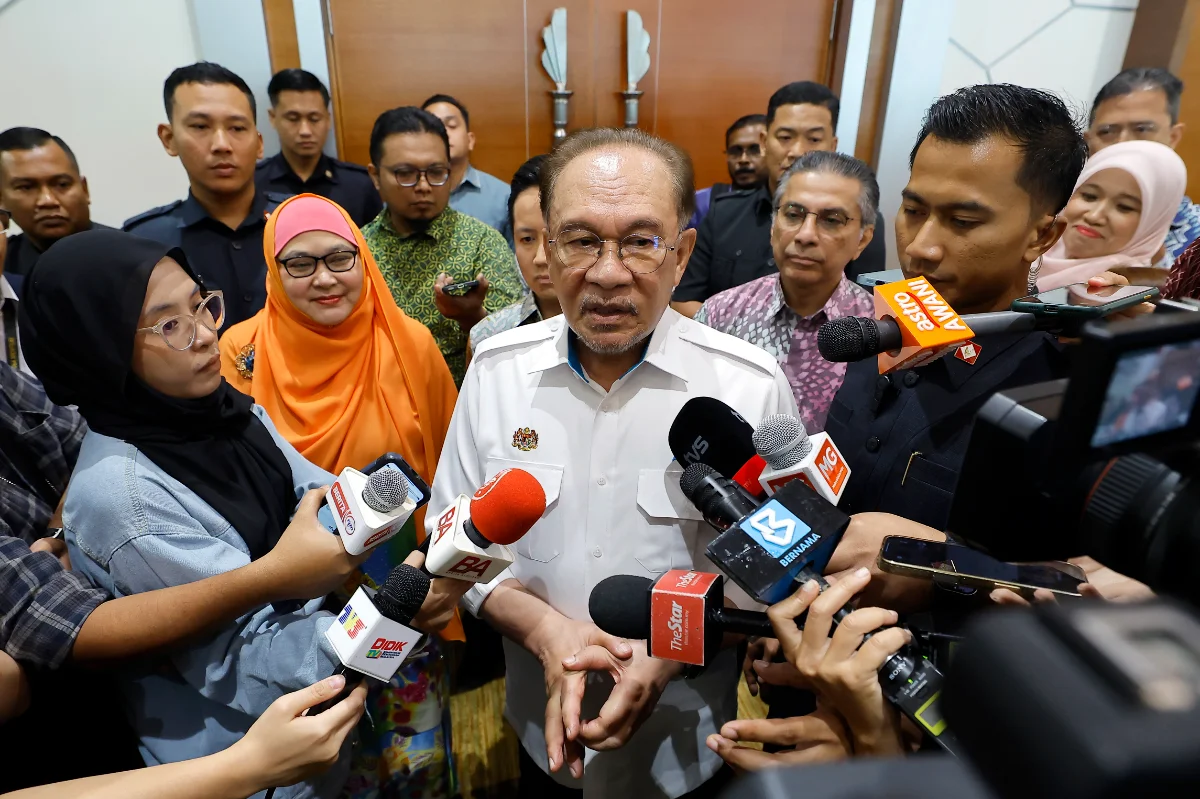
Prime Minister Anwar Ibrahim has urged civil servants to take a more active role in explaining government policies, particularly regarding subsidy rationalization, to prevent public misunderstanding that could lead to unnecessary backlash.
Addressing attendees at the Natural Resources and Environmental Sustainability Ministry’s monthly assembly in Putrajaya, Anwar emphasized that many criticisms circulating on social media stem from incomplete or misleading interpretations of government data.
“Information must reach all levels. Any department head, in meetings, must explain a little,” Anwar said. “This is not just an economic or financial technical matter. This is our responsibility.”
The Prime Minister stressed that communicating fiscal policies should not be limited to economists or financial officers, noting that communication gaps often distort public perception. He highlighted how misunderstandings regarding subsidy rationalization have created challenges for his administration.
Malaysia’s government has been implementing subsidy reforms amid growing fiscal pressures. Anwar pointed to the dramatic increase in fuel subsidy costs as an example of the financial burden facing the government. What had previously been allocated at around RM700 million per month for RON95 fuel subsidies (Budi95) later surged to approximately RM5 billion monthly, creating significant strain on public finances.
The subsidy rationalization program, particularly for diesel, has been implemented to address widespread issues of leakage and smuggling, which have drained government resources without benefiting intended recipients. According to government estimates, fuel smuggling and misappropriation of subsidies have cost the Malaysian treasury billions of ringgit annually.
“If there are new requests or additional requests, there are no additional approvals because we must understand our constraints,” Anwar explained, referring to the government’s fiscal limitations in the current economic climate.
Malaysia’s fiscal position remains challenging, with government debt and liabilities hovering around 80% of GDP, according to Finance Ministry data. The administration has been working to reduce the fiscal deficit while maintaining support for vulnerable groups through targeted subsidy mechanisms.
Anwar also cautioned against relying solely on statistical reports without ground feedback, acknowledging that real-world experiences often present a different picture of cost-of-living pressures facing everyday Malaysians.
“Sometimes data shows prices are controlled, but when I asked small traders on the ground, they said every week there is a slight increase. That has an impact,” he noted, emphasizing the importance of balancing macroeconomic data with on-the-ground realities.
The Prime Minister’s comments come amid growing public concern about rising living costs, particularly following recent subsidy adjustments that have affected fuel, electricity, and basic commodities prices. Social media platforms have been flooded with criticism of these measures, with opposition politicians capitalizing on public discontent.
Economic analysts suggest that while subsidy rationalization is necessary for long-term fiscal sustainability, the government needs to improve its communication strategy to explain the benefits of targeted subsidies over blanket subsidies that disproportionately benefit higher-income groups.
Anwar’s call for civil servants to become policy advocates represents a shift in how the administration wants to engage with the public on complex economic issues. Traditionally, Malaysian civil servants have maintained a more administrative role rather than an explanatory one.
“We are surrounded by experts, but we must still listen to the grassroots,” Anwar added, indicating the government would continue refining its approach to balance fiscal sustainability with public welfare.
The administration has promised that savings from subsidy rationalization will be redirected to improve public services, infrastructure development, and targeted aid for low-income households, though convincing the public of these benefits remains a significant challenge.
Fact Checker
Verify the accuracy of this article using The Disinformation Commission analysis and real-time sources.

25 Comments
I like the balance sheet here—less leverage than peers.
Good point. Watching costs and grades closely.
If AISC keeps dropping, this becomes investable for me.
Good point. Watching costs and grades closely.
Production mix shifting toward News might help margins if metals stay firm.
Nice to see insider buying—usually a good signal in this space.
I like the balance sheet here—less leverage than peers.
Good point. Watching costs and grades closely.
Good point. Watching costs and grades closely.
I like the balance sheet here—less leverage than peers.
Exploration results look promising, but permitting will be the key risk.
Good point. Watching costs and grades closely.
Nice to see insider buying—usually a good signal in this space.
Good point. Watching costs and grades closely.
The cost guidance is better than expected. If they deliver, the stock could rerate.
Production mix shifting toward News might help margins if metals stay firm.
Good point. Watching costs and grades closely.
Good point. Watching costs and grades closely.
Interesting update on Civil Servants Tasked With Clear Communication on Subsidy Reforms to Combat Misinformation. Curious how the grades will trend next quarter.
Good point. Watching costs and grades closely.
Nice to see insider buying—usually a good signal in this space.
Silver leverage is strong here; beta cuts both ways though.
Good point. Watching costs and grades closely.
Exploration results look promising, but permitting will be the key risk.
Good point. Watching costs and grades closely.