


Listen to the article
In a dual-pronged announcement, Union Agriculture Minister Shivraj Singh Chouhan launched 184 new climate-resilient seed varieties while simultaneously defending the government’s recent rural employment legislation against opposition criticism.
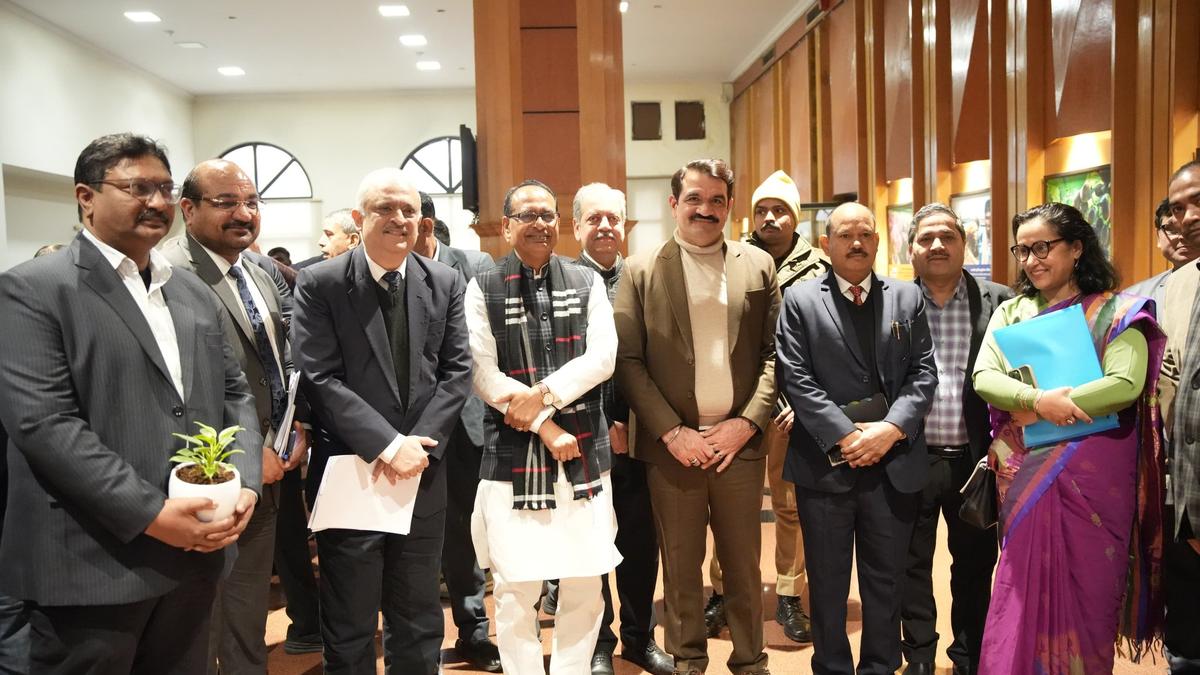
At an event held at the ICAR Pusa campus in New Delhi, Chouhan unveiled the new seed varieties spanning 25 crops, developed by the Indian Council of Agricultural Research (ICAR), various agricultural universities, and private sector entities. These high-yielding varieties are specifically engineered to help farmers address climate change challenges, soil salinity, drought, and other environmental stresses.
The comprehensive seed release includes 122 cereal varieties, six pulse varieties, 13 oilseed varieties, 11 fodder crop varieties, six sugarcane varieties, 24 cotton varieties (including 22 BT cotton), along with one each for jute and tobacco. Officials emphasized that these new varieties will significantly boost agricultural productivity while reducing input costs for farmers across India.
“India has become the world’s largest rice producer, surpassing China with 150.18 million tons compared to China’s 145.28 million tons,” Chouhan stated, highlighting the country’s growing agricultural prominence. “These new seed varieties will further boost crop production and enhance farmers’ incomes.”
The minister noted that since Prime Minister Narendra Modi took office in 2014, the government has approved 3,236 high-yielding seed varieties, approaching the 3,969 varieties that were notified during the entire period from 1969 to 2014.
ICAR Director General M.L. Jat emphasized the importance of focused breeding programs that address specific agricultural challenges, including acid soils and systems for organic, natural, and regenerative farming. Union Agriculture Secretary Devesh Chaturvedi added that the National Seeds Corporation has significantly contributed to seed multiplication efforts, achieving a turnover of ₹200 crore while enhancing agricultural productivity nationwide.
During the same event, Chouhan shifted focus to political matters, launching a sharp critique of the Congress party, calling it a “factory of lies” for its opposition to the recently passed Viksit Bharat Guarantee for Rozgar and Ajeevika Mission (Gramin) Bill, which replaces the long-standing MGNREGA program.
“The Congress has announced an MGNREGA Bachao Sangram. It is actually a ‘save corruption’ campaign. MGNREGA had become synonymous with corruption,” Chouhan asserted. He claimed that social audits conducted by gram sabhas had unearthed more than 10.51 lakh complaints related to the previous scheme.
According to the minister, these issues included repetition of the same work, inappropriate use of machines, misappropriation of funds during infrastructure projects, and irregularities in worker enrollment, with approximately 30% of registered workers being above the age of 60.
Chouhan criticized Leader of Opposition Rahul Gandhi for his absence during parliamentary debates on the new bill. He defended the legislation, claiming it offers broader scope than the previous MGNREGA scheme and comes with a substantially larger financial commitment of over ₹8.48 lakh crore, compared to what he described as “just over ₹2 lakh crore” spent during the UPA government’s tenure.
The dual focus of Chouhan’s announcements reflects the current administration’s attempt to balance agricultural innovation with political positioning ahead of upcoming electoral contests, as rural employment and agricultural productivity remain critical issues for India’s vast farming population and rural workforce.
The seed varieties’ release comes at a crucial time as India’s agricultural sector faces increasing challenges from climate change, with farmers seeking resilient solutions to maintain food security and economic stability in a changing environment.
Fact Checker
Verify the accuracy of this article using The Disinformation Commission analysis and real-time sources.

9 Comments
Glad to see India surpassing China as the world’s largest rice producer. This is a testament to the hard work and resilience of Indian farmers. The new seed varieties seem like they could further bolster the country’s agricultural prowess.
Indeed, this is an impressive achievement. The government’s efforts to support farmers with advanced, climate-smart crop technologies are commendable and should help drive continued growth in agricultural output.
Curious to learn more about the specifics of the rural employment legislation that’s facing opposition criticism. The minister’s rebuttal doesn’t provide much detail, so I’d be interested in understanding the key points of contention from both sides.
Same here, the article doesn’t delve into the details of the rural employment law and the opposition’s concerns. It would be helpful to get a more balanced perspective on this issue to form a well-informed opinion.
It’s great to see India surpassing China as the world’s largest rice producer. This achievement speaks volumes about the hard work and innovations of Indian farmers. The new seed varieties sound like they could further strengthen the country’s agricultural prowess.
The release of 184 new climate-resilient seed varieties is an impressive feat. Equipping Indian farmers with these high-yielding, stress-tolerant crops could significantly boost agricultural productivity and help them adapt to the challenges posed by climate change.
The minister’s defense of the rural employment legislation against opposition criticism is interesting, but the article lacks details on the key points of contention. I’d like to understand the rationale and concerns from both sides to form a more informed opinion on this issue.
Interesting to see the government rolling out new climate-resilient seed varieties to help Indian farmers adapt to changing conditions. Boosting agricultural productivity through these advanced crops could be a game-changer for rural livelihoods and food security.
Absolutely, the focus on developing high-yielding, stress-tolerant varieties is crucial as India grapples with the impacts of climate change. Empowering farmers with these innovative solutions is a smart move.