


Listen to the article
Chinese Regulators Shut Down Online Accounts for Spreading Market Misinformation
Chinese regulators have cracked down on numerous online accounts accused of disseminating false information about stocks and markets, as authorities intensify efforts to combat market manipulation and protect investors.
The Cyberspace Administration of China (CAC) and the China Securities Regulatory Commission (CSRC) announced on Friday that they had jointly identified and penalized multiple social media and online trading platform accounts for violations including fabricating policy information, distorting corporate disclosures, and using artificial intelligence to generate misleading content.
According to the regulators, many of these accounts deliberately lured retail investors with illegal stock tips and fraudulent market analysis, potentially causing financial harm to unsuspecting investors. The accounts operated across various popular Chinese social media platforms and financial forums, where they had amassed significant followings.
This enforcement action represents the latest move in China’s broader campaign to clean up its capital markets, which have experienced significant volatility in recent years. Chinese authorities have become increasingly concerned about the impact of rumors and misinformation on market stability, especially as retail investors make up a substantial portion of China’s stock market participants.
“False information and stock manipulation not only harm individual investors but also undermine the healthy development of our capital markets,” said a CSRC spokesperson in the announcement. “We will continue to work with relevant departments to maintain market order and protect investors’ legitimate rights.”
The Shanghai and Shenzhen stock exchanges have experienced considerable turbulence over the past year, with the benchmark indices showing high volatility. Market analysts suggest that rumors spread through online channels have contributed to some of the sharp market movements, highlighting the significant influence of social media on investor behavior in China.
Industry experts note that the rise of financial commentary on social media platforms has created challenges for regulators worldwide, but particularly in China where retail investors often rely heavily on online information for investment decisions. According to recent data, retail investors account for approximately 80% of trading volume in China’s A-share market.
“The democratization of financial information has many benefits, but it also creates new avenues for market manipulation,” explained Zhang Wei, a financial analyst at a Beijing-based investment firm who was not involved in the regulatory action. “Authorities are trying to strike a balance between allowing legitimate financial analysis and preventing harmful misinformation.”
The penalties imposed on the violators included account suspension, deletion of misleading content, and in some cases, referral to law enforcement for criminal investigation. The regulators did not disclose the exact number of accounts affected or the specific platforms involved.
This crackdown occurs against the backdrop of Beijing’s broader effort to reduce financial risk in the economy. In recent years, Chinese authorities have implemented stricter regulations across various sectors of the financial industry, including peer-to-peer lending, wealth management products, and cryptocurrency trading.
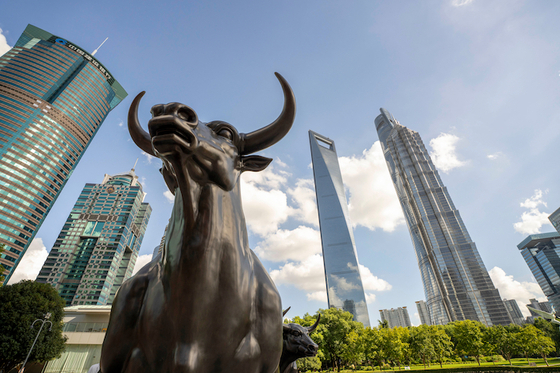
The Lujiazui Financial District in Shanghai’s Pudong area, home to China’s largest financial institutions and the iconic bull statue symbolizing market optimism, has become the physical representation of China’s ambitions to create world-class capital markets. Regulatory actions like today’s announcement reflect authorities’ determination to build investor confidence in these markets.
Market observers expect continued vigilance from Chinese regulators in monitoring online financial content, particularly as artificial intelligence tools make it increasingly difficult to distinguish between genuine analysis and fabricated information.
The CAC and CSRC urged investors to obtain financial information from official sources and authorized financial news outlets, warning that relying on unverified social media content for investment decisions carries significant risks.
Fact Checker
Verify the accuracy of this article using The Disinformation Commission analysis and real-time sources.

31 Comments
If AISC keeps dropping, this becomes investable for me.
Good point. Watching costs and grades closely.
Exploration results look promising, but permitting will be the key risk.
Good point. Watching costs and grades closely.
If AISC keeps dropping, this becomes investable for me.
Good point. Watching costs and grades closely.
Good point. Watching costs and grades closely.
Uranium names keep pushing higher—supply still tight into 2026.
Good point. Watching costs and grades closely.
Good point. Watching costs and grades closely.
If AISC keeps dropping, this becomes investable for me.
I like the balance sheet here—less leverage than peers.
Good point. Watching costs and grades closely.
Good point. Watching costs and grades closely.
Interesting update on China Targets AI-Generated Misinformation and Illegal Stock Tips in New Regulatory Crackdown. Curious how the grades will trend next quarter.
Good point. Watching costs and grades closely.
Good point. Watching costs and grades closely.
Production mix shifting toward News might help margins if metals stay firm.
Good point. Watching costs and grades closely.
Good point. Watching costs and grades closely.
Uranium names keep pushing higher—supply still tight into 2026.
Good point. Watching costs and grades closely.
If AISC keeps dropping, this becomes investable for me.
Good point. Watching costs and grades closely.
Good point. Watching costs and grades closely.
Interesting update on China Targets AI-Generated Misinformation and Illegal Stock Tips in New Regulatory Crackdown. Curious how the grades will trend next quarter.
Good point. Watching costs and grades closely.
Uranium names keep pushing higher—supply still tight into 2026.
Good point. Watching costs and grades closely.
Production mix shifting toward News might help margins if metals stay firm.
Uranium names keep pushing higher—supply still tight into 2026.