


Listen to the article
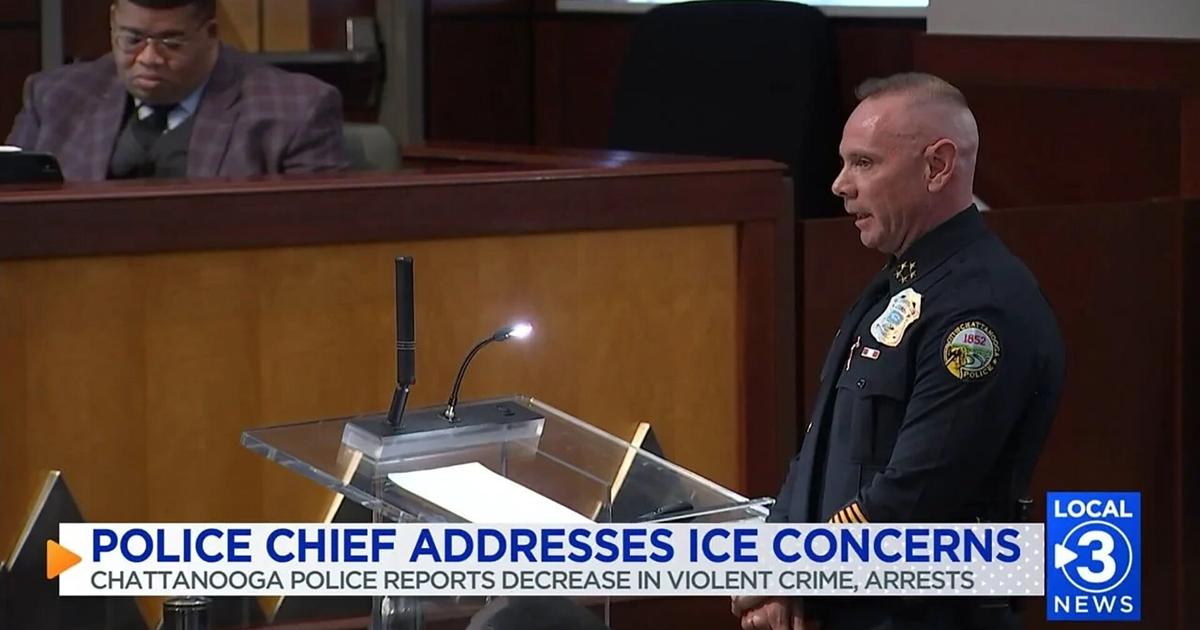
Chattanooga Police Chief John Chambers addressed the city council Tuesday to counter what he described as misleading information about the department’s enforcement practices, particularly regarding the Hispanic community.
“We’re not going to subjectively or bias our enforcement efforts. That is not something we are doing, and that is not something that we will ever do,” Chambers told council members during the meeting.
The chief presented data from the past three years showing a significant decline in overall arrests, including those involving Hispanic residents. He specifically highlighted that 2025 marked a three-year low in arrests of Hispanic adults for driving without a license, directly contradicting claims made in recent external analyses.
“That is completely contrary to what is being assumed by the release and analysis of other data centers,” Chambers said. “These are the facts, and we can’t change this. This is what is going on.”
Chambers took particular issue with a report claiming sharp increases in Immigration and Customs Enforcement (ICE) detention rates in Chattanooga. He explained that recent law changes make comparing current data with past figures statistically invalid.
“When you see this increase, and you’re mixing past protocols with previous law versus new protocols and new law, you cannot compare those two data sets,” he said. “It is being misconstrued as something that it is not.”
The misinformation about police practices has significant community impacts, according to Chambers. He expressed concern that false narratives create unnecessary fear within vulnerable communities and may prevent residents from seeking help when they truly need it.
“The result of misinformation is that you increase the level of fear, and then you decrease their opportunity to feel like they can call for help when they need it. That is a tragedy, because nobody wants to see children suffer because they don’t have support or someone to protect them–because they don’t have someone to stand up for them, or because they don’t have access to the support they should have,” he explained.
This issue comes amid nationwide debates about immigration enforcement and the role of local police departments in federal immigration matters. Many cities have grappled with how to balance legal requirements with community trust-building efforts, particularly in diverse communities where immigration status may be a concern for residents.
Chambers acknowledged the human dimension of policing, noting that officers feel the emotional weight of enforcement decisions even when they have legal obligations to fulfill.
“Even though we wear uniforms, we are humans, and that is a difficult thing to do repeatedly,” said Chambers. “We do not have a choice. The law doesn’t allow us to apply our opinions or our thoughts or beliefs into how we enforce the law.”
The chief’s appearance at the council meeting reflects a broader effort by the Chattanooga Police Department to improve transparency and community relations during a time of heightened scrutiny of law enforcement practices nationwide.
Chambers concluded his remarks with a firm commitment to fair and impartial policing: “That is something we have experienced in our country and our city, and I will fight like hell to keep it from ever happening.”
The Chattanooga Police Department has not announced specific new initiatives in response to the concerns raised, but Chambers’ public statements suggest the department will continue efforts to provide accurate data about enforcement patterns while maintaining adherence to legal requirements.
Community advocates throughout Chattanooga have called for ongoing dialogue between law enforcement and residents, particularly those from immigrant communities who may feel especially vulnerable to changing enforcement practices.
Fact Checker
Verify the accuracy of this article using The Disinformation Commission analysis and real-time sources.

9 Comments
It’s good to see the police department taking a proactive stance on addressing misinformation. Transparency and data-driven responses can go a long way in building public trust.
Appreciate the chief’s emphasis on unbiased enforcement. The decline in arrests for certain demographics is an encouraging sign, though the changing legal context makes interpreting the data nuanced.
Interesting to see the police chief addressing public misinformation concerns. Providing data-driven facts to counter misleading claims is important for transparency and building trust with the community.
This seems like a prudent move by the police chief to get out in front of misinformation concerns. Curious to learn more about the specific steps the department is taking to improve communication and data reporting.
Yes, clear and transparent communication from law enforcement is key, especially on sensitive topics. Glad to see the chief taking this issue seriously.
Addressing public concerns proactively is smart. Curious to know if the police department has plans to improve communication and data transparency going forward to stay ahead of potential misinformation.
This highlights the challenges police departments face in correcting misinformation, especially around sensitive topics like immigration enforcement. Kudos to Chief Chambers for taking the time to present the facts transparently.
I appreciate the chief’s focus on unbiased enforcement practices. The stats showing declines in arrests for certain demographics are good to see. Curious to learn more about the recent law changes impacting ICE detention data comparisons.
Yes, the nuances around changes to laws and data reporting can make it challenging to draw accurate comparisons over time. Glad the chief is working to clarify the real situation.