


Listen to the article
Medical Professionals Battle Misinformation in the Age of Social Media
In some ways, Lauren Hughes is a classic “momfluencer”: A bubbly mother of three who sells mugs with slogans like “I need this FORKING coffee” and makes videos for her 548,000 followers about how she weaned her twins off pacifiers.
In other ways, she is not.
Hughes, a pediatrician whose day job is running the medical practice she founded in Kansas City, offers something not often associated with social media’s health influencers: evidence-based information. Her Instagram account’s pinned post is a flowchart on how to follow the American Academy of Pediatrics’ recommendations on the measles, mumps, and rubella vaccine.
“It’s a lot of just saying these things over and over and acknowledging that people have questions, which is a perfectly reasonable, normal response,” Hughes explained.
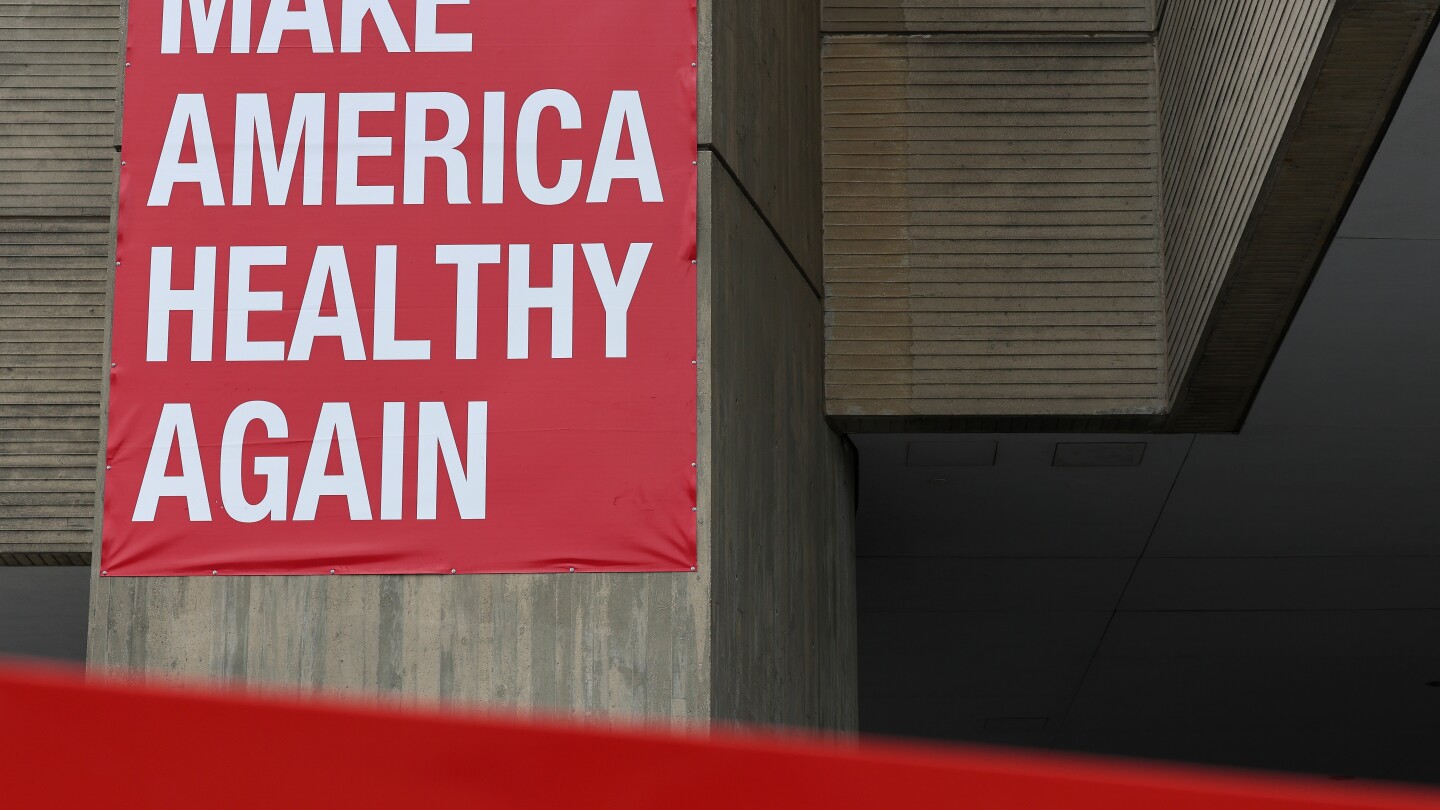
She represents a growing ecosystem of online influencers trying—and struggling—to counter Robert F. Kennedy Jr.’s Make America Healthy Again (MAHA) movement and its most misinformed policy positions. The counter-movement now includes prominent figures like Chelsea Clinton, who recently launched a podcast called “That Can’t Be True,” aimed at sorting “fact from fiction—especially on issues impacting our health.”
As Kennedy’s MAHA movement expands its cultural footprint, American public health professionals, medical practitioners, and scientists face an almost existential question: Can they effectively compete against MAHA’s messaging? Or is it too late?
“The anti-MAHA message needs to be said as aggressively as the people who are actually putting out the pseudoscience and the cherry picking,” said Demetre Daskalakis, the former director of the CDC’s National Center for Immunization and Respiratory Diseases, who resigned after Kennedy pushed out CDC Director Susan Monarez.
This call to action has placed new demands—like creating viral content—on scientists and medical professionals that extend far beyond their traditional training. The stakes are high, with cautionary tales like Dr. Anthony Fauci, who became a household name during the COVID-19 pandemic only to face intense partisan attacks, including from Kennedy himself, who authored a book titled “The Real Anthony Fauci: Bill Gates, Big Pharma, and the Global War on Democracy and Public Health.”
The prevalence of health misinformation online is significant. A 2022 review suggested it could represent as much as 30% of health-related content on social media. A 2024 study examining TikTok videos about sinusitis found that about half were created by non-medical influencers, and of those, over half contained inaccurate information.
A July KFF poll revealed that 55% of adults use social media for health information at least occasionally. When asked to name specific health influencers they trust, many respondents cited figures associated with the MAHA movement: Dr. Eric Berg, Dr. Mehmet Oz, and Dr. Phil.
Meanwhile, Trump administration cuts to federal programs and scientifically-dubious policy decisions from Kennedy have eroded public trust in traditional public health institutions like the CDC.
In response, several state “health alliances” have formed, though they include only Democratic-run states. The New England Journal of Medicine and the Center for Infectious Disease Research and Policy recently announced they would begin publishing “public health alerts” as an alternative to the CDC’s Morbidity and Mortality Weekly Report, which has been paused during the government shutdown.
However, these initiatives primarily target the scientific community rather than the general public. Major medical organizations like the American Medical Association and American Academy of Pediatrics have increased their outreach efforts but have historically directed messaging toward health professionals while avoiding overtly political territory.
“You’ve got these legacy organizations that have simply not thought it was that important to communicate with the public in a meaningful way,” said Colette Delawalla, president of advocacy group Stand Up For Science. She cited Research America, a nonprofit advocacy alliance, as an example: “It’s supposed to be one of these top places and has like, 200 freaking followers on Instagram.”
Infectious disease epidemiologist Jessica Malaty Rivera noted that professional organizations tend to temper their messages. “I hate to overuse this term, but we are really in unprecedented times,” Rivera said. “Groups like AAP and ACP and even institutions like APHA, who’ve had to go out on a limb and use very direct language to combat what’s being said, is the least that they could be doing.”
Several major medical associations are limited in making overtly political statements due to their 501(c)(3) or 501(c)(6) status. “Any of these organizations—and I know this because I’ve done it—on Jan. 21, 2025, could have stood up, in less than 24 hours, a 501(c)(4) nonprofit arm of what they’re already doing, and granted over some money, set up a little team, and gotten political,” Delawalla explained.
Susan Polan, associate executive director of the APHA, told NOTUS that the organization has been “actively trying” to find new ways to reach the public. “The truth is, in a perfect world, we would have billions of dollars to be able to do those large media campaigns and social media campaigns,” Polan said. “But obviously that’s not within our capacity.”
Without established infrastructure, countering Kennedy’s movement has fallen to individual science communicators like Hughes and Rivera. Mikhail “Doctor Mike” Varshavski, a family physician with a popular YouTube channel, noted that because medical providers haven’t traditionally focused on social media, a “gap” was created that was “filled by grifters, by snakeoil people, people selling all sorts of miracle cures.”
Even among like-minded influencers, there’s no consensus on strategy. Some advocate directly calling out MAHA’s misinformation, while others worry this approach risks alienating those who see value in the movement’s message.
“I think of my audience when I’m writing these articles—I’ve dubbed them the ‘curious and confused,'” said Caitlin Dow, a senior nutrition scientist at the Center for Science in the Public Interest. Her goal is “writing and communicating in such a way that doesn’t suggest that anybody who would believe this claim is a fool.”
The work is demanding and often thankless. “It’s mostly unpaid labor,” Rivera said, adding that publicly discussing health can be dangerous. “I’ve had death threats and wishes of harm on me and my children. I had the FBI call me one week saying that my name and my children’s names had shown up on dark websites.”
The MAHA movement, meanwhile, has embraced social media with prominent advocates like Vani Hari, the “Food Babe” (2.3 million Instagram followers), and Casey Means, the administration’s nominee for Surgeon General (850,000 followers).
The current environment has even pushed some doctors to run for office. Pediatrician-turned-candidate Annie Andrews, who is challenging Sen. Lindsey Graham, told NOTUS that voters have said they feel like they “already know her” through her social media presence.
“This is not a path I ever envisioned for myself. I was perfectly happy in my role as a pediatrician,” Andrews said. “We all just have to be brave, point the camera at our face, and start talking.”
Fact Checker
Verify the accuracy of this article using The Disinformation Commission analysis and real-time sources.

16 Comments
Interesting to see how medical experts are trying to match the viral success of misinformation campaigns. Dr. Hughes’ approach of offering clear, science-backed guidance while acknowledging people’s questions seems like a smart strategy. Curious to learn more about the impact of her efforts.
Absolutely. Empowering medical professionals to effectively communicate complex topics through social media is crucial. Hopeful more doctors follow Dr. Hughes’ lead in taking a proactive, empathetic approach to countering misinformation.
The rise of ‘momfluencers’ sharing unverified medical advice is concerning. But it’s heartening to see doctors like Dr. Hughes using their platforms to provide reliable, evidence-based information. Curious to learn more about her specific strategies and how they’re resonating with her audience.
While the MAHA movement has gained significant traction, it’s encouraging to see medical professionals like Dr. Hughes finding creative ways to elevate science-backed health guidance on social media. Countering misinformation with empathy and nuance is a real challenge, but a crucial one. Hopeful this helps turn the tide.
Agree, this is vital work. Equipping doctors to effectively communicate complex topics through social media platforms is key. Kudos to Dr. Hughes for her efforts, and I’m optimistic more will follow her lead.
The rise of ‘momfluencers’ sharing unverified medical advice is worrying. But it’s encouraging to see medical professionals like Dr. Hughes stepping up to offer reliable, science-backed guidance online. Hopeful this helps turn the tide against misinformation.
Agree, it’s a critical battle. Equipping doctors to effectively communicate complex topics through social media is key. Kudos to Dr. Hughes for her efforts, and I’m curious to see if others follow suit.
The medical community’s struggle to match the viral success of misinformation campaigns is concerning. But initiatives like Dr. Hughes’ are a step in the right direction. Curious to see if she and others can build sustained online engagement around science-backed health advice.
Definitely a tough battle, but important work. Empowering medical experts to effectively communicate complex topics through social media is crucial. Cautiously optimistic that more will follow Dr. Hughes’ lead.
The rise of ‘momfluencers’ sharing medical advice is concerning, but it’s good to see doctors like Dr. Hughes stepping up to offer reliable, science-based information online. Curious to learn more about her approach.
Agreed. Countering misinformation with empathy and nuance is a real challenge, but it’s critical work. Look forward to seeing how Dr. Hughes and others expand their reach.
While the MAHA movement has gained a lot of traction, it’s encouraging to see medical professionals finding creative ways to elevate evidence-based health guidance on social media. Will be interesting to track the impact.
While the MAHA movement has gained significant traction, it’s heartening to see medical professionals like Dr. Hughes leveraging social media to provide evidence-based health information. Countering misinformation with empathy and nuance is no easy task, but an essential one.
Interesting to see medical professionals like Dr. Hughes leveraging social media to provide evidence-based health information. Countering misinformation with facts and empathy is crucial in the age of viral content.
Absolutely. Establishing trust and having an open dialogue around sensitive topics like vaccines is key. Kudos to Dr. Hughes for her efforts to cut through the noise.
It’s great to see doctors like Dr. Hughes leveraging their platforms to provide evidence-based information. Building trust and countering misinformation on social media is no easy feat, but a necessary one. Curious to learn more about her specific strategies and impact.