


Listen to the article
Campus Misinformation Emerges as Growing Threat to Academic Freedom
A growing wave of misinformation targeting American universities represents a significant threat not just to higher education but to civil liberties and democratic values, according to a leading communications scholar.
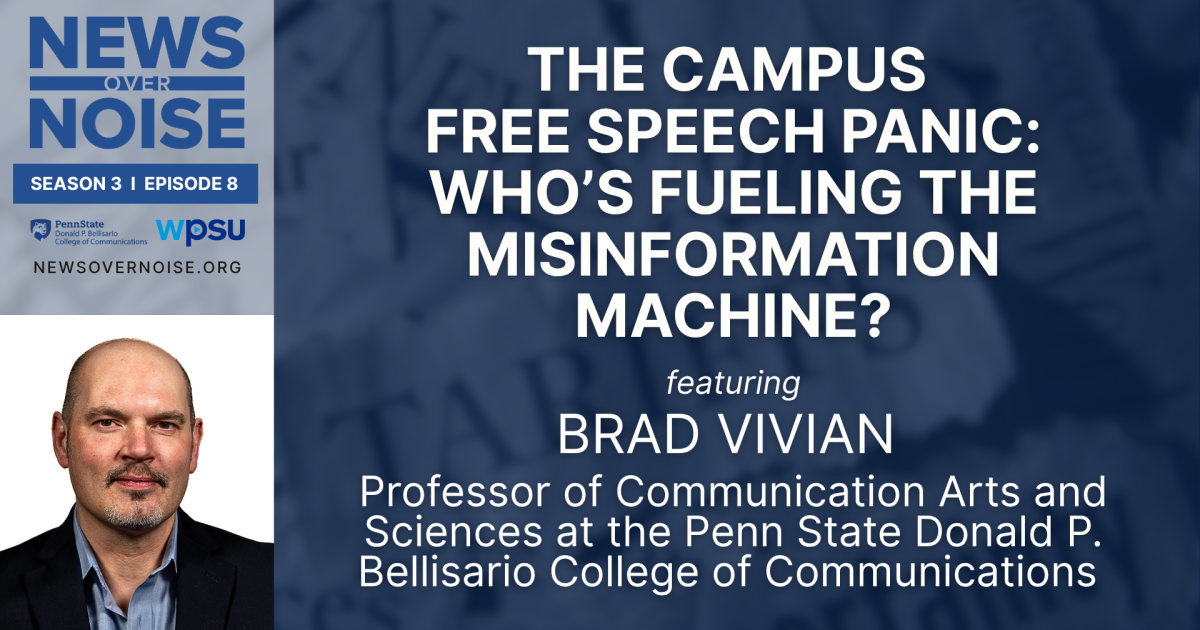
Bradford Vivian, Professor of Communication Arts and Sciences at Penn State and author of “Campus Misinformation: The Real Threat to Free Speech in American Higher Education,” argues that the current climate of anti-university sentiment is part of a decades-long political campaign that has recently gained dangerous momentum.
“What I call the misinformation campaign about universities is several decades old,” Vivian explains. “It’s not new. It’s just a new version of a story that’s long been told by certain political and media actors.”
According to Vivian, the template for anti-university rhetoric dates back to William F. Buckley’s McCarthy-era text “God and Man at Yale,” which characterized universities as “dangerously liberal” and disloyal to traditional values. But this familiar conservative critique has recently merged with something more concerning: international anti-university discourse originating from authoritarian regimes.
“Places like Russia and Hungary over the last decade and a half have seen the liberalization of universities as a threat to their authoritarian societies,” Vivian notes. “Throughout history, Western-style universities with liberal arts, secular-based education have been moderating forces in society.”
This convergence of domestic conservative grievances and international authoritarian tactics has created a potent strain of misinformation that portrays universities as hotbeds of “wokeness” and threats to free speech. These narratives spread through anecdotal claims, cherry-picked polling data, and personal testimonials that rarely undergo rigorous scrutiny.
Major media outlets, particularly opinion sections, have amplified these narratives using a simplistic left-versus-right framing that fails to capture the nuanced reality of academic environments. This coverage tends to fixate on elite Ivy League institutions, which represent a tiny fraction of America’s diverse higher education landscape.
“The Ivy League is extraordinarily unrepresentative of higher education in the United States, which includes thousands of community colleges, state systems, vocational schools, private religious schools, and so forth,” Vivian explains. This skewed focus distorts public perception of what actually happens on most college campuses.
The decline of local journalism has exacerbated the problem. As community newspapers disappear, national columnists and media personalities increasingly drive conversations about higher education, often with little direct knowledge of the institutions they criticize.
Vivian warns that this systematic misinformation campaign isn’t merely a PR problem for universities but signals a broader authoritarian drift. “Throughout different parts of history, a classic symptom of rising authoritarianism is political actions against universities,” he says. “Every time you see a rising dictatorial regime, one of the first steps they take is to try and seize control of universities, along with the free press.”
The real-world consequences are already visible. The viral spread of false stories about universities banning religious expression or persecuting conservative students has fueled legislative attacks on academic freedom and institutional funding. Many state legislatures have moved aggressively to defund university systems, often based on distorted perceptions of campus culture.
Large technology companies have also joined the fray, with some actively encouraging talented students to bypass higher education altogether. This trend aligns with what Vivian describes as a desire for “pliable” workers who won’t challenge corporate power structures.
Despite these challenges, Vivian sees potential for pushback as communities recognize the economic and social value of their local colleges and universities. He notes that in many rural areas, higher education institutions serve as essential economic engines, creating jobs and opportunities that transcend political divides.
For Vivian, defending universities means rejecting the artificial conservative-versus-liberal framing that dominates current discourse. “There are no conservative or liberal ideas—there’s just ideas. And we evaluate them based on evidence and persuasiveness of argument,” he insists.
As attacks on higher education intensify, Vivian urges a return to understanding universities as spaces that expand thinking rather than conform to ideological boxes. “What a university is for, what a healthy educational space is for, is to get away from modes of communication and decision-making where you are obligated to only think within a narrow set of stereotypical boxes,” he concludes. “A university setting should be the antidote to that circumstance.”
Fact Checker
Verify the accuracy of this article using The Disinformation Commission analysis and real-time sources.

16 Comments
The author makes a strong case that the current wave of anti-university rhetoric is part of a long-running political campaign, now amplified by emerging disinformation tactics. Preserving academic freedom while combating misinformation will be a complex task for higher ed leaders.
Well said. This represents a significant challenge for universities – upholding core democratic principles like free speech, while also fulfilling their duty to counter the spread of verifiable falsehoods. Striking the right balance will be critical.
This is a concerning trend. While the right to free speech on campus must be protected, the author highlights how this is being exploited by bad actors pushing misinformation. Universities have a responsibility to address this without compromising core academic freedoms.
Exactly. Maintaining that balance will require nuanced, evidence-based approaches from university leaders and policymakers. The stakes are high, as the integrity of higher education and democratic discourse are at risk.
This is a complex issue – academic freedom and free speech are vital, but misinformation can undermine the core mission of universities. The author raises some valid points about the political motivations behind these anti-university narratives.
Absolutely, it’s a challenging balance. Campuses need to uphold free expression, but also have a responsibility to address the spread of verifiable falsehoods. Tackling this will require nuanced approaches.
The author provides valuable insight into the evolution of anti-university rhetoric, showing how it has become more coordinated and dangerous by blending longstanding conservative critiques with modern disinformation tactics. Preserving academic freedom while combating misinformation will be a complex challenge for universities to navigate.
Absolutely. This represents a significant threat to the integrity of higher education and democratic discourse more broadly. Universities will need to develop thoughtful, evidence-based approaches to address this issue without compromising core principles of free speech and inquiry.
It’s concerning to see how anti-university rhetoric has evolved and become more coordinated, drawing on both longstanding conservative critiques and emerging disinformation tactics. Maintaining academic freedom while countering misinformation is a crucial challenge.
I share your concern. Universities must remain bastions of free speech and intellectual inquiry, but cannot ignore the serious threat posed by organized misinformation campaigns. Addressing this will require innovative approaches.
Interesting to see the long history of anti-university rhetoric from conservative voices. It’s concerning how this has merged with broader disinformation campaigns targeting higher ed. Free speech on campuses is crucial, but misinformation is a real threat to academic freedom.
I agree, the blend of longstanding conservative critiques and newer disinformation tactics is especially troubling. Preserving democratic values like free speech while combating misinformation will be a delicate balance for universities.
This article highlights the troubling convergence of traditional anti-university views and emerging disinformation campaigns. The author makes a compelling case that these coordinated efforts pose a serious threat to academic freedom and democratic values. Addressing this challenge will require nuanced, principled responses from universities.
I agree, this is a multifaceted issue that deserves careful consideration. Universities must find ways to protect free expression while also countering the spread of demonstrable falsehoods. Striking the right balance will be critical for the future of higher education.
The author raises important points about the evolution of anti-university rhetoric, blending longstanding conservative critiques with newer disinformation tactics. This represents a real threat to academic freedom that universities must grapple with. Preserving open discourse while combating verifiable falsehoods will be crucial.
Well said. This is a complex challenge with no easy solutions. Universities will need to be proactive and innovative in developing approaches that uphold free speech principles while also fulfilling their role as truth-seeking institutions.