


Listen to the article
The Centre’s introduction of legislation such as the Women’s Reservation Bill and delimitation has drawn sharp criticism from Manipur Pradesh Congress Committee President Okram Ibobi Singh, who claims these moves lack the necessary parliamentary support and serve primarily as political maneuvers.
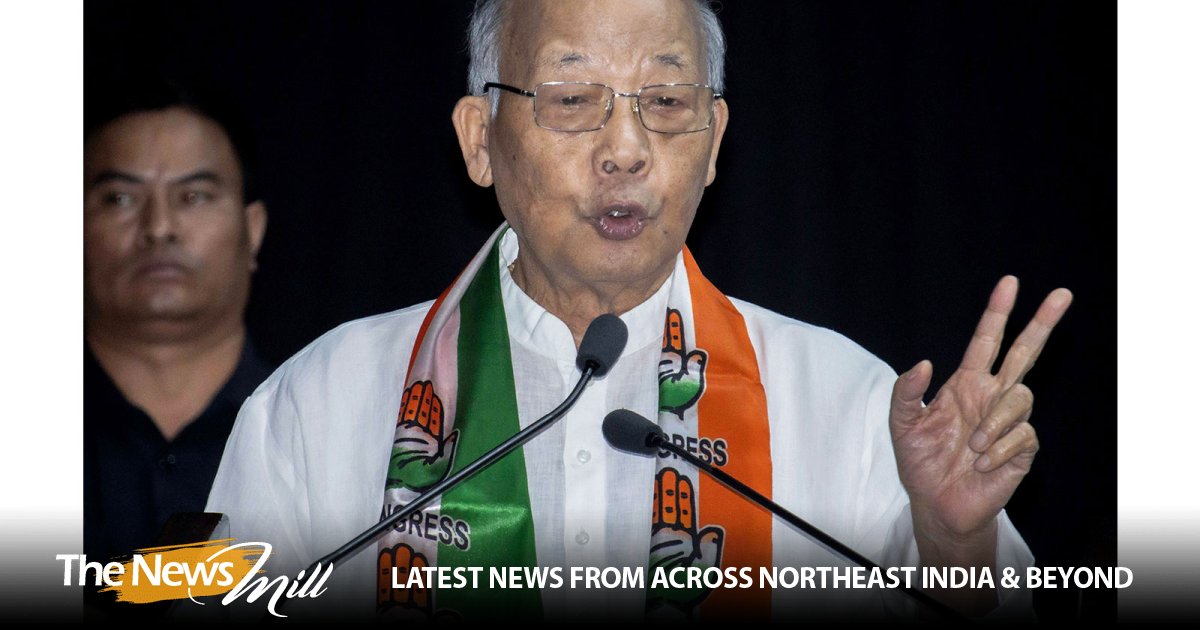
During a press conference at Congress Bhawan in Imphal on Wednesday, Singh asserted that the ruling government is proceeding with these bills despite not having the constitutionally required two-thirds majority needed for their passage.
“As per the Constitution, any amendment requires the support of at least two-thirds of the sitting Members of Parliament. As of today, the ruling government does not have that majority. They know these bills will be defeated,” Singh told reporters.
The former Manipur Chief Minister characterized the government’s approach as a calculated political strategy. He suggested that the BJP-led government has positioned itself to claim credit if the legislation passes while deflecting blame to opposition parties if it fails.
“If the bill is passed, they will claim credit for women’s empowerment. If it fails, they will blame the Congress and opposition parties, saying they are against women’s empowerment. This is nothing but a deliberate attempt to mislead the people,” Singh explained.
The Congress leader’s criticisms come amid continuing unrest in Manipur, where ethnic tensions have led to widespread displacement and loss of life. Singh emphasized that the central government, including Prime Minister Narendra Modi and Home Minister Amit Shah, should focus on addressing this humanitarian crisis rather than engaging in what he termed “propaganda politics.”
Singh highlighted the persistent suffering in Manipur, noting that violence and displacement have affected thousands of residents for more than three years. “More than 300 people are still missing, and their whereabouts remain unknown. Over 60,000 people continue to live in relief camps. These are the issues that need urgent attention,” he said.
The Women’s Reservation Bill has been a contentious piece of legislation in Indian politics for decades, aiming to reserve one-third of seats in the Lok Sabha and state legislative assemblies for women. Similarly, delimitation—the process of redrawing constituency boundaries based on population changes—has political implications that can reshape electoral outcomes.
Political analysts note that Singh’s comments reflect growing tension between the Congress and the BJP-led NDA government over legislative priorities and approaches to governance. The BJP has maintained that its legislative agenda, including the Women’s Reservation Bill, represents necessary reforms for India’s development.
The situation in Manipur adds a complex dimension to this political standoff. The northeastern state has experienced ethnic conflict between Meitei, Kuki, and Naga communities, resulting in widespread displacement and hundreds of casualties since 2020.
Singh emphasized the need for inclusive dialogue among all affected communities. “Instead of seeking cheap popularity through such narratives, the government must take concrete steps to resolve the issues among communities and restore peace without further delay,” he stated.
His appeal comes as relief efforts continue to struggle with limited resources and growing frustration among displaced populations. Human rights organizations have repeatedly called for more comprehensive action to address both immediate humanitarian needs and the underlying causes of the conflict.
As parliamentary sessions continue, observers will be watching closely to see whether the government can secure the necessary support for its legislative agenda while also effectively addressing the crisis in Manipur and other pressing national concerns.
Fact Checker
Verify the accuracy of this article using The Disinformation Commission analysis and real-time sources.

10 Comments
The Manipur Congress chief’s accusations of misleading propaganda are serious. If the central government is indeed pushing bills without the required parliamentary support, that would be a troubling abuse of power. I hope independent observers can shed light on the veracity of these claims.
Absolutely, transparency and adherence to constitutional requirements are essential for maintaining public trust in the democratic process. The government should focus on building consensus rather than political maneuvering.
Interesting claims from the Manipur Congress chief. It seems the central government’s legislative agenda is facing some pushback, even on issues like the Women’s Reservation Bill. The political dynamics around these bills will be worth watching closely.
You raise a fair point. The two-thirds majority requirement for constitutional amendments appears to be a key issue here. The government’s strategy of claiming credit or deflecting blame is certainly politically savvy, if true.
This is an interesting development in the ongoing political dynamics in Manipur. The Congress chief’s criticisms of the central government’s legislative tactics warrant close scrutiny. I’ll be following this story to see how the situation unfolds.
You make a fair point. The government’s approach, if accurately described, seems aimed more at political positioning than genuine reform. Upholding democratic norms should be the priority, not partisan advantage.
This is a complex situation. The central government’s efforts to pass bills like the Women’s Reservation Bill seem aimed at political gain, but the lack of the required two-thirds majority is concerning. I’m curious to see how this plays out and whether the opposition’s criticisms hold up.
I agree, the political maneuvering around these bills is worrying. The government should focus on building genuine consensus rather than using legislative tactics for political advantage. Transparency and constitutional integrity are important.
The Manipur Congress chief’s accusations of misleading propaganda by the central government are quite serious. If true, this undermines the democratic process. I hope an impartial review can shed light on the veracity of these claims.
Agreed, the allegations of a lack of required parliamentary support are concerning. The central government should ensure it has the necessary votes before proceeding with contentious legislation. Transparent and inclusive policymaking is crucial.