


Listen to the article
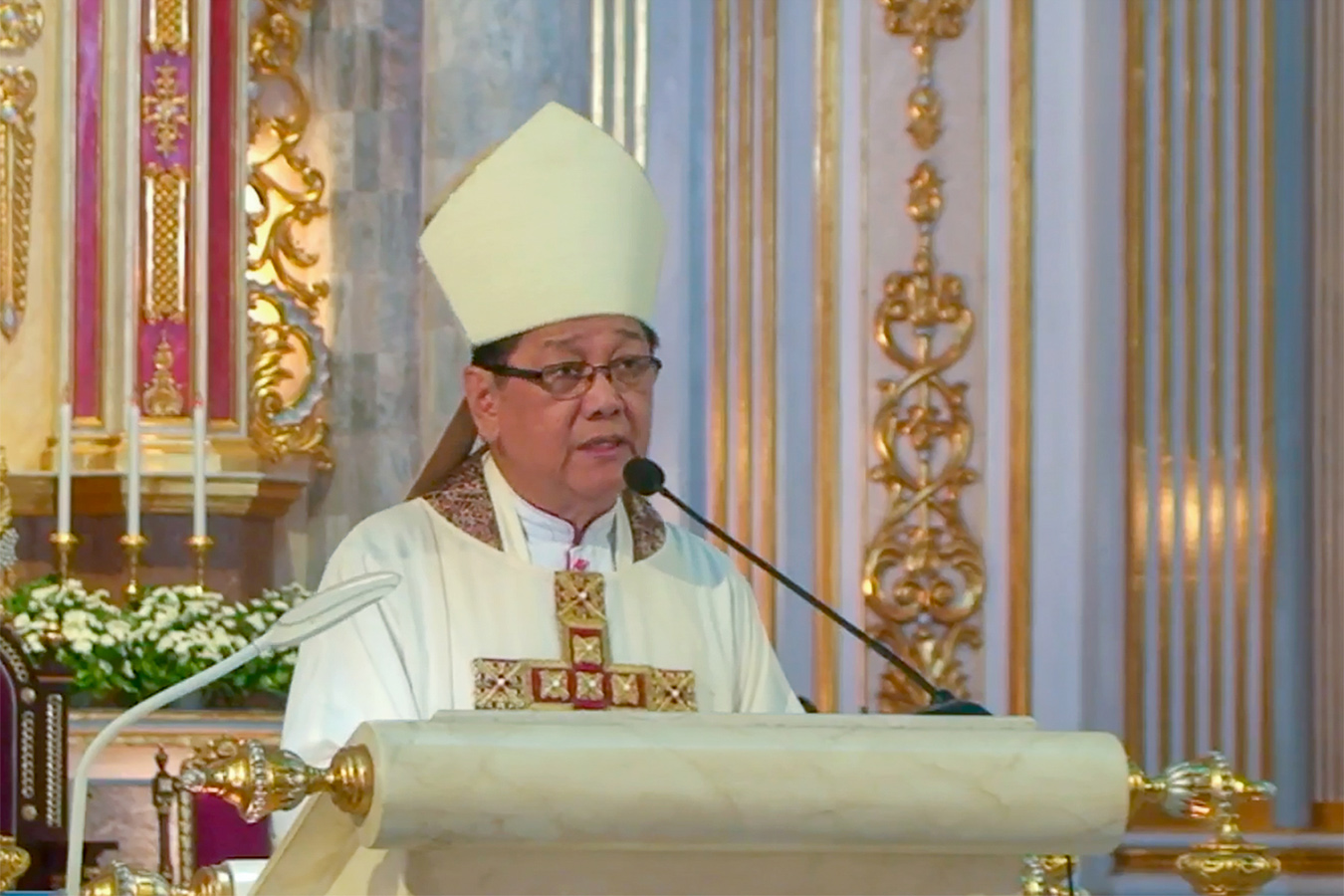
In a powerful homily that resonated through Dumaguete Cathedral on Sunday, Bishop Julito Cortes warned that the rising tide of conflicting corruption allegations against government officials is creating dangerous social division across the Philippines.
Speaking to parishioners gathered for Christ the King Sunday celebrations, the Catholic prelate expressed concern about the increasingly polarized information landscape that has made distinguishing between fact and fiction increasingly difficult for ordinary citizens.
“This confusion could weaken our moral sense and stir up division among us,” Cortes said. “We must guard our hearts and minds so that we may not be misled or manipulated by half-truths that erode the common good.”
The bishop’s comments come amid escalating political tensions in the Philippines, where corruption allegations have become a central flashpoint in national discourse. Recent months have seen heated exchanges between government factions and opposition groups, with accusations flying from all sides of the political spectrum.
Cortes specifically warned against what he termed a “culture of lies” that has permeated public dialogue, urging Filipino citizens to exercise greater discernment in their consumption of news and information. He emphasized the importance of fact-checking and relying on credible, established sources rather than unverified claims circulating on social media.
“Let truth, rooted in the Gospel, be our unshakable measure,” the bishop told the congregation.
The religious leader’s sermon touched on a particularly sensitive point in Philippine political culture – the tendency toward personality-driven politics over institutional integrity. Without naming specific political figures, Cortes cautioned against rhetoric that undermines democratic institutions or calls for extra-legal measures to address grievances.
“Emotion must never eclipse reason,” he stated firmly, emphasizing that citizens should place their loyalty with the nation and its democratic principles rather than with individual political personalities or factions that have dominated Philippine politics for generations.
In a direct appeal to those holding public office, the bishop reminded government officials of their sworn duty to uphold the Constitution. He called for thorough and impartial investigations into all corruption allegations, regardless of political affiliations or connections.
“Fidelity to the Constitution—not to any personality or political agenda—is essential to preserving peace, order, and unity grounded in justice,” Cortes said.
The bishop’s homily reflects growing concern within the Catholic Church about the state of Philippine governance and public discourse. The Catholic Bishops’ Conference of the Philippines has previously described the current situation as a “profound moral and spiritual crisis” requiring urgent attention and reform.
Political analysts note that the Church, which maintains significant influence in the predominantly Catholic nation, has historically played a crucial role during periods of political turmoil. The institution was instrumental during the 1986 People Power Revolution that toppled the Marcos dictatorship.
Cortes concluded his homily with a call to prayer, asking the faithful to seek divine intervention for national healing and renewal. “When our country is darkened by deceit and corruption, we implore God to shine His light that scatters all shadows,” he said.
The bishop’s message from Dumaguete, a cathedral city in Negros Oriental province, comes at a critical juncture when many Filipinos are questioning the integrity of government institutions amid persistent allegations of systemic corruption that continue to plague national development efforts.
Religious leaders across denominations have increasingly voiced concerns about the deterioration of civil discourse and the potential long-term damage to democratic norms if the current climate of mistrust and division persists unchecked.
Fact Checker
Verify the accuracy of this article using The Disinformation Commission analysis and real-time sources.

9 Comments
I’m curious to hear more about the specific examples of misinformation and half-truths the bishop is referring to. Identifying the root causes of this problem will be key to developing effective solutions.
Corruption allegations can certainly muddy the waters and divide a nation. Bishop Cortes makes a valid point about the need to be discerning and not get swept up in misinformation. Maintaining civility and the common good should be the priority.
This is a challenging situation. Corruption is never acceptable, but the way it’s being discussed publicly seems to be exacerbating divisions rather than leading to meaningful reform. The bishop’s call for moral clarity and the common good is an important reminder.
The Philippines isn’t alone in dealing with this dynamic of conflicting corruption allegations fueling societal division. It’s a global phenomenon that speaks to the urgent need for stronger institutions, transparency, and civic engagement.
You make a good point. Restoring trust in public institutions and democratic processes is a common challenge facing many countries right now. Thoughtful leadership will be crucial.
I appreciate the bishop’s call for Filipinos to guard their hearts and minds against manipulation. In these polarized times, it’s crucial that we seek out reliable information and focus on what unites us as a society.
Absolutely. Cutting through the noise and identifying facts is the only way to have a constructive dialogue and address real issues.
The bishop raises some concerning points about the ‘culture of lies’ taking hold. Eroding the public’s trust in institutions and each other is a dangerous path. Filipinos will need to work hard to rebuild unity and a shared sense of purpose.
Bishop Cortes is right to be concerned. When the truth becomes a matter of perspective, it erodes the foundations of a functioning society. Filipinos will need to find ways to come together around shared values and facts.