


Listen to the article
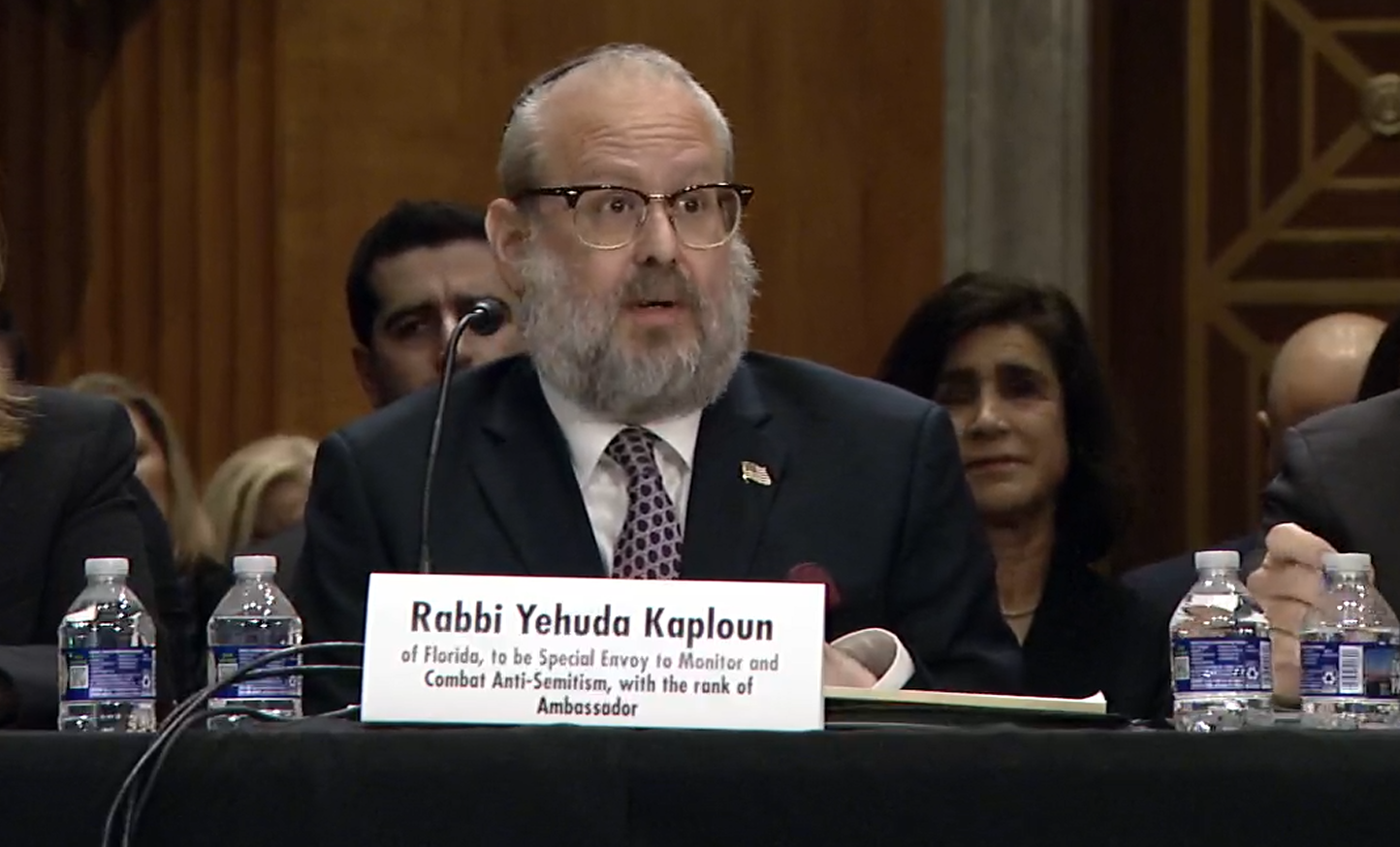
In a significant policy stance that may clash with his administration’s approach, Rabbi Yehuda Kaploun, President Trump’s nominee for U.S. antisemitism special envoy, has called for stricter oversight of misleading content on social media platforms to combat the spread of antisemitism.
Speaking to Jewish Insider ahead of his expected Senate confirmation vote this month, Kaploun emphasized the need for social networks to identify and label false information, particularly content that could fuel antisemitic sentiments.
“I want to continue America’s tradition of free speech and allowing free speech anywhere and everywhere,” Kaploun said. “But I would like the platforms — because of the advent of AI and those technologies — to recognize when something is not factually correct and label it as such.”
This position appears to contradict the broader Trump administration’s hands-off approach to content moderation. Since Trump took office earlier this year, major platforms including Meta have discontinued their fact-checking programs, while YouTube has significantly relaxed its content moderation policies.
Kaploun, a Chabad-trained rabbi and Miami businessman, also highlighted the issue of algorithmic amplification of hate speech, noting that bots are “busy promoting antisemitic rhetoric on the internet.” He expressed confidence that the administration has the will to address these challenges globally, despite the complexity involved.
As an example of problematic content, Kaploun referenced a July New York Times article about hunger in Gaza that initially misrepresented a child’s condition. The Times later published a correction clarifying that the child featured had preexisting health conditions unrelated to malnutrition. Kaploun argued that such misrepresentations can fuel antisemitism, especially when corrections receive far less visibility than original articles.
However, when pressed on whether social networks should remove such content entirely, Kaploun was noncommittal. “I’m not going to get into the specifics or the semantics of what that’s going to look like,” he said, emphasizing instead a collaborative approach with tech companies to “lower the disinformation and lower the hatred.”
Beyond content moderation, Kaploun outlined a broader strategy for his potential tenure, introducing the concept of “pro-Semitism” as a counterbalance to antisemitic attitudes. This approach would focus on educating people about Jewish history, culture, and contributions to society.
“What I mean by pro-Semitism is to explain to countries the benefits of what the Jewish nation provides, and our historical perspective of what Jewish communities have always done for communities,” Kaploun explained. He noted that countries that have persecuted or expelled Jews historically have often suffered as a result, while those embracing Jewish communities typically experience significant benefits.
While emphasizing that combating antisemitism isn’t solely about defending Israel, Kaploun acknowledged the impossibility of separating discussions about the Jewish state from broader conversations about antisemitism. He specifically addressed those who claim to only oppose Israel’s policies rather than harboring anti-Jewish sentiment.
“You want to condemn Israel, ‘Oh, I love the Jews, but I hate Israel.’ Why is Israel in existence? Because there was a period of time when Jews were being slaughtered throughout Europe and the world was silent and there wasn’t a country for the Jews to go to,” Kaploun stated.
The nominee expressed confidence in his administration’s support, saying, “The president and the secretary [of state] are firmly behind the efforts that I am doing. They’ve made it very, very clear that the administration is fully behind the efforts that we’re going to do to combat antisemitism.”
If confirmed, Kaploun would take on the role at a time of heightened global antisemitism, with incidents rising sharply in many countries over the past year, particularly following the ongoing conflict in the Middle East.
Fact Checker
Verify the accuracy of this article using The Disinformation Commission analysis and real-time sources.

8 Comments
The nominee’s stance on this issue seems to contrast with the Trump administration’s policies. It will be interesting to see how this plays out and if it leads to changes in social media content moderation.
While free speech is important, the spread of false information can also fuel dangerous sentiments. Labeling misinformation may be a reasonable compromise to address this issue.
Agreed. It’s a delicate balance between free speech and addressing the risks of online misinformation.
This is a complex topic with valid concerns on both sides. Labeling misinformation could help, but implementation and enforcement would be crucial. Curious to see how this unfolds.
As someone focused on combating antisemitism, the nominee’s support for misinformation labels is understandable. However, the broader implications for free speech will need careful consideration.
Interesting to see the Biden administration’s pick for antisemitism envoy support social media misinformation labels. This could be a departure from the Trump administration’s more hands-off approach to content moderation.
The nominee’s emphasis on using AI and technology to identify and label false information is an interesting approach. It could be a more nuanced way to address misinformation compared to outright removal.
While the nominee’s position may clash with the current administration’s, it’s a thought-provoking proposal. Balancing free speech and misinformation is an ongoing challenge for social media platforms.