


Listen to the article
Disaster Misinformation Undermines Flood Response Efforts in Central Vietnam
False information and fabricated content are severely hampering disaster response operations as rescue teams battle severe flooding across central Vietnam, officials report.
As torrential rains continue to batter the region, emergency responders find themselves fighting not only rising waters but also a surge of misinformation. Social media platforms have become flooded with AI-generated videos, manipulated images, and unverified claims about the disaster’s scope and impact, outpacing the spread of official updates.
“These fabricated posts are causing real harm to our operations,” said a spokesperson for the national disaster response team. “The confusion they create among residents makes coordination significantly more difficult when every minute counts.”
Particularly concerning are misleading posts linked to commercial opportunism. Authorities have identified numerous instances where false information comes packaged with advertisements for “disaster-prevention products,” using fear-inducing messages like “prepare before it’s too late” or “you’ll regret not buying this.” Such tactics exploit public anxiety during an already challenging humanitarian crisis.
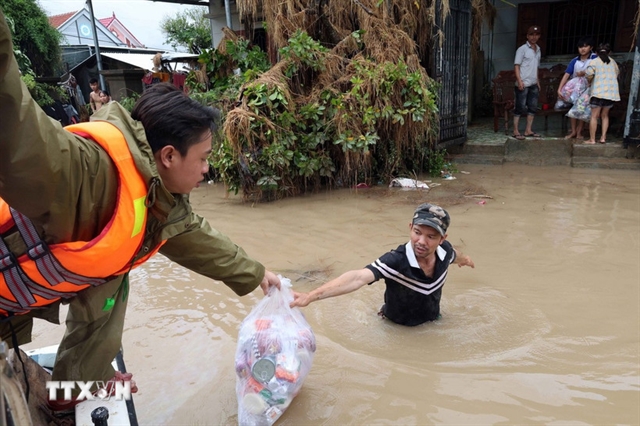
Vietnam’s central provinces have experienced devastating flooding in recent days, with rescue teams working around the clock to reach isolated communities. The spread of misinformation diverts critical resources and attention from legitimate rescue efforts.
“When false information circulates, we have to divert personnel to address public concerns about situations that don’t actually exist,” explained a local emergency management official. “Meanwhile, people who genuinely need help might not receive it in time.”
Vietnamese authorities have issued strong warnings about the legal consequences of spreading false information. Under current regulations, organizations publishing false, distorted, or defamatory content that damages the reputation of agencies or individuals face administrative fines between VNĐ20-30 million (approximately $800-1,200 USD).
Individuals using social networks to share fabricated information or unverified claims that cause public anxiety may be fined VNĐ5-10 million ($200-400 USD). Those impersonating organizations or individuals to spread misleading content could face penalties from VNĐ10-20 million ($400-800 USD).
The legal framework for these penalties is established in Article 8 of the 2015 Law on Cyberinformation Security and Article 9 of the 2018 Law on Cybersecurity. Depending on the violation’s severity, consequences can range from administrative fines to criminal prosecution, with additional requirements for compensation if damages occur.
“Everyone has the right to express themselves online, but with that comes responsibility,” said a police spokesperson addressing the issue. “We’re urging citizens to verify information before sharing and to report suspicious content rather than amplifying it.”
Disaster management experts note that this phenomenon isn’t unique to Vietnam. The proliferation of AI tools has made creating convincing fake disaster imagery easier than ever, presenting challenges for emergency responders worldwide.
Local community leaders in affected areas have started organizing information-verification networks, where trusted community members help validate reports before they spread further. These grassroots initiatives complement official government communications channels.
As rescue operations continue in Vietnam’s flood-ravaged central provinces, authorities emphasize that accurate information sharing is not merely a matter of legal compliance but a crucial component of the humanitarian response. Citizens are encouraged to rely on official news sources and government bulletins for updates on the situation.
The flooding in central Vietnam comes amid an increasingly severe typhoon season across Southeast Asia, with climate experts pointing to rising sea temperatures as a contributing factor to more intense weather events throughout the region.
Fact Checker
Verify the accuracy of this article using The Disinformation Commission analysis and real-time sources.

8 Comments
Worrying to see how AI-generated misinformation can undermine critical disaster response efforts. Authorities need to find ways to quickly identify and counter these false claims to ensure rescue operations can proceed efficiently.
Absolutely, the public deserves accurate, verified information during emergencies. Spreading false content, especially for commercial gain, is unconscionable and puts lives at risk.
It’s alarming how quickly AI-generated propaganda can spread online and cause real-world harm. Officials will need to invest heavily in digital verification and public education to combat this threat.
Agreed. Addressing misinformation requires a multi-pronged approach – from bolstering fact-checking capabilities to improving media literacy. Lives depend on having reliable, up-to-date information.
Disaster response is challenging enough without having to combat a parallel ‘infodemic’ of fabricated content. Authorities must act fast to identify and correct these false narratives before they take hold.
The impact of AI-generated misinformation on disaster response is deeply concerning. Officials will need to get out ahead of this issue to ensure accurate information reaches affected communities.
This is a sobering example of how AI can be weaponized to spread disinformation during a crisis. Authorities should work with tech platforms to detect and remove these fake posts quickly.
Absolutely. Coordination between government, tech companies, and the public will be key to curbing the spread of this kind of harmful misinformation.