


Listen to the article
Congress Leader Urges Immediate Implementation of Women’s Reservation Bill
Senior Congress leader and former minister Asha Kumari has criticized the Central Government for what she describes as spreading misinformation regarding the Women’s Reservation Bill, emphasizing that the legislation—already passed by Parliament in 2023—should be implemented without further delay.
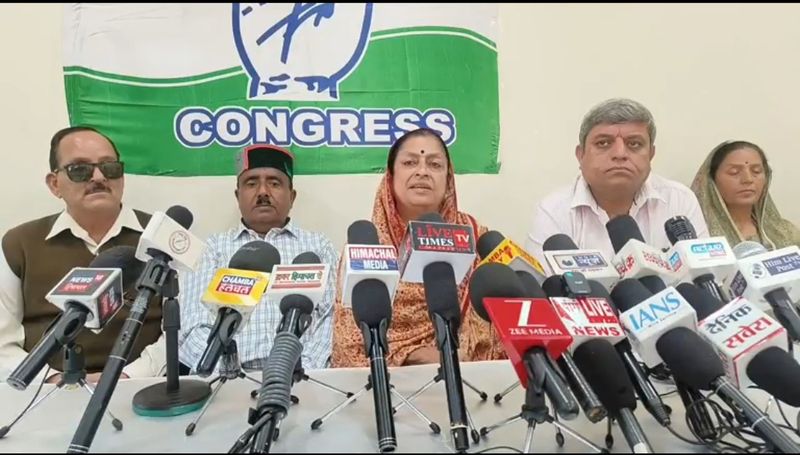
During a press conference in Himachal Pradesh on Friday, Kumari asserted that the bill had received unanimous support across political lines and does not require additional amendments or modifications before implementation. “The Women’s Reservation Bill has already been passed. There is no need to repackage it. The government should implement it in its present form,” she stated firmly.
The controversy centers around the 2023 legislation that mandates 33 percent reservation for women in the Lok Sabha (India’s lower house of Parliament) and state legislative assemblies. A key provision in the law links its implementation to the completion of the next national Census, which has become a point of contention.
Kumari emphasized that conducting the Census falls squarely within the responsibilities of the Central Government. “Without updated demographic data, the process cannot move forward as originally envisaged in the legislation,” she explained. The last Census in India was conducted in 2011, with the 2021 Census delayed due to the COVID-19 pandemic, creating a significant data gap that has complicated the implementation timeline.
The former minister addressed constitutional concerns regarding the implementation process, stating, “Parliament cannot arbitrarily decide the number of seats. This is the mandate of the Delimitation Commission after a Census. Any attempt to redraw the political map without due process is not constitutional.” The Delimitation Commission is responsible for redrawing constituency boundaries based on population data gathered through the Census.
Kumari also raised concerns about potential regional imbalances that could emerge if the reservation is implemented without proper demographic data. She warned that hasty implementation could disproportionately increase representation in larger, more populous states while offering only marginal gains to smaller states like Himachal Pradesh. This disparity, she argued, could disrupt the delicate political balance between different regions of the country.
The Women’s Reservation Bill has had a long and contentious history in Indian politics. First introduced in the 1990s, it faced decades of political resistance before finally being passed in 2023. The legislation aims to address the significant gender imbalance in Indian political representation, where women currently make up less than 15 percent of the Lok Sabha despite comprising nearly half the country’s population.
When questioned about women’s representation within the Congress party itself, Kumari defended her party’s record, asserting that Congress has consistently promoted women leaders and actively supported their participation in politics. The party has historically advocated for greater women’s participation in the political process, including being instrumental in pushing for the reservation bill over the years.
Political analysts note that the implementation delay has become a point of political contention, with opposition parties using it to question the government’s commitment to gender equality in political representation. The Central Government, meanwhile, has cited procedural and constitutional requirements as reasons for the phased implementation approach.
Chamba MLA Neeraj Nayar was also present at the press conference, indicating broader support within the regional Congress leadership for expediting the bill’s implementation.
The debate over the Women’s Reservation Bill implementation continues to highlight the complex intersection of gender politics, constitutional procedures, and regional representation that characterizes India’s evolving democratic framework.
Fact Checker
Verify the accuracy of this article using The Disinformation Commission analysis and real-time sources.

22 Comments
Kumari makes a fair point – the bill has already been passed, so further delays in implementation seem unnecessary. The government should act swiftly to honor the will of Parliament and uphold this landmark law.
Absolutely. Tying the bill’s enactment to the census process could be viewed as an excuse for postponement. The government should prioritize putting the 33% reservation into practice without further ado.
Kumari’s accusations of misinformation are serious. The government should respond transparently and address any valid concerns about the implementation of the Women’s Reservation Bill. Timely action is crucial.
Asha Kumari is right to demand that the government follow through on its commitment to the Women’s Reservation Bill. Delaying implementation undermines the democratic process and sends the wrong signal.
This is a politically charged issue, but Kumari’s stance seems justified. The government should heed the will of Parliament and the people by enacting the Women’s Reservation Bill without further delay.
Absolutely. Transparent and timely implementation of this legislation is crucial for strengthening India’s democracy and advancing gender equality in political representation.
Kudos to Asha Kumari for speaking up on this critical issue. Increased women’s representation in government is essential for inclusive and representative democracy. The government should heed her call and implement the bill as passed.
Well said. India has made progress on women’s rights, but more work remains. Implementing this bill is a crucial step forward that the government should prioritize.
Misinformation from the government on this issue is concerning. Kumari is right to demand prompt implementation of the Women’s Reservation Bill as passed. Transparent and timely action is needed to boost women’s political participation.
Interesting development regarding the Women’s Reservation Bill. Kumari’s emphasis on immediate implementation without further delay seems reasonable, given the bill’s unanimous passage. However, the government’s perspective on linking it to the census is worth understanding as well.
Agreed, the government’s rationale for the census link should be examined. Transparent implementation of this important legislation is crucial for advancing women’s political representation in India.
Kumari’s criticism of the government’s handling of this issue is concerning. Spreading misinformation undermines public trust and political discourse. The government should address her concerns in a transparent and accountable manner.
The accusation of spreading misinformation is a serious one. If true, it undermines public trust in the government. Kumari seems to have a point about the need for timely implementation of the Women’s Reservation Bill.
The government’s reported stance of linking the bill to the census seems puzzling. Kumari makes a strong case that the legislation is ready to be enacted without further preconditions. Expediting this reform should be a priority.
Agreed. The government’s rationale for the census connection is unclear. Kumari’s call for immediate implementation based on the bill’s existing parliamentary approval warrants serious consideration.
This is an interesting development. The Women’s Reservation Bill has been a long-standing demand, and it’s good to see it finally passed. Kumari raises a fair point about the need for timely implementation rather than further delays.
Agreed. The Census should not be a pretext for inaction. The government needs to honor the will of Parliament and the people by enacting this legislation without delay.
Kumari’s criticism of the government’s approach is understandable. The Women’s Reservation Bill has broad political support and should be swiftly implemented as passed, rather than facing further delays or modifications.
The Women’s Reservation Bill is an important step forward, and Kumari’s call for its swift implementation is understandable. However, the government may have legitimate reasons for the delay that should be openly discussed.
True. While urgency is warranted, the government should also engage with all stakeholders to ensure a smooth and effective implementation of the bill.
This is a complex issue with valid arguments on both sides. While the government may have its reasons, Kumari’s call for implementing the bill as passed seems reasonable. Transparent and inclusive policymaking is important.
Agreed. The government should engage constructively with Kumari and other stakeholders to address any legitimate concerns, while still delivering on the promise of the Women’s Reservation Bill.