


Listen to the article
‘Think Before You Share’ Campaign Addresses Misinformation Risks Among Students
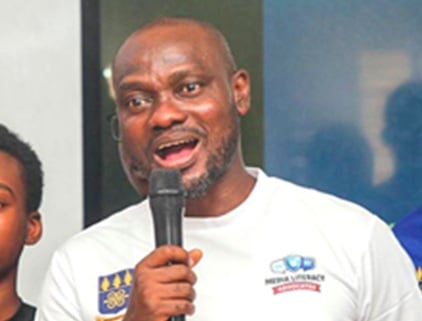
Nathan Gadugah, an editor at Dubawa Ghana, has issued a stark warning about the dangers of sharing unverified information online, emphasizing that “the quality of information people receive determines the quality of decisions they make.”
Speaking at a University of Ghana seminar as part of the “Think Before You Share” campaign, Gadugah addressed the critical need for media literacy in an era where false information spreads rapidly through social networks.
“When you receive quality information, you make quality decisions. When you receive poor information, you make poor decisions,” Gadugah told attendees at the event designed to equip students with practical skills to identify and counter false information online.
The media literacy advocacy initiative specifically targets university students, who are among the most active social media users and often serve as information gatekeepers within their communities. The campaign aims to promote critical thinking and responsible social media use among young people, who frequently encounter misleading content.
According to Gadugah, modern society has entered an unprecedented information age where digital platforms have democratized access to news and information. While this accessibility creates opportunities for people to stay informed, it simultaneously facilitates the rapid spread of false and misleading content.
“In the current information age, people depend heavily on information to make decisions about governance, business, relationships, and everyday activities,” Gadugah explained. “When such information is false or misleading, it can result in poor decisions and harmful consequences.”
The dangers extend beyond personal decision-making. Gadugah highlighted how persistent exposure to false information erodes public trust in vital institutions. When misleading narratives about electoral bodies, government agencies, and media organizations circulate repeatedly, citizens may lose confidence in these essential pillars of democratic society.
This institutional distrust represents a particular concern in regions like Ghana, where democratic institutions continue to develop and where social cohesion depends on shared trust in public systems.
The growing prevalence of misinformation globally has spurred the development of fact-checking organizations like Dubawa, which operates across several West African countries. These organizations systematically verify claims circulating in traditional and social media, publishing evidence-based findings to correct false narratives.
Media literacy experts note that the challenge of misinformation is particularly acute in regions experiencing rapid digital adoption without corresponding growth in critical media education. As smartphone penetration increases across Africa, millions of new internet users encounter online content without the tools to evaluate its credibility.
The University of Ghana’s initiative represents part of a broader movement across educational institutions worldwide to incorporate media literacy into academic curricula. Research indicates that young people equipped with basic fact-checking skills are significantly less likely to share unverified information online.
The “Think Before You Share” campaign distinguishes between different types of false information: misinformation (false information shared without malicious intent), disinformation (deliberately false information shared to cause harm), and malinformation (factual information shared out of context to cause harm).
Media literacy advocates emphasize that addressing the misinformation challenge requires a multi-pronged approach involving educational institutions, media organizations, technology companies, and individual users taking responsibility for the content they consume and share.
As social media platforms continue evolving and artificial intelligence makes fabricated content increasingly sophisticated, initiatives like the University of Ghana’s campaign represent crucial interventions in the ongoing battle against information disorder.
Fact Checker
Verify the accuracy of this article using The Disinformation Commission analysis and real-time sources.

14 Comments
The warning about the direct link between information quality and decision-making is a sobering reality we must address. Efforts to improve media literacy are crucial to combat the growing misinformation crisis.
Absolutely right. Misinformation can have far-reaching consequences, so empowering people to think critically and verify information is vital.
The warning about the direct link between information quality and decision-making is a sobering reminder of the importance of media literacy. This campaign’s focus on equipping students with critical thinking skills is crucial.
Absolutely. Promoting responsible social media use and fact-checking skills among young people is essential to combat the spread of misinformation and its negative impacts.
Promoting critical thinking is crucial to combating the risks of misinformation. Students as information gatekeepers need to be equipped with the right skills to identify and counter false narratives online.
Absolutely. Media literacy should be a core part of modern education to empower young people to think critically about the information they consume and share.
This ‘Think Before You Share’ campaign is a step in the right direction. Addressing the risks of misinformation through practical education and skills-building is a smart and proactive approach.
I agree. Empowering students to think critically about the information they encounter and share is key to building a more informed and discerning society.
Kudos to the organizers for launching this timely and much-needed initiative. Promoting critical thinking and media literacy is essential to tackling the growing misinformation crisis.
Absolutely. With misinformation spreading rapidly online, equipping young people with the skills to identify and counter false narratives is crucial for a healthier information landscape.
This campaign’s focus on university students is smart. They are often opinion leaders within their communities and need to be equipped with the skills to identify and counter false narratives.
Agreed. Targeting future professionals and community influencers is a strategic approach to building a more discerning and responsible information ecosystem.
I’m glad to see this campaign targeting university students, who are particularly vulnerable to the spread of misinformation on social media. Equipping them with practical skills is a smart approach.
Agreed. Fostering critical thinking and responsible social media use among the youth is key to building a more informed and discerning society.