


Listen to the article
Ghana’s communications minister announced that the government is developing new legislation aimed at combating online misinformation while maintaining freedom of expression, as part of a broader digital transformation strategy.
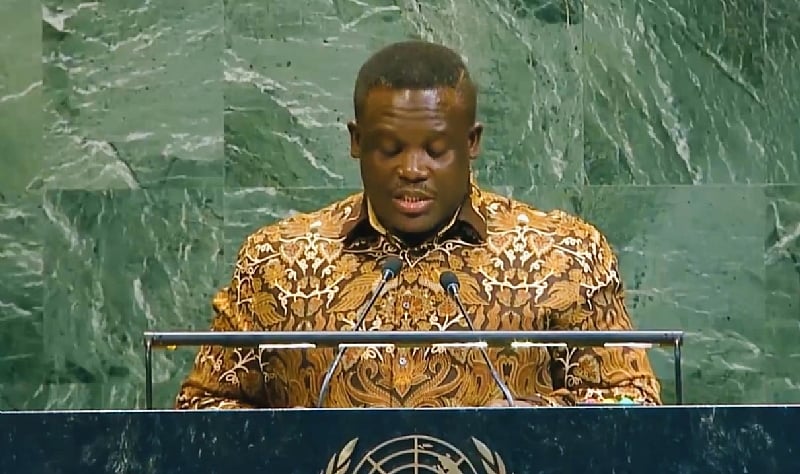
Speaking at the UN High-level Meeting reviewing the outcomes of the World Summit on the Information Society (WSIS+20) on Tuesday, Samuel Nartey George, Minister for Communications, Digital Technology and Innovations, outlined Ghana’s approach to balancing digital safety with civil liberties in an increasingly connected world.
“We’re developing frameworks to deal with mis- and disinformation while respecting the rights of free speech online,” said George, who also serves as the Member of Parliament for Ningo Prampram constituency.
The announcement comes amid growing global concerns about the spread of false information online and its potential impact on democratic processes, public health, and social cohesion. Many countries are grappling with how to regulate digital spaces without infringing on citizens’ rights to free expression.
Ghana’s initiative is part of a comprehensive digitalization agenda that includes significant investments in connectivity infrastructure and public digital systems. The West African nation has been working to position itself as a technology hub in the region, with digital transformation becoming a cornerstone of its economic development strategy.
According to George, the government is simultaneously modernizing legislation governing the digital economy while strengthening cybersecurity measures and data protection frameworks. These efforts aim to build greater trust in digital systems and services among Ghanaians.
“Digital inclusion remains a central pillar of our efforts through nationwide digital literacy campaigns, Community Information Centers, the 1 Million Coders program, and the Girls in ICT initiative, empowering women, youth, and underserved communities to participate effectively in the digital economy,” the minister explained.
The Girls in ICT initiative is particularly significant in a region where gender disparities in technology access and usage remain pronounced. By focusing on bringing more women into the digital economy, Ghana is addressing a critical aspect of the digital divide that persists across much of Africa.
The government’s 1 Million Coders program represents an ambitious effort to build domestic technical capacity in software development, potentially creating new economic opportunities in the growing technology sector. Community Information Centers, meanwhile, serve as access points for those who might otherwise be excluded from digital participation.
Digital literacy has become increasingly important as more essential services, including government functions, banking, and education, move online. Without adequate skills, significant portions of the population risk being left behind in this transition.
In his address, George also emphasized the need for international cooperation to ensure equitable digital access globally and responsible governance of emerging technologies. He pledged Ghana’s readiness to work with global partners toward creating what he described as “a secure, inclusive, and sustainable digital future.”
Ghana’s approach reflects a growing recognition among African nations that digital transformation requires not just technical infrastructure but also appropriate regulatory frameworks and skills development initiatives.
The challenge for Ghana, as with many countries, will be implementing regulations that effectively address harmful content without creating mechanisms that could potentially be used to suppress legitimate speech or political opposition. The specific details of the proposed legislation, which have not yet been released, will be crucial in determining whether this balance can be achieved.
As Ghana continues its digital transformation journey, the success of these initiatives will likely depend on both government commitment and engagement with civil society, technical experts, and international partners to ensure that digital development serves all citizens.
Fact Checker
Verify the accuracy of this article using The Disinformation Commission analysis and real-time sources.

17 Comments
It will be interesting to see how Ghana’s new anti-disinformation laws take shape and are enforced. Ensuring they are targeted and proportionate will be crucial to upholding democratic principles.
Agreed. The implementation details will be critical to evaluate the effectiveness and impact of these new measures.
Striking the right balance between curbing disinformation and protecting free speech is a complex challenge. Ghana’s approach to develop frameworks that address online misinformation while respecting civil liberties is an interesting and nuanced approach.
Ghana’s announcement to address digital misinformation while preserving free speech is a thoughtful and balanced response to a complex challenge facing many countries today.
It will be important to closely monitor how Ghana’s new anti-disinformation laws are implemented in practice to ensure they do not inadvertently restrict legitimate online discourse.
Developing effective frameworks to address digital misinformation is a growing challenge worldwide. Ghana’s approach to do so without restricting legitimate online discourse is a thoughtful step.
Digital transformation and connectivity are vital, but the risks of misinformation must also be addressed. Ghana’s initiative to combat false information online while preserving free speech seems a prudent path forward.
Ghana’s initiative to combat online misinformation while protecting free speech is a commendable approach. Navigating this complex issue requires careful policy development and execution.
Tackling online misinformation is critical, but doing so without infringing on civil liberties is a delicate task. Ghana’s plan to develop targeted anti-disinformation laws is an interesting and necessary approach.
It will be important to see the details of Ghana’s proposed anti-disinformation laws and how they are implemented in practice. Ensuring they do not unduly restrict legitimate online discourse will be crucial.
Absolutely, the devil will be in the details. Careful drafting and implementation will be key to upholding democratic values.
Combating the spread of false information online is crucial, but any regulatory efforts must be carefully crafted to avoid infringing on fundamental civil liberties. Ghana’s approach seems to strike that delicate balance.
Striking the right balance between digital safety and free expression is a difficult task facing many countries. Ghana’s plan to address online misinformation without unduly restricting speech is a thoughtful approach worth watching.
Striking the right balance between digital safety and civil liberties is a global challenge. Ghana’s approach to tackle online disinformation without compromising free expression is a thoughtful and nuanced response.
Ghana’s initiative to develop anti-disinformation frameworks that uphold free speech is a commendable and nuanced response to a global challenge. The details of implementation will be crucial to evaluate its effectiveness.
The spread of false information online is a serious concern, but any efforts to curb it must be balanced against the fundamental right to free expression. Ghana’s initiative seems to strike that balance.
Exactly, finding the right equilibrium between these competing priorities is key. Ghana’s nuanced response is a model worth watching.