


Listen to the article
Social Media Emerges as Primary News Source for European Youth, Raising Concerns
Social media has overtaken traditional outlets to become the main source of information on politics and social issues for young Europeans aged 16 to 30, according to recent Eurobarometer data. In Spain, the trend is particularly pronounced, with 49% of respondents using social platforms for news consumption—seven percentage points higher than the EU average.
This shift represents a significant change in media consumption patterns, as social media now surpasses television (44%) and online newspapers (20%) as information sources for Spanish youth. Among the platforms, Instagram leads with 51% of users, followed by TikTok (43%), Twitter (36%), YouTube (32%), and Facebook trailing at just 11%.
The growing reliance on social media for news raises questions about vulnerability to misinformation, especially among younger demographics. At a recent conference organized by the Catalan Audiovisual Council (CAC), Professor Luiz Peres-Neto of the Autonomous University of Barcelona presented findings from a qualitative study of teenagers that highlighted their distrust of traditional media.
“An 18-year-old girl from Barcelona told me that traditional media outlets have very clear political interests. ‘They’re bought and paid for,’ she said,” Peres-Neto recounted. “She claimed to be aware of the risks of social media—disinformation, conspiracy theories, algorithms—but preferred it to the rigid narratives of television news programs or the political biases of the press.”
Contrary to stereotypes of youth apathy, the academic emphasized that young people remain engaged with current affairs, albeit differently from previous generations. “Young people are interested in politics, but not in institutional politics or the kind that appears in the media,” he explained. “They’re concerned about feminism, climate change and other thematic interests, but their agenda doesn’t coincide with mainstream media’s focus.”
A 2023 Save the Children report examining disinformation in digital environments revealed significant gender differences in how young people assess their media literacy. Among boys, 56% believed they could identify fake news, while only 11.2% admitted they couldn’t. Girls demonstrated greater caution, with just 38.5% confident in their ability to spot misinformation, and 48.3% responding with “it depends.”
When seeking to verify potentially false information, most young people (56.8%) turn to family or friends rather than traditional sources like television (43.9%), online news (32.3%), print media (17%), or radio (10.1%). The study also found that boys are more likely than girls to trust social media and content creators as reliable information sources.
Perhaps most concerning is the apparent impact of social media polarization on social attitudes. Since 2019, the percentage of boys who believe that “gender violence doesn’t exist, it’s an ideological invention” has nearly doubled, rising from 11.9% to 23% by 2023.
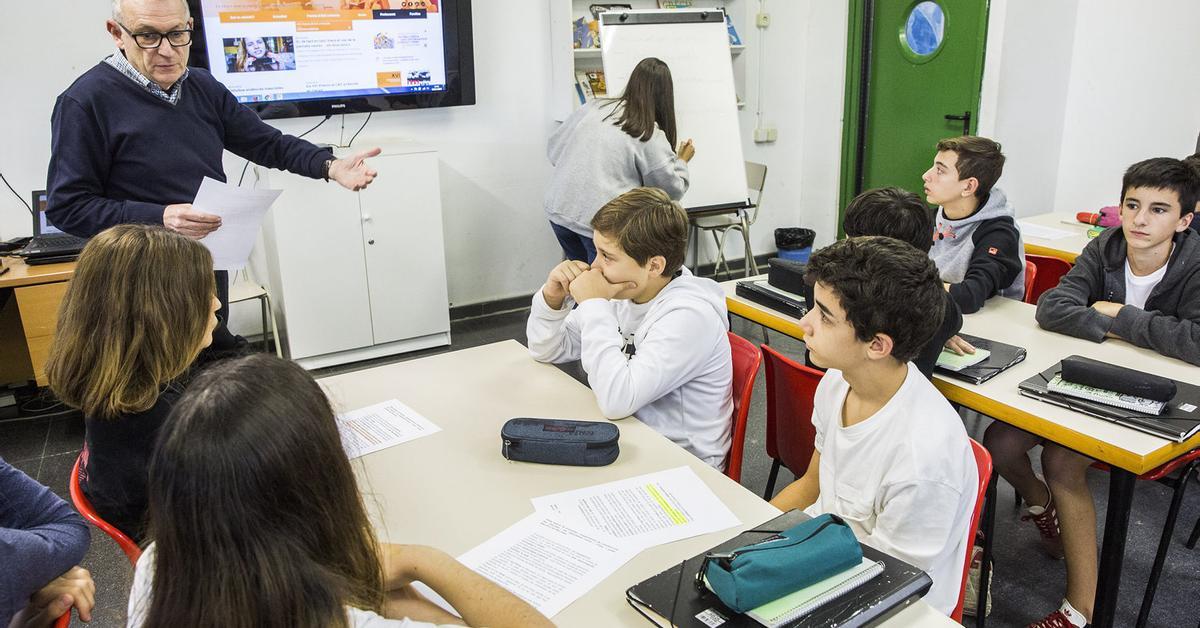
Educational institutions across Catalonia have begun addressing these trends through media literacy programs. IES Euclides in Pineda de Mar, a high-complexity school, recently received the first CAC Award for Outstanding Career Achievement in Promoting Media Literacy. The school has integrated media education throughout its curriculum, with 30-40% of its approximately 500 students taking media-related courses.
“When there’s an outreach component to the community, it really motivates them,” explained Gemma Paricio, head of studies at IES Euclides. “The idea is to train them to be aware and critical. We want them to be not only spectators but also active participants in this digital society.”
The school’s comprehensive approach includes practical production of magazines, radio programs, television content, and documentaries, though Paricio notes that recent bans on mobile phones in schools have created new challenges for these activities.
Meanwhile, UNICEF’s extensive study of 100,000 students highlights additional concerns about digital media consumption. The research found that one-third of teenagers have experienced digital violence in romantic relationships, 78.3% of primary school students are already registered on at least one social network, and 43.6% use three or more platforms.
The average age for first mobile phone ownership in Spain remains steady at 10.8 years. UNICEF’s analysis concludes that 5.7% of students may have already developed problematic social media use, with higher rates among girls (7.2% versus 4% for boys). Additionally, 29.6% of surveyed students have viewed pornography, with access rates increasing dramatically from primary school (7.2%) to vocational training (62.9%), and boys’ consumption nearly triple that of girls.
As digital platforms continue reshaping information landscapes, these findings underscore the urgent need for comprehensive media literacy initiatives targeting younger generations.
Fact Checker
Verify the accuracy of this article using The Disinformation Commission analysis and real-time sources.

10 Comments
This shift in news consumption patterns among young Europeans is an interesting development, but one that raises significant concerns. The potential for the spread of misinformation and the lack of traditional editorial oversight on social media platforms is a concerning trend that warrants close attention and proactive measures to address. Improving media literacy education will be key to equipping the youth with the necessary skills to critically evaluate online content.
I agree that the reliance on social media for news is a complex issue with both positive and negative implications. While it provides greater accessibility, the risks of misinformation and biased content are very real. Developing robust media literacy programs to empower young people is a crucial step in addressing this challenge.
The rise of social media as the dominant news platform for young Europeans is certainly a concerning trend. While it offers greater accessibility, the lack of traditional editorial oversight raises serious questions about the quality and veracity of the information being consumed. Addressing this challenge will require a multi-faceted approach focused on media literacy and critical thinking skills.
Well said. Social media’s role as a primary news source is a complex issue with both benefits and drawbacks. Fostering media literacy and critical evaluation of online content is crucial to empower young people to navigate this landscape effectively and make informed decisions.
Interesting how social media has overtaken traditional media as the primary news source for young Europeans. This shift raises valid concerns about the spread of misinformation, especially among impressionable demographics. It’s crucial that we find ways to improve media literacy and critical thinking skills to empower youth to navigate the digital landscape effectively.
I agree. The reliance on social media for news is a double-edged sword – it provides greater access to information, but also heightens the risk of exposure to biased or misleading content. Educating the public, especially the youth, on evaluating sources and recognizing potential biases is essential.
This shift in news consumption patterns among young Europeans is certainly thought-provoking. While social media offers greater accessibility, the lack of traditional editorial oversight raises valid concerns about the potential spread of misinformation and biased content. Addressing this challenge will require a multipronged approach, including bolstering media literacy education to equip the youth with the necessary skills to critically evaluate online information.
Well said. The growing reliance on social media for news is a complex issue that deserves careful consideration. Improving media literacy and critical thinking skills among the youth is a crucial step in empowering them to navigate this landscape effectively and make informed decisions.
The increasing reliance on social media as the primary news source for young Europeans is a worrying trend. While social platforms offer greater accessibility, the lack of traditional editorial oversight heightens the risk of exposure to misinformation and biased content. Addressing this challenge will require a multifaceted approach focused on improving media literacy and critical thinking skills among the youth.
I share your concerns about the potential pitfalls of social media’s dominance as a news source. Fostering media literacy and critical evaluation skills is essential to empower young people to navigate this landscape effectively and make informed decisions. It’s a complex issue that deserves close attention and proactive solutions.