


Listen to the article
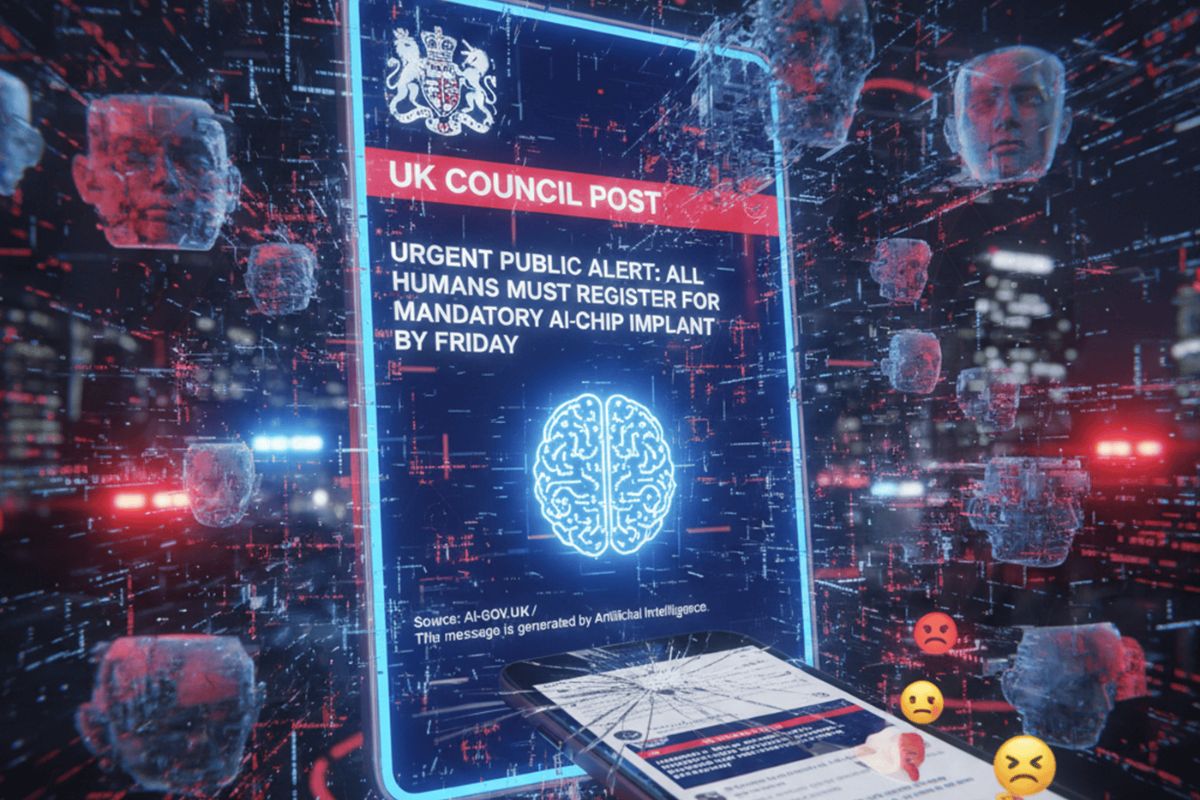
British officials are raising alarms as AI-generated fake council announcements circulate widely across Yorkshire, potentially undermining public trust in local governance. The convincing fabrications, primarily targeting the City of York Council, have spread rapidly on social media platforms despite their fraudulent nature.
The falsified posts feature realistic council branding and professional layouts that many residents could mistake for legitimate announcements during casual social media browsing. These fabrications promote non-existent initiatives that touch on politically sensitive issues – claiming the council is asking residents to house asylum seekers, recruiting volunteers to remove St. George flags, or encouraging citizens to fill potholes themselves.
By the time York Council officials confirmed these posts were fake, thousands of shares had already occurred, with some reaching accounts followed by hundreds of thousands of users. The damage was already done, as many residents likely viewed and believed the false information before any corrections could reach them.
Digital misinformation experts note this represents a troubling evolution in how false information propagates online. The accessibility of sophisticated AI tools has dramatically lowered both the technical skill and financial resources needed to create convincing fake content. What once required professional design expertise and specialized software can now be accomplished by anyone with basic computer literacy and access to AI tools.
“The internet used to rely on the principle of ‘pics or it didn’t happen’ as a verification standard,” explained one researcher who studies online misinformation patterns. “Now, that standard has become meaningless as AI can generate photorealistic evidence of events that never occurred.”
While these fakes often contain subtle tells—blurred logos or occasional spelling errors—these flaws are easily overlooked by users quickly scrolling through busy social media feeds. The volume and speed at which this content spreads presents a particular challenge for local authorities with limited resources.
Local council leaders have expressed mounting concern about managing these incidents, particularly when false claims target sensitive topics like immigration that can inflame community tensions. The problem extends beyond simply correcting individual posts to addressing the widespread circulation of misleading content before significant damage occurs.
In some documented cases, content creators have refused to remove false posts despite official corrections because the inflammatory content generates substantial engagement and advertising revenue, creating financial incentives for spreading misinformation.
This pattern extends far beyond Yorkshire, reflecting a global trend affecting democracies worldwide. In the United States, AI-generated robocalls mimicking President Biden’s voice attempted to discourage primary election voting, prompting regulatory investigations. Taiwan has battled deepfake videos of political leaders designed to influence public opinion, while European authorities report coordinated disinformation campaigns using AI-altered content during election periods.
Nigeria’s 2023 election saw manipulated audio recordings falsely suggesting election interference, heightening political tensions in an already volatile environment. The pattern is consistent across regions: accessible AI tools are being weaponized to undermine electoral processes and democratic institutions.
Disinformation researchers emphasize that the threat isn’t merely whether individual voters believe specific false content. Rather, the danger lies in how repeated exposure to conflicting information creates a general atmosphere of confusion and doubt. This “uncertainty effect” can erode confidence in democratic institutions even among citizens who don’t fully believe specific false claims.
“AI accelerates this process exponentially,” notes one academic studying the phenomenon. “It makes false content production faster, cheaper, and more precisely targeted to specific communities or local issues. Most people simply lack the time or motivation to verify everything they see online, often sharing material that aligns with existing beliefs without checking its accuracy.”
As AI technology continues advancing, democratic societies face the challenge of adapting through stronger digital literacy programs, clearer rules for online platforms, and updated regulations—all without undermining principles of free expression. While the production cost of misleading content continues to fall, experts warn the long-term cost to democratic trust could prove incalculably higher.
Fact Checker
Verify the accuracy of this article using The Disinformation Commission analysis and real-time sources.

11 Comments
While the impact of these false posts is concerning, I’m hopeful that increased awareness and proactive measures can help limit the damage. Maintaining trust in local government is essential for a healthy democracy.
While the technology behind these fake posts is impressive, the intent to mislead the public is deeply concerning. I hope the authorities can find effective ways to counter this threat to democratic discourse.
This situation underscores the importance of verifying information, especially on social media. Residents should be encouraged to cross-check with official council channels before believing or sharing posts.
This is a concerning development, as AI-generated misinformation can erode public trust in local government. Residents need accurate, official information to make informed decisions.
This is a complex issue with no easy solutions. Ongoing vigilance and collaboration between authorities, tech companies, and the public will be crucial to combat the spread of AI-fueled disinformation.
The use of realistic branding and layouts to spread misinformation is particularly troubling. It speaks to the sophistication of these AI tools and the need for robust digital literacy initiatives.
I agree. Councils should consider implementing stronger verification processes and working with social media platforms to quickly identify and remove fraudulent content.
I’m curious to know what measures the authorities are taking to combat this issue and prevent the spread of these fake council announcements. Fact-checking and rapid response seem crucial.
Yes, prompt action by officials to identify and debunk false posts is essential. Educating the public on how to spot AI-generated content would also help mitigate the problem.
It’s alarming to see how quickly these AI-generated fabrications can spread, even when they are eventually debunked. Rapid response and transparency from local authorities will be crucial.
The use of AI to create such convincing fake council announcements is deeply troubling. It highlights the need for robust digital authentication tools and public education on media literacy.