


Listen to the article
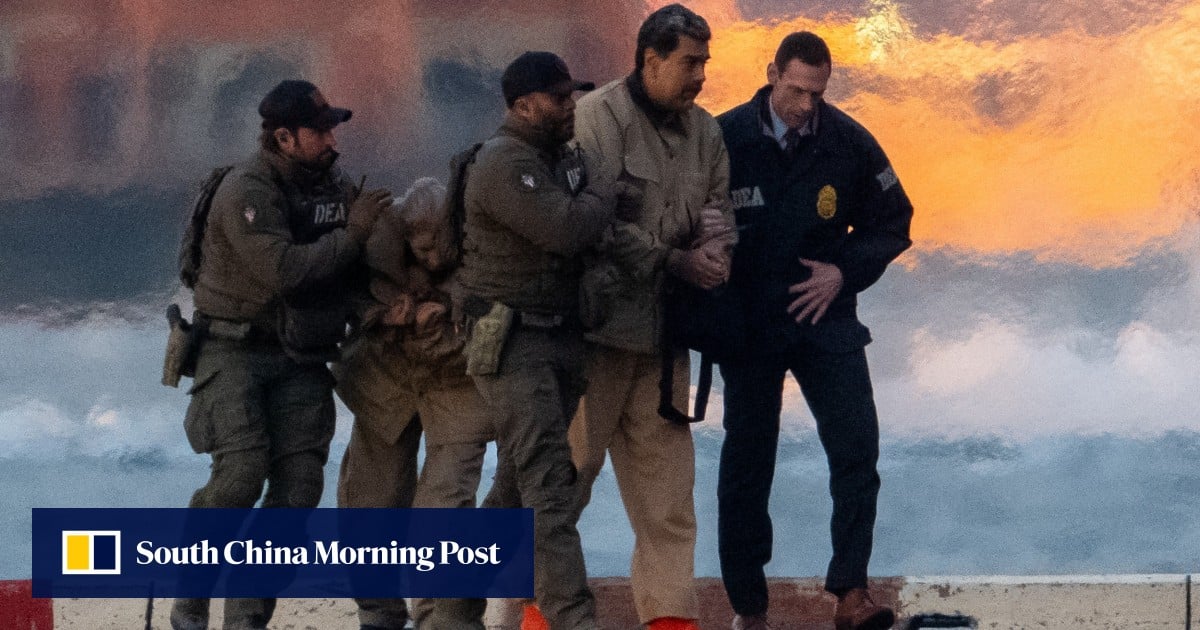
A surge of visual misinformation has flooded social media platforms following the dramatic capture of Venezuelan leader Nicolas Maduro by US forces. The operation, which saw American troops seize Maduro from his residence in Caracas, has triggered a wave of fake and misleading images that have reached millions of viewers across multiple platforms.
Digital verification experts have identified numerous instances of fabricated content competing with legitimate news coverage of the high-profile detention. This phenomenon highlights a growing challenge in today’s information landscape, where artificially created or manipulated visuals can rapidly spread alongside authentic reporting.
One widely circulated image purported to show the first photograph of Maduro in American custody. The image depicted the Venezuelan leader surrounded by US military personnel near an aircraft. However, fact-checkers quickly determined the image was AI-generated, with Google’s artificial intelligence tool Gemini detecting a SynthID watermark embedded in the content. The watermark, designed to identify AI-created imagery, revealed the deception. Observers also noted that the fake image portrayed Maduro as noticeably younger than his actual appearance.
In another instance of misinformation, social media users shared what they claimed was a photograph of an American soldier posing with a captured Maduro, who appeared with a bag covering his head. Verification revealed this image actually dated back to 2003, showing the capture of Iraqi leader Saddam Hussein during the US military operation that removed him from power. Contemporary news reports from that period confirm the image’s true origin.
According to disinformation watchdog NewsGuard, at least seven fabricated or misrepresented images and videos related to the Venezuela operation have been identified. These manipulated visuals collectively garnered more than 14 million views in less than 48 hours on X (formerly Twitter) alone. The rapid spread across the Elon Musk-owned platform demonstrates how quickly misinformation can reach massive audiences in today’s digital environment.
The proliferation of such content presents significant challenges for news consumers attempting to understand unfolding international events. The Venezuela operation represents a major geopolitical development in the Western Hemisphere, with potential implications for regional stability, US-Latin American relations, and global oil markets. Venezuela possesses the world’s largest proven oil reserves, making developments there particularly consequential for energy markets and international politics.
Media literacy experts note that the blending of authentic and fabricated content creates a particularly difficult environment for citizens seeking reliable information. The sophistication of AI-generated imagery continues to advance, making visual verification increasingly challenging even for experienced observers.
This incident represents part of a broader trend in which major international news events are quickly followed by waves of visual misinformation. Similar patterns emerged following the outbreak of the Russia-Ukraine conflict, the Israel-Hamas war, and other significant global events.
Social media platforms continue to face scrutiny over their role in the dissemination of misleading content. Critics argue that engagement-driven algorithms often amplify sensational but unverified visuals before fact-checkers can evaluate their authenticity.
As Venezuelan and American officials manage the diplomatic and security fallout from the capture operation, the parallel information battle playing out online demonstrates how modern conflicts unfold simultaneously on physical and digital fronts. This dual reality creates new challenges for journalists, policymakers, and citizens attempting to make sense of complex international developments.
Fact Checker
Verify the accuracy of this article using The Disinformation Commission analysis and real-time sources.

8 Comments
This highlights the complex geopolitical situation in Venezuela. While the US operation against Maduro is controversial, the spread of deepfake content only serves to further cloud the facts. I’m curious to see how this situation develops and whether the verification issues can be addressed.
That’s a good point. The Venezuela situation is delicate, and the proliferation of fake visuals makes it even harder to discern the truth. Maintaining impartiality and relying on reputable sources will be vital as this story unfolds.
The use of AI-generated deepfakes in this context is quite alarming. It’s a powerful tool that can be easily abused to spread disinformation. Fact-checkers and tech companies need to stay vigilant and continuously improve their detection capabilities.
Hmm, the fake image of Maduro in US custody is a good example of how AI-generated content can mislead people. The embedded watermark is an interesting detail that helps identify these kinds of manipulated visuals. We need better tools to combat this misinformation.
Agreed. The ability to quickly verify the authenticity of images and videos will be crucial moving forward. Proactive steps by tech platforms and fact-checkers are important, but media literacy for the general public is also key.
This is a concerning development. The spread of deepfakes on social media is a growing challenge that erodes trust in information. It’s critical that we rely on authoritative and verified sources when it comes to major news events like this.
This is a timely reminder of the importance of digital media literacy. As AI capabilities advance, the ability to distinguish authentic content from manipulated visuals will be critical. Fostering a more discerning and skeptical public is an ongoing challenge.
The Maduro case illustrates how deepfakes can quickly gain traction and potentially sway public opinion. While the technology behind these fabricated images is impressive, their malicious use is deeply concerning. Robust verification processes are essential to maintain trust in news coverage.