


Listen to the article
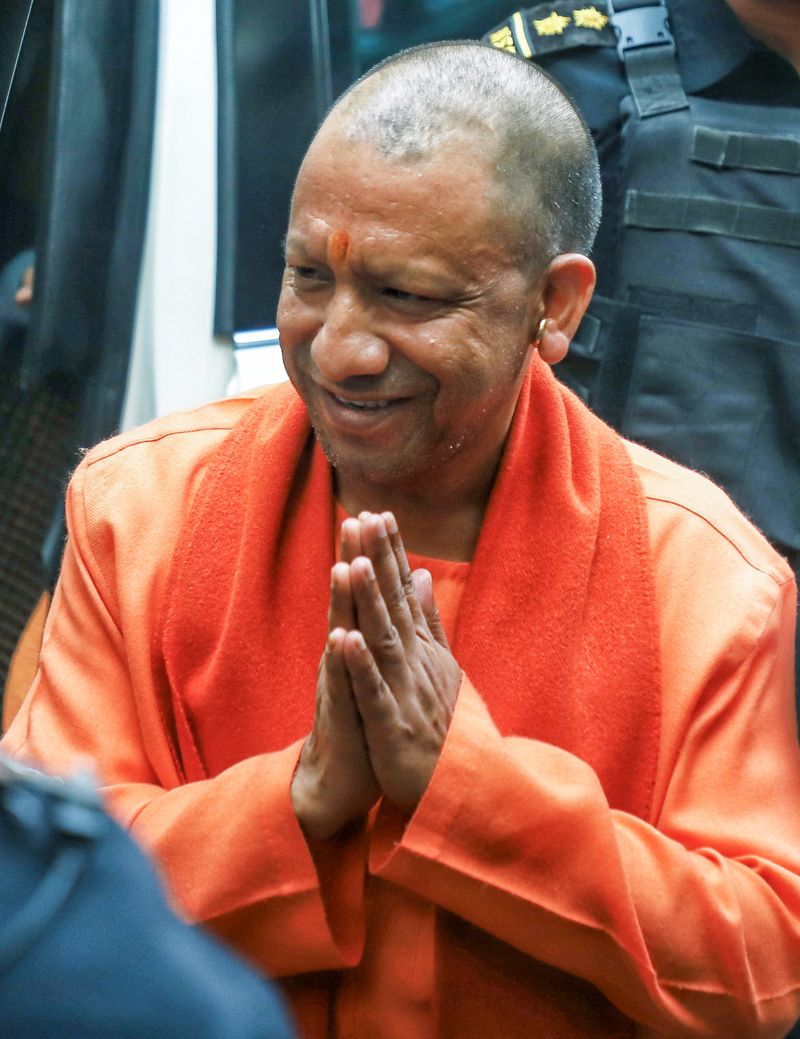
In a forceful defense of the newly enacted Viksit Bharat Guarantee for Rozgar and Ajeevika Mission (Gramin) (VB-GRAM G) law, Uttar Pradesh Chief Minister Yogi Adityanath on Tuesday criticized the Congress and INDIA bloc for opposing what he termed a “transparent reform” designed to strengthen rural India.
During a press conference attended by Deputy Chief Ministers Brajesh Pathak and Keshav Prasad Maurya, along with ministers from NDA coalition partners including the Nishad Party, SBSP, and Apna Dal (S), Adityanath explained the key features of the legislation that replaces the Mahatma Gandhi National Rural Employment Guarantee Act (MGNREGA).
“Those who plundered the country’s resources for decades and pushed the poor and youth into hunger and migration are now questioning a transparent reform aimed at strengthening rural India,” Adityanath said, directly targeting opposition parties.
The Chief Minister described the new law as a milestone for village-centric development that aligns with Prime Minister Narendra Modi’s vision of a developed India. He emphasized that the legislation would guarantee employment, ensure livelihoods, and create permanent infrastructure in rural areas.
According to Adityanath, the previous MGNREGA scheme suffered from numerous deficiencies, including fake job cards, bogus attendance records, delayed wage payments, weak social audits, and widespread corruption. He claimed the system failed to create durable assets while leaving workers without timely employment and compensation.
In contrast, the new VB-GRAM G law increases the employment guarantee from 100 to 125 days annually and introduces weekly payments to workers with mandatory compensation for delays. Unemployment allowance has been established as a legal right if work is not provided upon demand.
A significant provision of the law addresses the agricultural labor shortage by implementing a 60-day pause in scheme work during peak farming seasons, ensuring labor availability for critical planting and harvesting periods while maintaining the 125-day employment guarantee throughout the year.
The Chief Minister outlined four categories of permissible work under the new law, with a strong emphasis on creating permanent assets rather than temporary ones. These include water conservation projects such as rainwater harvesting and check dams, rural infrastructure development like roads and drainage systems, and livelihood-related infrastructure including sports facilities and marketplaces that can generate income for villages.
“Earlier, under MGNREGA, durable assets were rarely created. Now, the focus is entirely on permanent asset creation,” he stated.
To ensure transparency and eliminate corruption, the legislation incorporates technological solutions including biometric attendance, geo-tagging, satellite imagery, real-time mobile app monitoring, and AI-based oversight. Direct digital payments through DBT (Direct Benefit Transfer) will prevent the misappropriation of funds.
Referring to past irregularities, Adityanath cited an alleged MGNREGA scam in Sonbhadra during the previous Samajwadi Party government, which he said remains under CBI investigation.
The new framework includes bi-annual social audits supported by digital systems, time-bound grievance redressal mechanisms, and district-level ombudsmen. The funding model maintains a 60:40 partnership between the central government and states, which Adityanath claimed could bring more than Rs 17,000 crore to Uttar Pradesh.
“Earlier, funds often went to states where fake payments were rampant. Now, states with a larger labor force and genuine demand for work will receive more resources,” he explained.
For Uttar Pradesh, which has over 57,600 gram panchayats and more than 1.05 lakh revenue villages with nearly 70 percent of its population living in rural areas, the Chief Minister emphasized the law’s potential impact on rural development and agricultural productivity.
“Uttar Pradesh is India’s food basket. Better coordination between farmers and laborers is essential,” said Adityanath, adding that the new system would ensure labor availability during farming seasons while providing guaranteed employment during agricultural off-seasons.
Adityanath concluded by asserting that the legislation would accelerate rural infrastructure development while addressing longstanding demands for community facilities, creating permanent assets that contribute to sustainable rural development rather than temporary relief measures.
Fact Checker
Verify the accuracy of this article using The Disinformation Commission analysis and real-time sources.

10 Comments
The Chief Minister’s criticism of opposition parties raises some valid concerns about potential misinformation. However, independent analysis of the law’s provisions and impact on the ground will be needed to assess its merits.
Absolutely, political rhetoric aside, the real test will be whether the new law delivers tangible benefits for rural communities in Uttar Pradesh and across India.
This debate highlights the ongoing challenges in India’s rural employment and development policies. It will be important for all sides to engage in a fact-based, nuanced discussion to find the best solutions for the country’s rural population.
The replacement of MGNREGA with this new law is a significant policy shift. While the stated goals of strengthening rural India are admirable, the implementation and impact on the ground will need to be closely monitored.
Agreed, the proof will be in the pudding. It’s important that the government engages constructively with all stakeholders, including opposition parties, to ensure the new program delivers tangible benefits.
The Chief Minister’s comments suggest a political battle brewing over this policy change. While the government’s intentions may be good, the real impact on the ground will depend on effective implementation and addressing the concerns of all stakeholders.
Absolutely, this is a complex issue that requires careful analysis and a collaborative approach, not just partisan rhetoric. The true test will be whether the new law delivers meaningful improvements for rural communities.
As someone interested in rural development, I’m curious to learn more about how VB-GRAM G compares to the previous MGNREGA program. The emphasis on permanent infrastructure could be a positive step, but details on job creation and livelihood support will be crucial.
Interesting development in the ongoing debate around employment guarantee schemes in India. It will be important to carefully evaluate the pros and cons of the new VB-GRAM G law and how it impacts rural livelihoods.
Agreed, transparency and effective implementation will be crucial for the success of this new program. Balancing employment guarantees with infrastructure development could be a challenge.