


Listen to the article
A Climate of Truth and Action: Bridging Global Inequality Through Permaculture
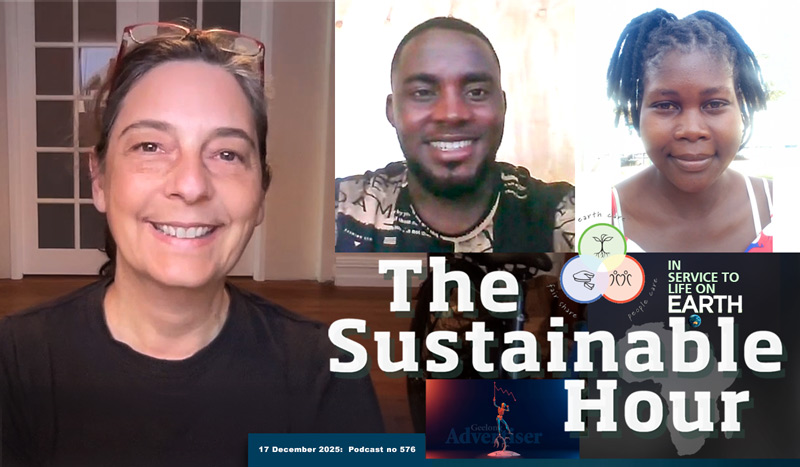
In the final episode of The Sustainable Hour for 2025, hosts tackled pressing issues at the intersection of climate action, media responsibility, and grassroots solutions spanning continents.
The program opened with a pointed critique of climate misinformation in mainstream media. Co-host Mik Aidt called out the Geelong Advertiser for publishing a paid advertisement that falsely claimed carbon dioxide poses no climate threat, arguing that such misinformation directly impacts public safety during an era of increasing climate disasters. “Climate denying content affects how we deal with this problem,” Aidt emphasized. “That means it affects our food security, health, and infrastructure, as we’re seeing with flooding and bushfires. People are getting killed in Australia from the consequences of climate inaction.”
Colin Mockett’s global outlook highlighted both progress and challenges in the decade since the Paris Agreement. While clean energy momentum continues worldwide with visible evidence in growing electric vehicle adoption and rooftop solar installations, political obstacles remain. The Victorian government recently approved new gas exploration in the Otway and Gippsland basins, drawing criticism from environmental groups who argue the move undermines emissions reduction targets.
Mockett also presented striking data on global inequality, revealing that just 56,000 ultra-wealthy individuals—who could fit inside Melbourne’s Marvel Stadium—now control more wealth than half of humanity. “Twelve of the world’s wealthiest billionaires produce more greenhouse gas emissions from their yachts, private jets, mansions and financial investments than the annual energy emissions of two million average homes,” he reported, highlighting how wealth concentration affects climate action.
The program then shifted focus to practical solutions through a conversation with Jessica Perini, who coordinates permaculture education projects connecting Australians with refugee communities in Uganda and Kenya. What began as online teaching sessions during the pandemic has evolved into collaborative projects providing food security and livelihood opportunities in refugee settlements.
“I started getting this huge cohort from Africa, specifically from East Africa—people from Kenya, Uganda, Cameroon, all sorts of places, but mainly from refugee camps,” Perini explained. “They were desperate for this knowledge. So I started asking, what do you want to learn? They wanted practical skills: how to grow maggots for chickens, how to deal with water issues.”
Through fundraising and knowledge-sharing, these partnerships have established mushroom-growing operations providing vital protein sources in the Nakivale refugee settlement in Uganda, where approximately 280,000 refugees live. Eric Hakizimana, principal of the African Basic Care Center Initiative there, described how these skills are transforming lives: “We provide women and children with skills so they can provide at least something on their table each day.”
In Kenya, Ruth Akinyi shared how permaculture training has empowered girls and women in her community. “This knowledge was a life-changing moment for me,” she said. “It’s been really worthwhile for the community, especially with the empowerment of girls. Now we’ve had the first five head to university.”
The permaculture initiatives have gained momentum as communities witness tangible benefits. “People would easily show up now because they have started seeing the fruits of it,” Akinyi noted. “I don’t see any other solutions that could really curb the negative impacts climate has caused to the world, especially in Africa, which is suffering the most despite contributing less to the problem.”
This community-driven approach has become increasingly vital as international aid diminishes. Perini explained that when USAID funding was cut, many refugees received letters saying “next month there’s nothing,” leaving communities to develop their own resilience strategies.
As 2025 concludes, the hosts reflected on values that matter moving forward: being connected, creative, critical, innovative and solution-focused. “It’s not thousands, not hundreds of thousands, or millions of lives at risk from climate change—it’s billions,” they emphasized, quoting from recent climate emergency briefings.
The episode closed with an invitation for listeners to get involved, whether through small contributions of time or expertise. As Perini advised those inspired to help: “Don’t hesitate. Just reach out. You can help no matter what skill set you have—you don’t have to be a permaculturist or an expert in anything. All you need is a little enthusiasm and the ability to reach out and talk to people.”
Fact Checker
Verify the accuracy of this article using The Disinformation Commission analysis and real-time sources.

10 Comments
The juxtaposition of clean energy progress and persistent political obstacles is thought-provoking. Clearly, more needs to be done to translate technological advances into equitable, systemic change.
Agreed. Bridging the gap between innovation and policy will be critical to addressing the multifaceted challenges of climate change and global inequality.
This article provides a sobering look at the complex, interconnected challenges of climate change, inequality, and grassroots solutions. Tackling misinformation while empowering local communities is crucial.
Well said. Grassroots initiatives like permaculture seem vital to building resilience, but require support from policymakers and the media to scale up and have broader impact.
Interesting article on the complex interplay between climate, inequality, and grassroots solutions in Africa. It’s encouraging to see permaculture advances tackling food security and climate resilience at the local level.
Agreed, permaculture offers a promising path to sustainable development that empowers communities. Curious to learn more about the specific permaculture projects mentioned and their real-world impacts.
The critique of climate misinformation in the media is important. Responsible reporting on climate change and its consequences is crucial, especially as extreme weather events become more frequent and severe.
Yes, media outlets have a duty to provide accurate, science-based information to the public. Pushing climate denial content is unethical and puts lives at risk.
Good to see progress on clean energy adoption globally, but the political obstacles highlighted are concerning. Policymakers need to do more to support the transition and address inequality.
Agreed, the clean energy transition must be accelerated to mitigate climate change. Curious what specific policy reforms the article suggests to overcome the political barriers.