


Listen to the article
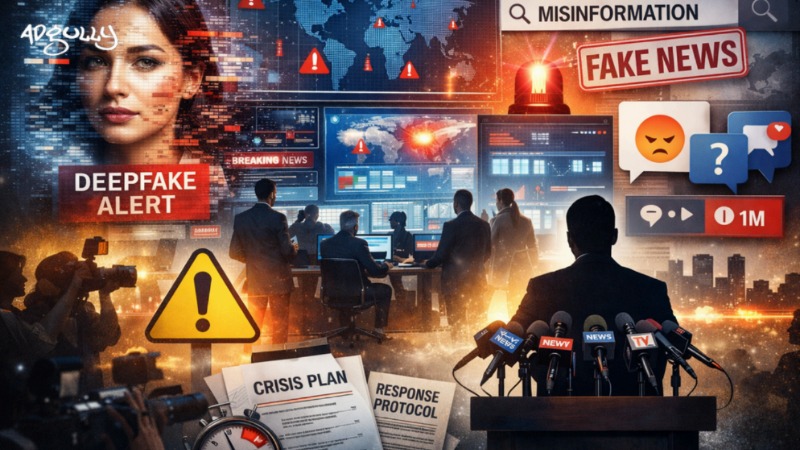
In an era when information travels at lightning speed, crisis communication has fundamentally transformed. Reputation no longer erodes gradually but combusts in real-time, challenging organizations to respond within minutes rather than days to preserve their public standing.
Industry experts emphasize that today’s hyper-connected ecosystem, powered by algorithms and artificial intelligence, demands more than reactive damage control. Modern crisis management requires structured preparation during peaceful periods, disciplined rapid response when issues emerge, and unprecedented transparency when stakes are highest.
The Indian government has recognized these shifting dynamics, introducing stricter oversight of AI-generated and deepfake content through revised Information Technology Rules. Social media platforms must now remove flagged content within three hours and clearly disclose AI-manipulated material, signaling a more aggressive enforcement approach to digital misinformation.
“Organizations need to keep their playbook ready for any crisis,” says Mehraj Dube, Managing Partner at Your Next Orbit. “Keep your spokesperson ready. Keep the emergency group aligned. Some response mechanism should be very clearly spelt out in a document and all this should be specified during peace time, so that in times of crisis, everything does not become chaos.”
This proactive stance is echoed by Neha Gour, CEO of PR 24×7, who warns that reactive communication is no longer viable in today’s digital landscape. “Every organisation must have a well-defined crisis communication framework in place – this includes a ready set of anticipated questions and approved responses, along with a clearly identified, trained spokesperson who is easily reachable at all times,” Gour explains. “Delays caused by internal confusion or approval bottlenecks often do more damage than the crisis itself.”
The threat landscape has grown increasingly complex with the rise of deepfakes and AI-generated misinformation. Shailesh Goyal, Founder Director of Simulations Public Affairs Management Services, recommends building cross-functional war rooms that conduct regular deepfake drills, paired with real-time monitoring tools to detect problems early.
“Deepfakes turn crises viral in minutes, so preparedness needs to be an organizational reflex, not just paperwork,” Goyal notes. “In the end, trust really is the first line of defense.”
When responding to crises, experts caution that speed must be balanced with accuracy. While rapid response is essential, hasty communication without factual clarity can exacerbate problems, particularly when AI-generated misinformation muddles the information landscape.
“Speed should not be the core of one’s response,” Dube advises. “What’s more important is if you stick around your messaging and your purpose is very clear. Then you can keep up the speed, otherwise speed can ruin it.” He emphasizes that while AI tools are valuable for monitoring misinformation, “human response is at the top of everything.”
Gour reinforces this perspective, noting that “speed without clarity can backfire.” She recommends organizations rely on verified facts, communicate in straightforward language, and utilize their owned channels to address concerns directly, reducing dependency on speculation from unreliable sources.
Goyal describes crisis response as “a tightrope walk between immediacy and precision,” where silence can imply guilt but haste can breed errors. His practical advice: “Respond fast, verify continuously, and correct openly.” Organizations should acknowledge issues within minutes, commit to regular updates through verified channels, and maintain transparency about ongoing verification efforts.
Transparency emerges as perhaps the most valuable currency in crisis management. It builds trust with stakeholders and provides a competitive advantage in reputation management.
“Nothing can beat transparency. It is a strong pillar to gain trust from your audiences or your customers,” Dube states. “Even if major response is delayed, start with engaging with them and show the world that you are ready to face a crisis. You are not hiding.”
Gour positions transparency as both a reputational safeguard and business necessity. “Being proactive – acknowledging the issue, sharing what is known, and committing to updates – signals accountability. In contrast, silence or delayed responses can severely damage brand credibility.”
Goyal adds a pragmatic dimension to transparency, noting it builds trust but must be backed by action. “Communicate early even if facts aren’t complete, show your verification steps openly, and archive everything publicly for easy access,” he advises. Without proactive communication, “AI lies rush in to fill the void and harden false narratives, making recovery exponentially costlier.”
The consensus among experts is clear: effective crisis communication today requires institutional readiness before problems emerge, disciplined speed when they do, and radical transparency throughout the process. Miss any of these elements, and algorithms—not organizations—will control the narrative.
Fact Checker
Verify the accuracy of this article using The Disinformation Commission analysis and real-time sources.

8 Comments
The article raises some valid concerns around the challenges of crisis management in the AI age. With the potential for rapid spread of misinformation, it’s crucial that companies in the mining and energy sectors have robust strategies in place to respond quickly and transparently. Curious to see how industry leaders adapt.
Agreed. Proactive planning and alignment across the organization will be essential. The new IT rules in India are an interesting regulatory development that other countries may look to emulate.
Interesting analysis on the evolving crisis management strategies in the AI age. The need for rapid response and transparency is critical, especially with the rise of misinformation and deepfakes. I wonder how smaller organizations can effectively prepare and allocate resources for these new challenges.
As the mining and commodities sector continues to navigate an uncertain geopolitical landscape, crisis management will be paramount. Maintaining public trust and reputation will be critical, especially with the potential for AI-powered disinformation campaigns. Rigorous preparation and transparency will be key.
This article highlights an important shift in crisis communications. With information moving so quickly, companies need to be proactive and have a plan ready to go. The new IT rules in India are a good example of how regulators are trying to stay ahead of the curve on AI-driven content.
The article highlights the urgency for mining, energy, and commodities companies to rethink their crisis management playbooks in the AI age. With information moving at lightning speed, the need for proactive planning, rapid response, and unprecedented transparency is paramount. An important trend to follow.
Adapting crisis management strategies to the AI age is a critical challenge, especially for industries like mining and commodities that can be vulnerable to misinformation. The emphasis on preparedness, rapid response, and transparency is well-taken. Curious to see how industry leaders address these issues.
This piece underscores the evolving nature of crisis communications in the digital age. For mining and energy companies, maintaining public trust and managing reputational risks will be vital, especially with the rise of AI-generated content. The need for rapid, transparent response is clear.