


Listen to the article
The Year in Deception: 2025’s Most Viral Misinformation
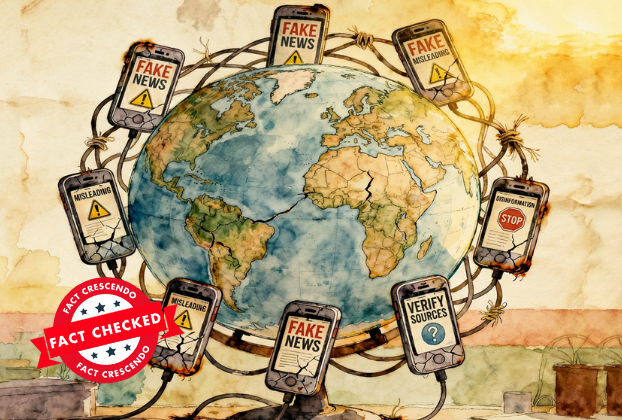
Throughout 2025, digital platforms served as breeding grounds for misinformation that spread with unprecedented speed and sophistication. From fabricated celebrity news to AI-generated hoaxes, misleading health claims to false product warnings, the year presented significant challenges for information consumers navigating an increasingly complex digital landscape.
As content creation tools became more advanced, distinguishing fact from fiction required greater vigilance and media literacy skills. This comprehensive review documents the year’s most significant and viral falsehoods that captivated public attention.
Early 2025: Entertainment and Technology Hoaxes
January began with viral claims that Netflix’s hit series “Squid Game” was inspired by actual deadly competitions in 1986 South Korea. Fact-checkers quickly debunked this false narrative, confirming the show was entirely fictional despite drawing on themes of social inequality.
Meanwhile, as Los Angeles battled devastating wildfires, AI-generated images showing a solitary house miraculously surviving amid destruction circulated widely, misleading viewers who believed they were witnessing authentic disaster photography.
The technology sector wasn’t immune to misinformation either. When TikTok faced potential U.S. restrictions over national security concerns, rumors spread that Donald Trump had purchased the platform. While false, the claims gained traction as the administration extended TikTok’s operational deadline by 75 days.
Health Misinformation Resurges
Health-related falsehoods proved particularly resilient throughout 2025. In South Asia, warnings about “Strawberry Quik” – allegedly crystal methamphetamine disguised as candy targeted at children – created panic despite being entirely fabricated.
As COVID-19 cases increased during certain months, old myths resurfaced. Claims that consuming alkaline foods could combat the virus gained traction despite fundamental scientific errors – viruses don’t possess pH values, and many foods were incorrectly categorized.
Cancer-related misinformation was particularly prevalent. September saw viral claims about “Enteromix,” supposedly a groundbreaking Russian cancer vaccine with 100% efficacy. The story generated significant interest before investigation revealed it was merely an experimental therapy with a small trial and no peer-reviewed data or independent validation.
Similarly, October witnessed widespread misrepresentation of a South Korean study examining COVID-19 vaccination and cancer risk. Social media posts claimed the research “proved” vaccines cause cancer, when it merely identified statistical correlations without establishing causation.
Disasters and Tragedies Exploited
When Air India Flight AI-171 crashed in Ahmedabad in June, killing over 270 people, misinformation flooded social platforms. Old video footage was falsely presented as capturing the crash, fabricated stories about survivors emerged, and unrelated disaster imagery was repurposed to exploit the tragedy.
Natural disasters similarly triggered waves of falsehoods. When a tsunami affected Russia and Japan in July, social media was saturated with unrelated footage presented as current. The November partial collapse of China’s Hongqi Bridge prompted circulation of images showing an entirely different structure, creating confusion about what actually occurred.
In December, videos allegedly showing Sri Lanka’s cyclone damage were exposed as unrelated footage from Japan and Thailand. Even more concerning, conspiracy theories emerged blaming natural disasters on “climate weapons,” HAARP technology, and NATO’s supposed “Beast computer” rather than recognizing climate change and natural geological processes.
Consumer Product Misinformation
Throughout the year, consumer product misinformation created market confusion. In February, misleading claims about Apeel food coating sparked concerns among shoppers. Posts described it as a dangerous, toxic product backed by Bill Gates that couldn’t be washed off produce. Investigation revealed Apeel is FDA-approved, made from edible plant materials, and has no substantiated health risks.
False claims about McDonald’s were particularly frequent. In September, social media buzzed with news of the chain’s “first-ever buffet” in Missouri offering unlimited menu items for $12.99. The story originated from a satirical page but was widely shared as fact. December saw claims about a fully automated McDonald’s in Texas with no human workers, which investigation revealed was only partially true – the restaurant features automation but still employs human staff.
Technology products faced similar issues. A September video purporting to show a removable camera bump on the iPhone 17 Pro misrepresented the device’s actual unibody design. November brought false claims that OpenAI had implemented a complete ban on ChatGPT providing health or legal information, when the company had merely clarified its longstanding policy on personalized professional advice.
Evolving Sophistication of Misinformation
What distinguished 2025’s misinformation landscape was the increasing sophistication of deceptive content. AI-generated videos showing Barron Trump supposedly performing on America’s Got Talent and fabricated footage of water-powered Toyota engines demonstrated how synthetic media continued to evolve as a vector for falsehoods.
Even traditional products faced modern misinformation challenges. Claims that Clearblue pregnancy tests contained hidden “pills” (actually moisture-absorbing desiccants) and that Always sanitary pads showed mold contamination (normal shadows from absorbent materials) demonstrated how everyday consumer goods could become subjects of viral misconception.
The year’s misinformation trends highlight the continuing importance of critical media consumption habits. As content creation tools become more sophisticated and distribution channels more efficient, the ability to verify information independently, consult multiple trusted sources, and approach dramatic claims with healthy skepticism remains essential for navigating our increasingly complex information environment.
Fact Checker
Verify the accuracy of this article using The Disinformation Commission analysis and real-time sources.

7 Comments
Interesting to see the challenges of combating misinformation, especially with the rise of AI-generated content. Fact-checking and media literacy will be crucial for navigating the digital landscape.
The rise of AI-generated misinformation is a concerning trend that will require innovative solutions. Developing robust fact-checking frameworks and empowering media literacy will be key priorities.
It’s concerning how quickly false narratives can spread online, even around serious issues like natural disasters. Maintaining a critical eye and verifying information sources will be key going forward.
Absolutely. With content creation tools becoming more advanced, the spread of misinformation will likely only increase. Vigilance and media literacy will be essential skills.
This comprehensive review provides a valuable snapshot of the misinformation challenges we’ll likely continue to face. Maintaining vigilance and critical thinking skills will be essential for navigating the digital world.
The example of the false claims about ‘Squid Game’ highlights how even entertainment-related misinformation can captivate public attention. Fact-checking will be crucial to combat these types of hoaxes.
Agreed. Viral misinformation in the entertainment space can have significant real-world impacts, so addressing it proactively is important.