


Listen to the article
The New York Times Defends Iranian Crowd Photo Against Manipulation Accusations
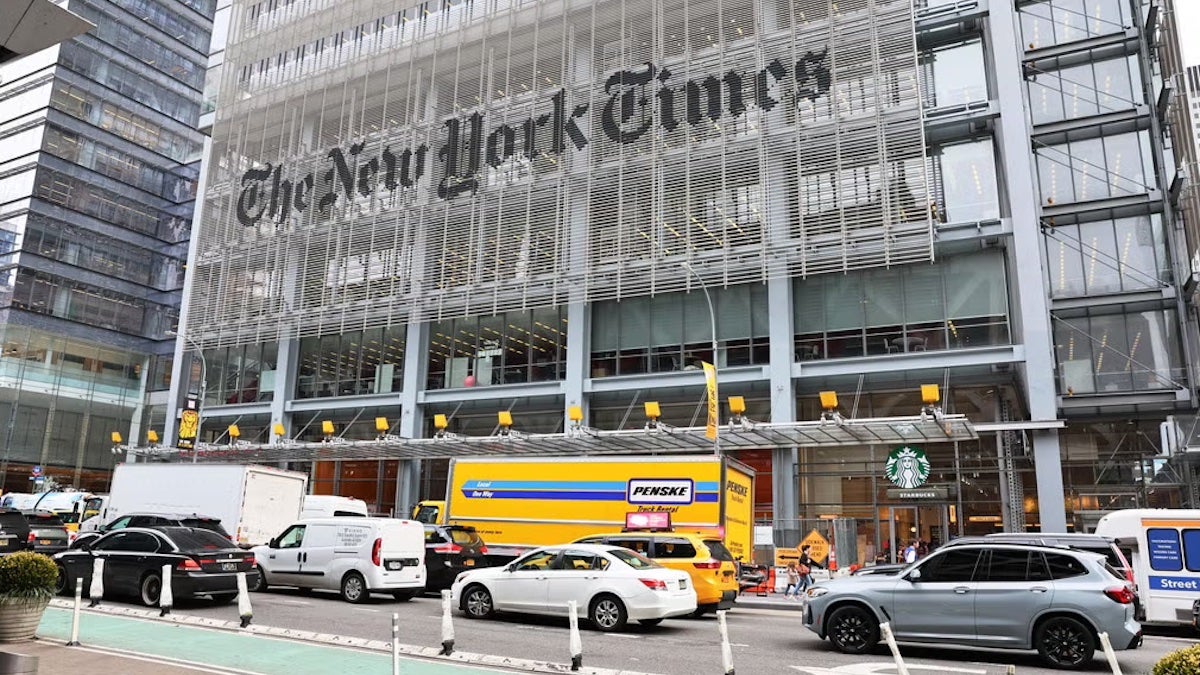
The New York Times has firmly rejected accusations that it published an AI-manipulated image of a crowd gathering in Tehran’s Enghelab Square to celebrate the announcement of Mojtaba Khamenei as Iran’s new supreme leader.
The controversy erupted Wednesday when several conservative social media accounts claimed the newspaper had digitally altered or fabricated the photograph. The self-described “Empirical Research and Forecasting Institute” posted on X (formerly Twitter) alleging the image showed telltale signs of “digital manipulation,” including “uniform noise texture across the crowd” and “suspiciously consistent flag density suggesting copy-paste duplication.”
As the allegations spread across social media, prominent conservative commentators Mark Levin, Eyal Yakoby, and Sana Ebrahimi amplified the claims. Some went further, suggesting the photo wasn’t even recent but actually dated from 2020, accusing the Times of serving as “a propaganda tool for the Ayatollahs.”
Times spokesperson Nicole Taylor issued a direct rebuttal to these accusations, defending both the newspaper’s integrity and photographer Arash Khamooshi’s work. “The analysis shared by the Empirical Research and Forecasting Institute is fundamentally flawed: it is dishonestly based on a re-posted version of the originally published image, which misrepresents standard image compression behavior,” Taylor stated.
She emphasized the newspaper’s commitment to journalistic standards, adding: “The New York Times does not use A.I. to generate or manipulate images to represent real facts; we rely on the work of human beings to bear witness, gather the facts and help readers better understand the world.”
The Times’ unequivocal defense reflects growing concerns about misinformation in an era where accusations of media manipulation have become increasingly common. The incident demonstrates how easily claims about AI-generated content can spread, particularly regarding politically sensitive regions like Iran, where independent verification can be challenging.
The newspaper maintains strict guidelines regarding artificial intelligence, with its published principles explicitly stating that it must “tell readers how our work was created” if AI technology is employed in any way. The article featuring the disputed photograph contains no such disclosure, further supporting the Times’ position that the image is authentic.
This controversy emerges against a backdrop of heightened scrutiny around media coverage of Iran’s leadership transition following the death of Ayatollah Ali Khamenei. The appointment of his son, Mojtaba Khamenei, as supreme leader represents a significant moment in Iran’s political landscape, making accurate visual documentation particularly important for international audiences.
The dispute also highlights the increasingly complex challenges facing major news organizations in a digital environment where image authenticity can be questioned and where accusations of bias can rapidly gain traction. For the New York Times, which has invested heavily in international reporting and photojournalism, defending the integrity of its visual journalism remains paramount.
The incident occurs as the Times continues negotiations with its union over potential future AI use in journalism, making questions about image authenticity especially sensitive for the organization. The newspaper’s photojournalists, like others across the industry, face growing pressure to prove their work’s authenticity in an era where digital manipulation tools have become increasingly sophisticated.
While social media continues to serve as a platform for challenging mainstream media narratives, this case demonstrates how quickly accusations of manipulation can spread without substantive evidence, and how news organizations must respond decisively to protect their credibility in covering complex international events.
Fact Checker
Verify the accuracy of this article using The Disinformation Commission analysis and real-time sources.

14 Comments
This is a tricky situation. There are valid questions about the photo, but branding the Times as a ‘propaganda tool’ seems like an overreaction. Healthy skepticism is good, but unsubstantiated claims can be damaging. Both sides should aim for a more measured discussion.
Well said. Maintaining journalistic integrity is crucial, but so is acknowledging valid concerns. An open, evidence-based dialogue is needed to get to the bottom of this.
The accusations of photo manipulation are serious, but the Times’ defense of their integrity also deserves consideration. This requires a balanced, impartial review of the available evidence before drawing any firm conclusions. Inflammatory rhetoric from either side is unlikely to be productive.
Well said. In these divisive times, it’s important to avoid knee-jerk reactions and instead seek a nuanced, fact-based understanding of complex issues like this.
This seems like a complex issue with valid questions on both sides. The Times’ denial is understandable, but more details on their investigation would be helpful to fully assess the situation. Claims of propaganda should be carefully examined before being amplified.
Agreed, a nuanced look at the evidence from all angles is needed here. Rushing to judgment without thorough review risks inflaming tensions unnecessarily.
The Times’ rejection of the manipulation claims is understandable, but they should still provide more details on their verification process. Extraordinary accusations require extraordinary evidence. A careful, impartial review of the facts is needed here.
Exactly. Rushing to judgment without a thorough investigation could undermine trust in the media. Both sides have a responsibility to engage constructively and avoid inflammatory rhetoric.
Hmm, the allegations of digital manipulation are concerning, but the Times’ defense of their integrity and processes is also important to consider. I’d like to see a more thorough, impartial evaluation of the evidence before drawing any conclusions.
That’s a fair point. Jumping to accusations of propaganda without a balanced examination of the facts could backfire. The Times should provide more transparency, but the critics also need to substantiate their claims.
Interesting controversy over the Iran photo. It’s important to scrutinize media claims, but outright accusations of manipulation without solid evidence are concerning. The Times should provide more details to address the concerns raised, while maintaining journalistic integrity.
I agree, transparency from the Times on their verification process would help address the skepticism. Jumping to conclusions without clear proof is unproductive.
This is a delicate situation. While the Times’ denial is reasonable, the concerns raised about the photo’s authenticity shouldn’t be dismissed outright. More transparency from all parties, and a measured, evidence-based discussion, would be the best path forward.
I agree. Maintaining journalistic credibility is crucial, but so is addressing legitimate questions. An open, fact-based dialogue is needed to resolve this controversy effectively.