


Listen to the article
Platformization and Opacity: How Digital Technology Shapes Public Opinion
In the post-pandemic era of technological warfare, platformization and digital opacity are increasingly generating manipulative effects on consensus-building dynamics, fundamentally altering how public opinion forms in democratic societies.
We now live in what experts call the era of the “self-informative program,” where the hierarchical dimension of information sources has virtually vanished alongside the collapse of authority, credibility, and trustworthiness of traditional media sources. Today’s digital individual creates their own information ecosystem, establishing new relationships with other users based on shared biases rather than shared facts.
This shift represents a profound transformation in how society processes information, particularly as platforms increasingly drive identity construction within digital containers that adapt to individual demands, leading to a flattening of search results that follow the principle of confirmation bias.
“The increasing complexity of the ecosystem, coupled with platformization that relies on data hoarding and the emergence of artificial intelligence, raises critical questions about our ability to govern these processes,” notes Francesco Pira, a leading researcher in digital communication. “The positivist view of technology’s impact overlooks the evolution of the disinformation industry within our media ecosystem.”
Public opinion manipulation through social platforms has emerged as an overt threat to public life. Studies show that disinformation strategically attacks three cornerstones of democracy: politics, science, and economics—with the explicit aim of manipulating public opinion and destabilizing democratic processes in Western societies.
The digital transformation has created what Pira calls a “polyphonic, polychromatic, multidimensional aspect of time and space,” where platforms scan time and create veracity within frames constructed to replace reality with representation. This digital capitalism generates significant consequences for identity construction processes that are increasingly mediated by technology.
“We are witnessing the transformation of social mechanisms of information exchange that are increasingly based on homophily,” explains Pira. “Platform architectures favor communication exchanges between like-minded people who don’t generate cognitive dissonance but instead reinforce existing beliefs through social similarity.”
The concept of “surveillance capitalism,” coined by Shoshana Zuboff, describes how those with surveillance power have expropriated assets from human experience, subjugating it to market mechanisms where behaviors become data ready for predictive analysis algorithms and trading in a marketplace of future behaviors.
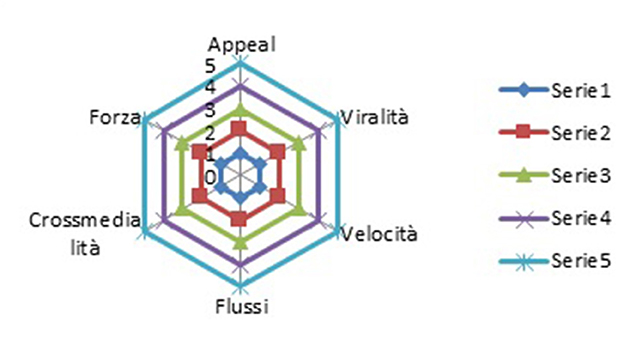
The Hexagon of Fake News
To understand how misinformation spreads, researchers have developed the “fake news hexagon,” a tool that analyzes six key elements that power disinformation campaigns:
- Appeal: The mechanism that attracts users through agenda-setting that aligns with existing beliefs
- Virality: The capacity for content to spread rapidly through informational cascades
- Speed: The exploitation of rapid communication channels that outpace verification processes
- Flow: How information spreads strategically to support specific narratives
- Cross-media: The ability for content to move seamlessly across different media platforms
- Strength: The robustness of conspiracy narratives and polarizing information
A study analyzing misinformation on TikTok—where more than 60% of users are under 25—revealed how these elements combine to create powerful disinformation. This platform is particularly concerning given that fewer than one in ten students can distinguish between fact and opinion, according to OECD research.
The study examined videos related to health misinformation, including false claims about COVID-19 vaccines containing microchips, toxic spike proteins, and connections between monkeypox and Bill Gates. These videos had garnered millions of views with minimal warning labels or fact-checking interventions.
“We are observing a mutation in the process of spreading misinformation,” Pira notes. “We’re no longer in the era of blatantly false news. Today’s disinformation uses elements with apparent veracity, seemingly supported by ‘scientific’ sources and powerful keywords.”
The Crisis of Democratic Participation
This widespread manipulation of information threatens the foundations of democratic participation. As traditional institutions weaken and political parties lose their representative role, citizens become increasingly isolated in digital tribes with weak ties.
“The prevalence of individualism generates significant consequences on identity construction processes,” says Pira. “We assist to an increasing lack of recognition of the other, as individuals move away from commitment, sacrifice, and achieving higher collective good.”
The digital age has created environments that favor “hit-and-run” content where information prevails over knowledge. The line between inner values and social behaviors thins as identity construction centers on social media representation and the consensus it generates.
This crisis is running through all Western democracies. Citizens have lost trust in institutions and cultural intermediaries, while simultaneously showing decreasing ability to select, analyze, and understand information flows. The result is a social dimension characterized by increasing homogeneity, with social action based primarily on confirmation bias rather than critical thinking.
As the digital transformation accelerates, developing new interpretive processes to understand reality and rebuild public trust becomes not just important but essential for the survival of informed democratic participation.
Fact Checker
Verify the accuracy of this article using The Disinformation Commission analysis and real-time sources.

20 Comments
This report highlights the serious threat that disinformation and consensus manipulation pose to democracy. The technological shifts outlined, such as platformization and opacity, are deeply concerning and require comprehensive responses.
You’re absolutely right. The decline of traditional media authority and the rise of self-reinforcing digital bubbles is a major challenge that policymakers and tech companies need to grapple with. Restoring trust and combating confirmation bias should be top priorities.
This article highlights the serious risks posed by the growing prevalence of disinformation and manipulative online tactics. The platformization and opacity of digital media is a profound challenge for the future of democracy.
Absolutely, the collapse of traditional media authority and the emergence of self-reinforcing digital bubbles is a deeply worrying trend. Policymakers and tech companies need to find ways to restore trust and curb confirmation bias.
Excellent analysis of the growing problem of disinformation and consensus manipulation enabled by digital technology. The article’s insights into platformization and opacity are crucial for understanding these complex challenges.
You make a strong point. The decline of credible information sources and the personalization of online content are deeply undermining democratic debate. Restoring trust and curbing confirmation bias should be top priorities for addressing these issues.
Excellent overview of how the changing media landscape is enabling the spread of disinformation and the erosion of democratic norms. The issues raised around platformization and opacity are crucial to address.
I agree, this is a critical problem that requires urgent attention. The personalization of information and the loss of credible sources is undermining public discourse. Innovative solutions are needed to combat these challenges.
The prevalence of disinformation and the manipulation of online consensus is a major threat to democracy. This report outlines some of the key drivers behind these trends, which policymakers and platforms need to grapple with.
Agreed, the platformization and opacity of digital media is enabling the spread of harmful falsehoods. Restoring public trust and countering confirmation bias should be top priorities.
Concerning report on how digital platforms are enabling the spread of disinformation and undermining democratic discourse. The rise of individualized information bubbles and confirmation bias is a worrying trend that needs to be addressed.
Agreed, the platformization and opacity of digital media is a serious problem. Restoring trustworthy sources and curbing manipulative algorithms should be a priority to protect the integrity of public debate.
Fascinating analysis of how the digital information ecosystem is being weaponized to erode democratic norms and institutions. The loss of traditional gatekeepers and the rise of personalized bubbles is extremely concerning.
You make a good point. The flattening of search results and the tailoring of information to individual biases is a major contributor to the proliferation of disinformation. Innovative solutions are urgently needed.
This article highlights how technological shifts are changing the way people form opinions and engage with information online. The loss of traditional media authority and the rise of personalized information ecosystems is a complex challenge.
You’re right, the decline of credible media sources and the growth of self-reinforcing online communities is deeply concerning for the health of democratic discourse. Addressing these issues will require innovative solutions.
This article provides a sobering look at the threat that disinformation and consensus manipulation pose to democracy in the digital age. The dynamics around platformization and opacity are deeply concerning and require comprehensive responses.
Absolutely, the issues raised in this report are extremely serious. The erosion of traditional media authority and the rise of self-reinforcing digital bubbles is a major threat to the integrity of public discourse. Policymakers and tech companies must work together to find effective solutions.
Fascinating and concerning analysis of the ways in which digital technology is enabling the spread of disinformation and the manipulation of public opinion. The issues around platformization and opacity are particularly worrying.
I agree, this is a critical issue that demands urgent attention. The loss of credible information sources and the emergence of personalized echo chambers is deeply undermining democratic discourse. Innovative solutions are needed to address these challenges.