


Listen to the article
Video of Musk Snubbing South African President Proven to be Manipulated Footage
Amidst escalating tensions between Elon Musk and the South African government, a doctored video claiming to show the tech billionaire refusing to shake President Cyril Ramaphosa’s hand has been debunked as false.
The manipulated 11-second clip, which began circulating on social media platforms in April 2026, appears to show Ramaphosa extending his hand to Musk, who stands with arms crossed, seemingly laughing at the gesture. The video was shared with text reading: “Viral Video of Elon Musk Appearing To Snub A Handshake From South Africa’s President Cyril Ramaphosa Has The Internet Talking.”
Fact-checkers have confirmed the footage was deceptively edited from a May 21, 2025 meeting between President Ramaphosa and US President Donald Trump at the White House. The original, unaltered video—available on the South African presidency’s official YouTube channel—clearly shows Ramaphosa successfully shaking hands with all delegates present, including Musk.
The fabricated controversy emerges against a backdrop of genuine tension between Musk and South African authorities regarding his satellite internet service, Starlink. Musk, who was born in South Africa but left during apartheid to avoid military conscription, has publicly criticized the South African government for blocking Starlink’s entry into the market.
“South Africa won’t allow Starlink to be licensed, even though I was BORN THERE, simply because I am not Black!” Musk wrote to his 239 million X followers on April 12, 2026. His complaints target South Africa’s Black Economic Empowerment (BEE) policies, which require companies in certain industries to sell 30 percent ownership stakes to previously disadvantaged groups—including people of African, Asian, or mixed-race descent, women of any race, and disabled individuals.
These policies, designed to address historical inequities resulting from apartheid, have been characterized by Musk as “racist.” However, President Ramaphosa has emphasized that companies can comply through alternative equity-equivalent programs rather than direct ownership transfers.
The dispute has further intensified with Musk amplifying discredited narratives about alleged persecution of white South Africans. On April 13, he reshared a video purporting to show evidence of a “white genocide” in the country—footage previously debunked by fact-checkers in 2025 when then-President Trump had screened it during a meeting with Ramaphosa.
The video actually showed crosses erected during a 2020 protest following the murder of a farming couple in South Africa’s North West province, not evidence of systematic persecution as claimed.
In response to Musk’s barrage of criticisms, presidential spokesperson Vincent Magwenya advised the billionaire to “move on,” stating: “It will be fair to conclude that in the absence of respect for South Africa’s transformation laws, your peddling of lies and disinformation about South Africa, the relationship you are forcefully seeking is not going to happen.”
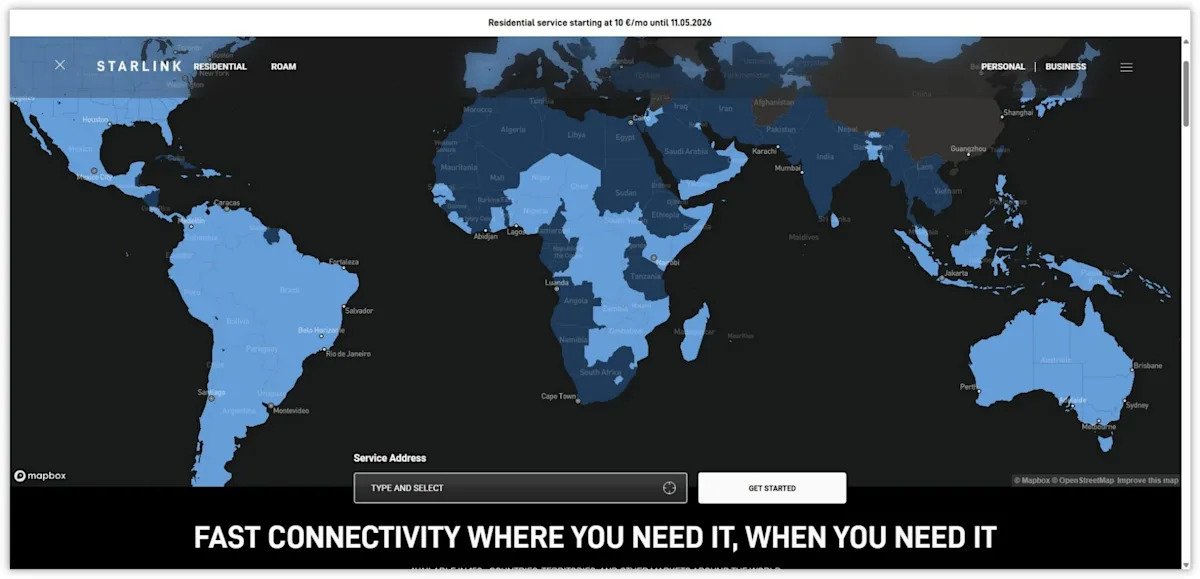
While Starlink has expanded its operations to approximately half of Africa’s nations, South Africa isn’t alone in its resistance. Neighboring Namibia also rejected the internet service in March 2026, highlighting regional regulatory challenges for the satellite provider.
The misleading video and surrounding controversy illustrate the complex intersection of technology, national policy, and social media disinformation. As one of the world’s most powerful tech figures, Musk’s public statements carry significant weight, particularly when concerning his birth country and its policies.
The incident also underscores the growing sophistication of manipulated media and the importance of verification in an era where edited clips can rapidly fuel international misunderstandings and inflame existing tensions.
Fact Checker
Verify the accuracy of this article using The Disinformation Commission analysis and real-time sources.

10 Comments
Interesting how this doctored video tried to stir up controversy between Musk and the South African government. It’s important to rely on verified, unaltered footage to get the facts straight, especially on sensitive political matters.
This dispute between Musk and the South African government over Starlink is certainly an interesting development in the world of technology and geopolitics. I’ll be following this story closely to see how it unfolds.
As someone interested in the intersection of technology and geopolitics, I’m curious to learn more about the Starlink dispute between Musk and the South African government. Does anyone have insights on the key issues involved?
While the tensions between Musk and the South African authorities are real, it’s concerning to see manipulated footage being used to further inflame the situation. Fact-based reporting is crucial in these types of cases.
The tensions between Musk and the South African authorities over Starlink are certainly newsworthy, but this fake video doesn’t help matters. I hope both sides can work to resolve their disputes through proper channels.
This just goes to show how easily misinformation can spread online these days. Glad the fact-checkers were able to debunk the false claims and set the record straight on what actually happened at that meeting.
Agreed. It’s crucial that we all be more discerning consumers of online content and cross-reference sources to separate truth from fiction.
I’m glad the authorities were able to quickly identify and debunk this false video clip. It’s a good reminder that we should always verify the authenticity of online content, especially if it seems designed to stir up controversy.
It’s disappointing to see disinformation campaigns attempting to manipulate public opinion on this issue. Fact-checking and transparency are crucial to maintaining trust in our institutions and leaders.
Absolutely. We need to be vigilant about separating truth from fiction, especially when it comes to politically charged topics that could have real-world consequences.