


Listen to the article
Japanese Police Deny Rumors as Child Murder Case Sparks Xenophobic Claims
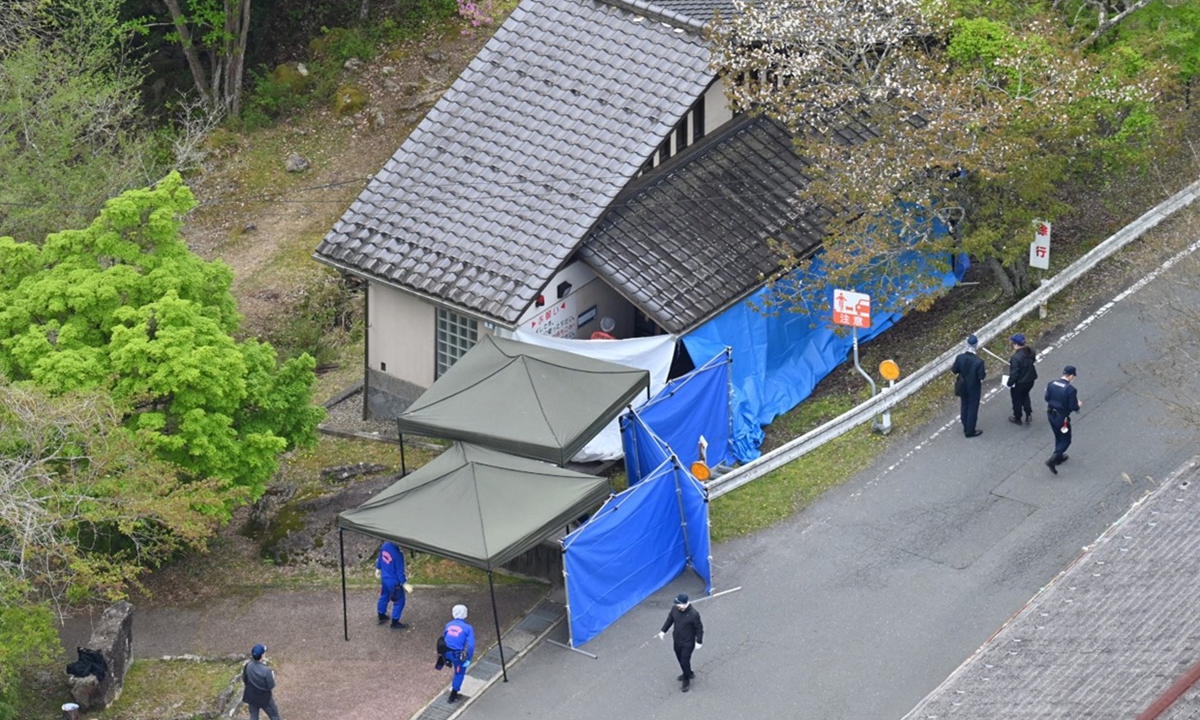
Japanese authorities continue to investigate the tragic death of 11-year-old Yuki Adachi, whose body was discovered abandoned in Nantan, Kyoto Prefecture, as false information about the suspect’s nationality sparked xenophobic reactions across social media platforms in Japan.
The 37-year-old stepfather, arrested on suspicion of abandoning the body, became the target of unfounded claims that he was a Chinese national—allegations that Kyoto Prefectural Police have explicitly denied. School-related sources told Kyodo News that the young victim had previously expressed to classmates that he “hated his father,” prompting investigators to examine family relationships as a potential factor in the case.
“We had received no prior consultations or reports indicating possible abuse,” police officials stated while confirming their investigation into background factors that may have contributed to the tragedy.
Japanese media outlets, including NHK and Mainichi Shimbun, reported a troubling surge in social media posts falsely identifying the suspect as foreign, despite official denials. The misinformation gained momentum when Taiwan’s Formosa Television (FTV) aired a report on April 15 erroneously claiming the stepfather was “Chinese,” citing non-existent reporting from Japanese magazine Shukan Bunshun.
FTV issued an apology on April 17, acknowledging they had wrongly amplified false claims circulating on Japanese social media. The Yomiuri Shimbun noted that this cross-border amplification of misinformation created a feedback loop, with Japanese users subsequently citing the Taiwan broadcast as confirmation of their unfounded speculation.
The case highlights growing concerns about xenophobic sentiments in Japanese social discourse. Tomoka Igari, a member of idol group Kamen Joshi who uses a wheelchair following a spinal cord injury, described on social platform X how the misinformation spread: rumors originating among Japanese users were picked up by Taiwanese media, then recirculated in Japan with added perceived credibility.
“At this point, it’s really hard to tell what is true,” Igari wrote, expressing frustration over the confusing spiral of misinformation.
The incident prompted condemnation from various Japanese public figures. Hideo Nakayama, a physician who commented on social media, called the spread of nationality-based fake news “absolutely unforgivable,” adding that such behavior “severely undermines trust between the Japanese and Chinese peoples and completely lacks the ethics expected of the media.”
This case emerges amid heightened concerns about the safety of Chinese nationals in Japan. The Chinese Embassy in Japan recently highlighted several troubling incidents, including a Japan Self-Defense Forces member illegally entering the Chinese Embassy with a knife, right-wing activists harassing Chinese marathon participants, an assault on a Chinese student in Tokyo, and an attack on a Hong Kong tourist at a restaurant in Hokkaido.
Lü Chao, a professor at the Liaoning Academy of Social Sciences, told the Global Times that the groundless labeling of criminal suspects as Chinese reflects “a troubling tendency in Japanese society to direct hostility toward foreigners, especially amid rash anti-China sentiment.”
According to Lü, the Sanae Takaichi administration has contributed to an atmosphere that “belittles and smears Chinese people in the public sphere,” which he describes as “a key force behind the erosion of the social foundation for China-Japan friendship.”
The case underscores how serious crimes, particularly those involving children, can become politicized through misinformation. As police continue their investigation into the actual circumstances of Yuki Adachi’s death, the spread of nationality-focused rumors has shifted attention away from the victim and the pursuit of justice toward broader geopolitical tensions between neighboring countries.
Authorities have urged the public to rely on official information sources as the investigation continues.
Fact Checker
Verify the accuracy of this article using The Disinformation Commission analysis and real-time sources.

7 Comments
Tragic news. It’s unfortunate that misinformation and xenophobic claims spread so quickly in cases like this. The authorities should be commended for swiftly denying the false nationality rumors and focusing the investigation on the facts.
Xenophobic claims in a tragedy like this are deeply disturbing. I’m glad the authorities are refuting the misinformation and keeping the focus on the real issues at hand. A fair and transparent investigation is crucial in a case like this.
What a terrible incident. It’s concerning to see how quickly false information can spread, especially when it involves sensitive topics like nationality and ethnicity. The police’s efforts to correct the record are important, but the underlying problem of online misinformation remains a challenge.
The spread of false information in a tragic case like this is deeply concerning. I hope the authorities are able to conduct a thorough and impartial investigation, free from the influence of harmful rumors and xenophobic claims.
This is a heartbreaking case, and it’s disappointing to see social media being used to spread unfounded rumors. I hope the police are able to conduct a thorough and impartial investigation to determine the true circumstances surrounding the victim’s death.
You’re right, it’s crucial that the investigation remains focused on the facts and evidence, without being influenced by harmful speculation or biases.
This is a heartbreaking case, and I’m troubled to see that it has sparked xenophobic claims on social media. It’s important that the investigation remains focused on the facts and evidence, without being influenced by harmful speculation or biases.