


Listen to the article
Nearly One-Third of Americans Have Accidentally Shared Fake News on Social Media, Study Reveals
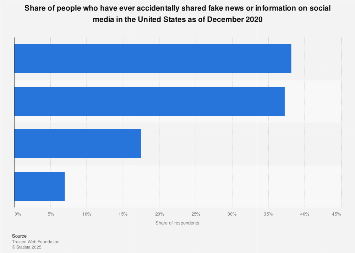
A recent study by the Trusted Web Foundation has revealed that a significant portion of Americans have unwittingly contributed to the spread of misinformation online. According to data released in January 2021, approximately one-third of U.S. social media users admit to having accidentally shared fake news or misleading information at some point.
The research, conducted in December 2020, comes amid growing concerns about the proliferation of false information across digital platforms and its impact on public discourse. The findings highlight a troubling trend in how easily misinformation can spread, even when users have no intention of sharing inaccurate content.
“The data points to a critical gap between users’ intentions and their actions online,” said Dr. Emma Richardson, a digital media researcher not affiliated with the study. “Many people share content without thoroughly verifying its accuracy, especially when the information aligns with their existing beliefs or comes from a seemingly trustworthy source.”
The timing of the study is particularly relevant following the 2020 U.S. presidential election, which saw unprecedented levels of misinformation circulating across social platforms. Tech companies including Facebook (now Meta), Twitter (now X), and YouTube implemented various measures to combat false information, but the effectiveness of these interventions remains debated among experts.
Social media platforms have been under mounting pressure to address misinformation, with companies implementing various fact-checking measures and labeling systems to identify questionable content. Despite these efforts, the Trusted Web Foundation’s findings suggest that current safeguards may be insufficient to prevent the accidental spread of fake news.
“What’s concerning is that this statistic only reflects those who are aware they’ve shared misinformation,” noted Marcus Chen, a digital literacy advocate. “The actual number is likely higher, as many users may have shared false content without ever realizing it was inaccurate.”
The study comes as part of a broader investigation into online information ecosystems and how misinformation spreads through social networks. The Trusted Web Foundation, an organization focused on promoting digital literacy and responsible internet practices, has been tracking misinformation trends since 2018.
Industry experts suggest that addressing this issue requires a multi-faceted approach. “We need better technological solutions from platforms, improved media literacy among users, and perhaps regulatory frameworks that encourage responsible information sharing,” said Sophia Martinez, a policy analyst specializing in digital media regulation.
Some platforms have implemented “friction” in the sharing process—such as prompts asking if users have read an article before sharing it—in attempts to reduce impulsive sharing of potentially false information. However, the effectiveness of these measures remains under evaluation.
The findings also raise important questions about personal responsibility in the digital age. While platforms bear some responsibility for content moderation, individual users play a crucial role in verifying information before amplifying it to their networks.
As social media continues to serve as a primary news source for many Americans, the accidental sharing of misinformation represents a significant challenge for maintaining an informed public. The Trusted Web Foundation recommends that users adopt simple verification practices, such as checking multiple sources, reviewing publication dates, and being wary of sensational headlines before sharing content online.
The full report from the Trusted Web Foundation includes additional insights into demographic patterns and the types of misinformation most commonly shared, providing valuable data for policymakers, platform developers, and educational institutions working to combat the spread of fake news in the digital age.
Fact Checker
Verify the accuracy of this article using The Disinformation Commission analysis and real-time sources.

10 Comments
This is a troubling trend that speaks to the broader challenges of the digital age. While social media has many benefits, the ease with which misinformation can spread is a serious concern that requires a multi-faceted response.
Absolutely. Platforms, policymakers, and the public all have a role to play in addressing this issue. Improving digital literacy, enhancing content moderation, and fostering a culture of verification will be key to curbing the spread of fake news.
Wow, one-third is a startlingly high percentage. It highlights how easily misinformation can propagate, even by well-intentioned people. Improving critical thinking and source verification skills should be a priority to combat this problem.
Agreed. We need to be more vigilant consumers of online content and not blindly trust or amplify information, no matter how tempting or aligning it may be with our views. Fact-checking has never been more important.
As someone who follows mining and energy news, I’m concerned about the potential impact of fake information circulating in these sectors. Fact-based reporting and reliable sources are crucial for making informed decisions. We all need to be more discerning online.
As someone with a keen interest in mining, commodities, and energy, I find this news deeply concerning. The spread of misinformation in these sectors can have real-world impacts on investments, policies, and public discourse. We must all be more vigilant in our online behavior to prevent the further propagation of fake news.
This is a worrying trend that highlights the need for greater media literacy and critical thinking skills. Sharing misinformation, even unintentionally, can have serious consequences. I hope this study leads to more efforts to educate the public on how to identify and avoid fake news.
This is concerning but not entirely surprising. The rapid spread of misinformation online is a major challenge we need to address through digital literacy and verification tools. It’s a complex issue without easy solutions, but raising awareness is an important first step.
You’re right, we all have a role to play in being more cautious about what we share online. Verifying information before hitting ‘post’ is crucial to prevent the further spread of fake news.
One-third is a staggeringly high number. It’s a sobering reminder of how easily false narratives can take hold, especially in an era of information overload. Developing more robust verification mechanisms and promoting digital citizenship should be priorities for social media companies and policymakers.