


Listen to the article
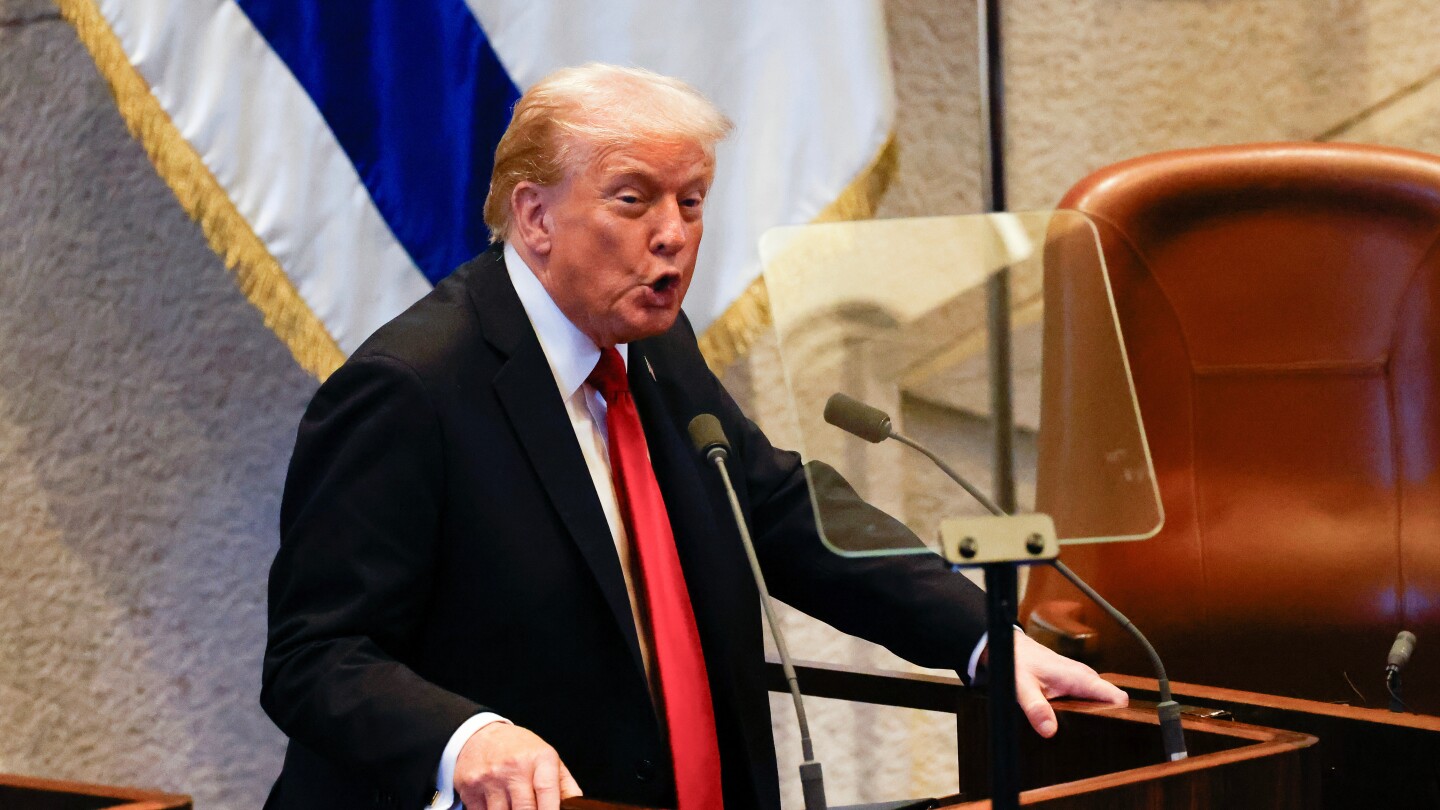
As Israel and Hamas exchanged hostages and prisoners on Monday, taking a first step toward peace, U.S. President Donald Trump addressed the Knesset, Israel’s parliament, declaring he had ended his eighth war.
“After so many years of unceasing war and endless danger, today the skies are calm. The guns are silent. The sirens are still. And the sun rises on a holy land that is finally at peace,” Trump told Israeli lawmakers, adding, “Yesterday I was saying seven, but now I can say eight.”
However, Trump’s claim appears premature. While significant progress has been made in the Israel-Hamas conflict, a permanent resolution remains distant, as is the case with other conflicts where Trump claims credit for ending hostilities.
The ceasefire and hostage exchange represent important milestones, but they mark only the beginning of a complex peace process. The initial agreement brokered by Trump includes the release of hostages from Gaza, freedom for hundreds of Palestinian prisoners held in Israel, increased humanitarian aid to Gaza, and a partial withdrawal of Israeli forces from major Gaza cities.
Following his Israel visit, Trump convened with world leaders in Egypt for a “Summit of Peace” to discuss the ceasefire plan. The leaders signed what Trump described as a comprehensive document outlining “rules and regulations,” though specific details were not immediately disclosed.
Significant challenges remain, including negotiations on disarming Hamas, establishing a post-war Gaza government, planning reconstruction efforts, and determining the extent of Israel’s withdrawal. Trump’s plan also calls for developing a new Palestinian security force with regional and international support.
Trump envoy Steve Witkoff indicated that he and Jared Kushner, the president’s son-in-law, were already working on implementation issues, but the path to lasting peace remains uncertain.
Regarding the brief Israel-Iran conflict in June, Trump is credited with negotiating a ceasefire after directing American warplanes to strike Iranian nuclear sites. The 12-day war began when Israel attacked Iran’s nuclear facilities, claiming to prevent Tehran from developing nuclear weapons—a goal Iran denies pursuing.
Evelyn Farkas, executive director of Arizona State University’s McCain Institute, acknowledged Trump’s role in ending the immediate conflict, though she noted future flare-ups remain possible if Iran resumes its nuclear program.
Lawrence Haas, senior fellow for U.S. foreign policy at the American Foreign Policy Council, characterized the ceasefire as a “temporary respite” in the ongoing “day-to-day cold war” between the countries.
Trump’s claims extend to other regional disputes, though with varying degrees of involvement and success. The tension between Egypt and Ethiopia over the Grand Ethiopian Renaissance Dam, inaugurated in September, persists despite Trump’s earlier mediation attempts during his first term. Negotiations among Egypt, Ethiopia, and Sudan have stalled, and experts note these countries are not engaged in actual warfare.
In the case of India and Pakistan, Trump claims credit for brokering an April ceasefire following deadly attacks in Indian-controlled Kashmir. While Pakistan thanked Trump and recommended him for the Nobel Peace Prize, India has denied U.S. involvement in trade concessions related to the ceasefire.
For Serbia and Kosovo, the White House lists this as a resolved conflict, but there has been no significant progress under Trump’s second term, nor has there been any imminent threat of war between the neighbors in recent years.
In Africa, Trump has contributed to peace efforts between Rwanda and the Democratic Republic of Congo, culminating in a June agreement signed at the White House. However, the M23 rebel group, a key player in the conflict, was not directly involved in negotiations and has refused to abide by the terms. Deadly fighting continues in eastern Congo despite these diplomatic efforts.
Regarding Armenia and Azerbaijan, Trump hosted their leaders in August for the signing of a deal aimed at ending their decades-long territorial dispute. While both leaders praised Trump’s involvement, the peace treaty has been initialed but not yet signed or ratified by either country.
In Southeast Asia, officials from Thailand and Cambodia credit Trump with facilitating a ceasefire in their brief border conflict this summer. Trump reportedly warned both countries that the U.S. would withhold trade agreements if hostilities continued—a significant factor given both nations’ economic challenges.
While Trump has made notable diplomatic contributions across these conflicts, his claim to have definitively ended eight wars represents a significant overstatement of the current geopolitical reality.
Fact Checker
Verify the accuracy of this article using The Disinformation Commission analysis and real-time sources.

9 Comments
Uranium names keep pushing higher—supply still tight into 2026.
I like the balance sheet here—less leverage than peers.
I like the balance sheet here—less leverage than peers.
If AISC keeps dropping, this becomes investable for me.
Exploration results look promising, but permitting will be the key risk.
Good point. Watching costs and grades closely.
Good point. Watching costs and grades closely.
Nice to see insider buying—usually a good signal in this space.
Uranium names keep pushing higher—supply still tight into 2026.