


Listen to the article
Majority of SNAP Recipients Are U.S. Citizens, Contrary to Viral Social Media Claims
Amid the ongoing federal government shutdown, the Trump administration has agreed to partially fund the Supplemental Nutrition Assistance Program (SNAP) following a federal court ruling. This decision affects approximately 42 million Americans who rely on this essential food assistance program for low-income households.
However, a wave of misinformation about who actually benefits from SNAP has been spreading rapidly across social media platforms, particularly on X (formerly Twitter), creating confusion about the program’s demographic makeup.
Recent viral posts on X have made startling claims about SNAP recipients. One video, which garnered over 2.3 million views by November 3, asserted that only 30% of SNAP recipients are U.S.-born citizens. Another widely shared post exclaimed, “59% of food stamp recipients aren’t even American?!”
These claims dramatically misrepresent the true composition of SNAP beneficiaries, according to official government data.
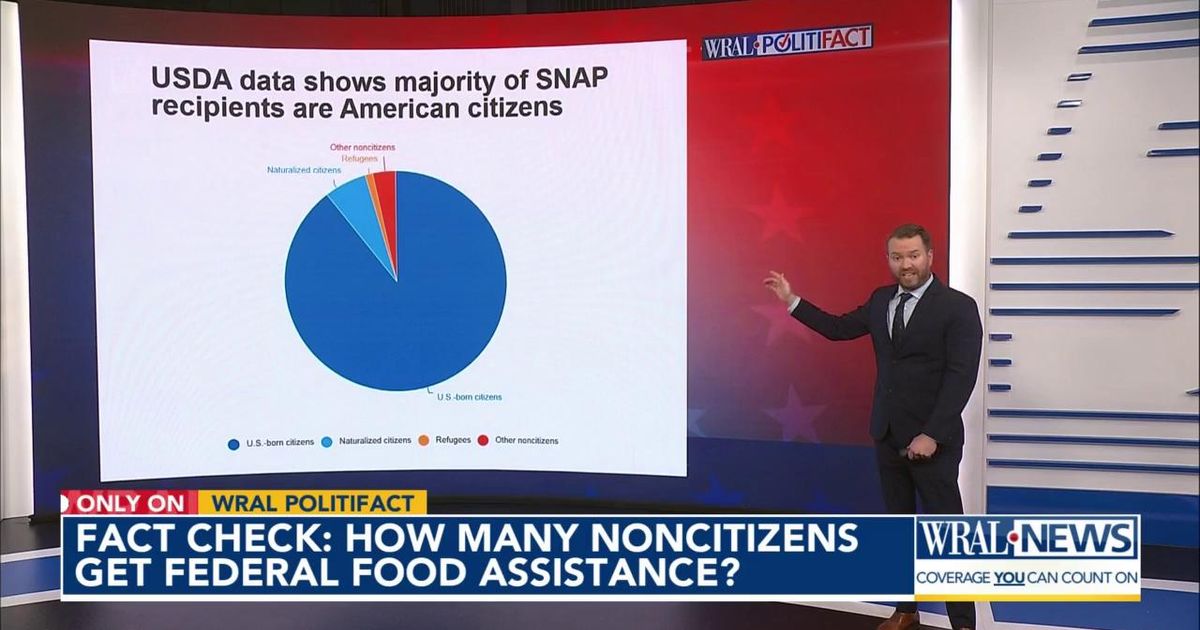
The U.S. Department of Agriculture’s 2023 data—the most recent available—tells a very different story. Nearly 36 million of the more than 40 million SNAP recipients were U.S.-born citizens, representing approximately 89% of all program participants. When naturalized citizens are included in the count, the percentage of SNAP beneficiaries with U.S. citizenship rises to 95.6%.
The USDA’s comprehensive breakdown shows that only 1.1% of SNAP recipients are refugees, while 3.3% fall into the category of “other noncitizens,” which can include lawful permanent residents, asylees, people granted stays of deportation, and individuals without lawful immigration status.
The agency explicitly notes in its report that undocumented individuals are ineligible for SNAP benefits, though they may live in households with eligible family members. Only 1.2% of SNAP households consisted of citizen children living with participating noncitizen adults, while 4.2% had citizen children living with nonparticipating noncitizen adults.
Recent policy changes have further restricted eligibility. In July, President Donald Trump signed the One Big Beautiful Bill Act, which altered the program’s eligibility requirements. Prior to this legislation, refugees and individuals granted asylum could qualify for SNAP without a waiting period, while other noncitizens, including lawful permanent residents, could become eligible after completing a five-year waiting period. The new law eliminated eligibility for refugees and asylees altogether.
The origin of the misleading 59% figure appears to be a December 2023 report from the Center for Immigration Studies, a think tank that advocates for reduced immigration. However, social media posts have significantly distorted the report’s findings. The center’s analysis used data from the U.S. Census Bureau’s 2022 Survey of Income and Program Participation to estimate that 59% of households headed by immigrants in the country illegally use “at least one major program”—not that 59% of SNAP recipients are non-citizens.
Importantly, the report’s authors explicitly stated, “We have no evidence this is due to fraud.” Their analysis indicated that 17% of “illegal immigrant households” participated in SNAP, and they noted that many of these households include one or more U.S.-born citizen children who are legally eligible for benefits.
USDA data from 2023 further confirms that 98% of participating SNAP households included U.S. citizens.
The persistent circulation of these misleading claims comes at a particularly sensitive time, as food assistance programs face scrutiny during the federal shutdown. Accurate information about who benefits from these programs remains crucial for informed public discourse and policy decisions affecting millions of vulnerable Americans.
Fact Checker
Verify the accuracy of this article using The Disinformation Commission analysis and real-time sources.

10 Comments
Interesting to see the facts around SNAP recipients in the US. It’s important to rely on official government data rather than unsubstantiated social media claims. I wonder if the demographic breakdown has shifted at all in recent years with changing immigration patterns.
You make a good point. It’s critical to look at authoritative sources when discussing sensitive topics like this to avoid spreading misinformation.
This fact check provides a helpful reality check on the demographics of SNAP recipients. While non-citizens do make up a portion of beneficiaries, the majority are indeed US citizens as the government data shows. It’s important to separate fact from fiction.
Well said. Maintaining an accurate, evidence-based understanding of social programs is key, especially when they become politicized topics.
Given the vital role of SNAP in combating food insecurity, it’s concerning to see such inaccurate claims circulating about the program’s beneficiaries. The data paints a much different picture than the viral social media narratives.
Absolutely. Spreading misinformation undermines public trust and understanding of important social welfare initiatives like SNAP. Fact-based reporting is crucial in these cases.
The SNAP program provides essential food assistance to low-income Americans, both citizens and non-citizens. It’s good to see the majority of recipients are indeed US-born citizens, contrary to viral social media claims.
Agreed. SNAP plays a vital role in supporting food security for vulnerable populations in the US, regardless of citizenship status.
These types of fact-checking reports are valuable in cutting through the noise and misinformation online. It’s reassuring to see the data shows most SNAP beneficiaries are US citizens, even if the rhetoric suggests otherwise.
Yes, it’s important to rely on official government statistics rather than unverified social media posts. Fact-checking helps provide a more accurate picture.