


Listen to the article
False Claims Circulate About Boko Haram Victory in Nigeria
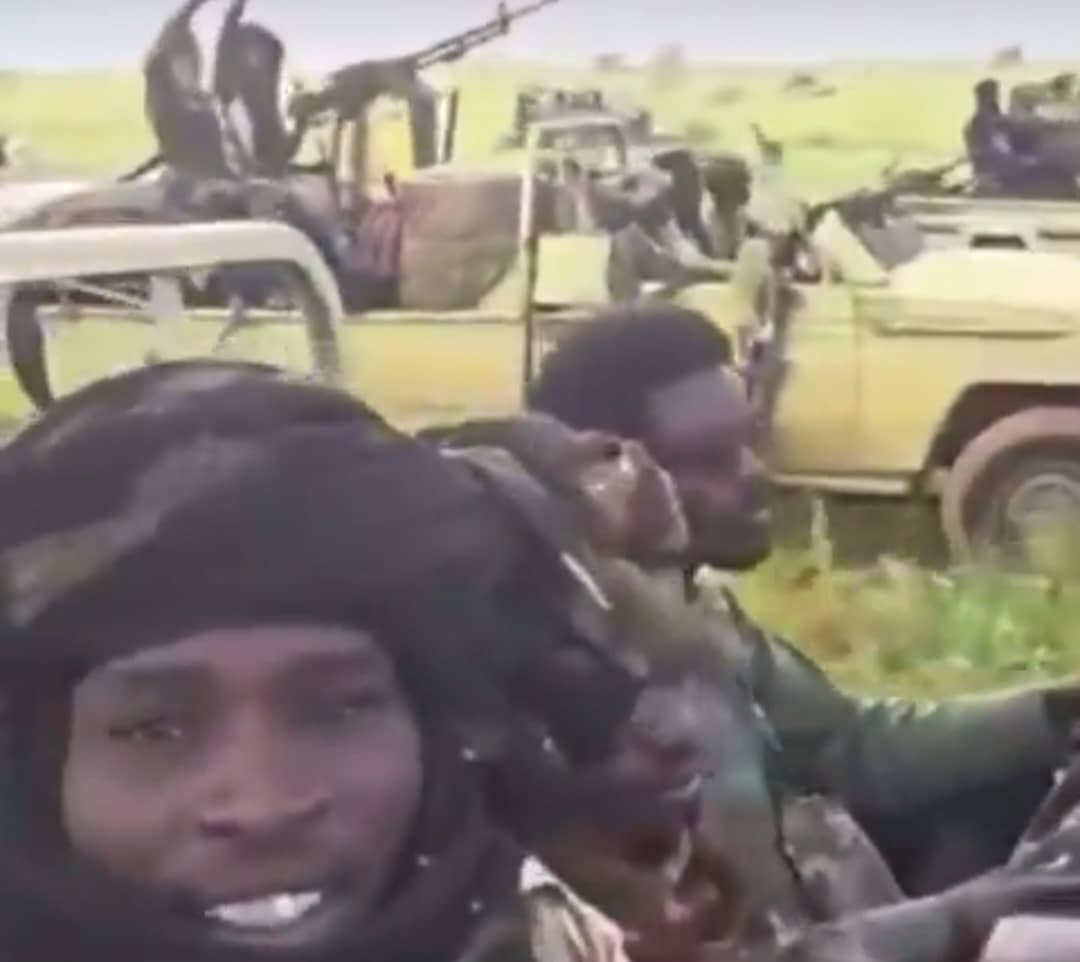
A misleading video claiming to show Boko Haram militants celebrating the capture of Nigerian military barracks has gone viral on social media, accumulating over one million views. Fact-checkers have confirmed the footage actually depicts armed forces in Sudan, not Nigeria.
The nearly two-minute video was shared on Sunday by X (formerly Twitter) account @K3lv1nB0b0 with the caption: “Boko Haram taking over many Nigerian Military barracks & Rejoicing for their victory.” Since its posting, the content has generated substantial engagement, including 3,900 likes, 2,900 reposts, 1,300 bookmarks, and 1,100 comments.
The footage shows several trucks transporting heavily armed men across an open landscape. Throughout the video, gunfire can be heard in the background as the men speak in an unidentified language and cheer loudly. The camera operator repeatedly turns the recording device toward himself before panning back to capture the surroundings.
CableCheck, a fact-checking organization, conducted a reverse image search of the video and discovered it had originally appeared on Facebook in September. The account that posted it was identified as Sudanese, based on the page details. The original caption, translated from Arabic, read: “Check in, morale up, victory from God.”
Further investigation of a clearer version of the same footage, uploaded to YouTube on October 1, revealed additional identifying features that confirmed the video’s origin. Trucks visible in the footage bore Arabic inscriptions, and the camouflage uniforms worn by the armed men displayed crests of the Sudanese flag.
The video emerges against the backdrop of Sudan’s ongoing civil war, which erupted in April 2023 between two rival factions of the military government. This violent conflict pits the Sudanese armed forces, commanded by General Abdel Fattah al-Burhan, against the paramilitary Rapid Support Forces (RSF) led by General Mohamed Hamdan Dagalo, also known as Hemedti.
This is not the first time content from conflicts in other African nations has been misrepresented as being from Nigeria’s insurgency. Media literacy experts have warned about the increasing prevalence of such cross-border misinformation, especially during periods of heightened security concerns.
The spread of such false information comes at a sensitive time for Nigeria, which continues to combat actual insurgent activities in its northeastern regions. Boko Haram and its splinter group, Islamic State West Africa Province (ISWAP), remain significant security threats in the Lake Chad Basin area, though Nigerian military forces have made substantial territorial gains in recent years.
Security analysts note that while the Nigerian military faces genuine challenges in its counter-insurgency operations, false claims about militant victories can undermine public confidence and potentially affect morale among security personnel and civilians in affected areas.
Social media platforms have struggled to contain the rapid spread of misinformation related to security situations, particularly when videos are shared across linguistic and national boundaries, making context and verification more challenging for average users.
The incident highlights the importance of critical media consumption and verification of claims, particularly those related to security matters. Experts recommend checking the original source of content, looking for distinctive features like uniforms and vehicle markings, and consulting reliable news sources before sharing potentially misleading information.
Fact Checker
Verify the accuracy of this article using The Disinformation Commission analysis and real-time sources.
